




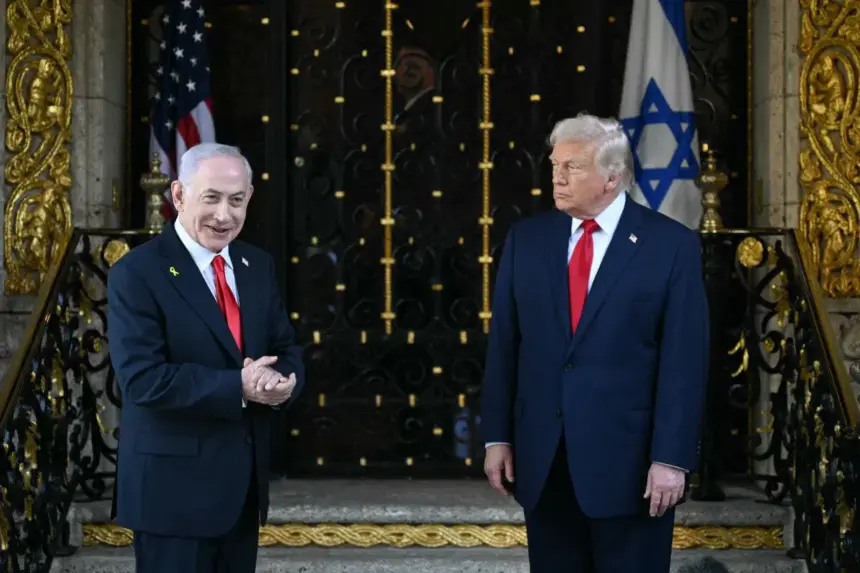
The Netanyahu Trump meeting will place the Iran war and regional security at the centre of discussions when both leaders meet at the White House on Tuesday.
According to AFP, Israeli Prime Minister Benjamin Netanyahu travelled to Washington on Monday for his first face-to-face talks with US President Donald Trump since the war began. The meeting comes after months of occasional public disagreements between the longtime allies.
Tuesday’s engagement will be their eighth meeting since Trump returned to office in 2025. It comes as Washington pushes for further negotiations with Tehran, while Israel continues to prioritise measures aimed at limiting Iran’s regional influence.
“This is a great privilege, but it is also a great responsibility,” Netanyahu said before leaving Israel.
“We will discuss all the issues on the agenda, first and foremost Iran. Naturally, our goal is to safeguard our security and also to expand the circle of peace around us.”
Netanyahu Trump meeting follows public disagreements
Relations between Trump and Netanyahu appeared strained during negotiations that produced an Iran ceasefire in April. Trump publicly criticised the Israeli leader during the process and later described him as difficult.
Netanyahu played down the exchanges, describing them as tactical disagreements rather than a wider breakdown in relations. He maintained that both governments remained aligned on their broader objectives concerning Iran.
Israel did not participate in the latest round of fighting between the United States and Iran. The confrontation resumed earlier this month after the April ceasefire collapsed.
Washington has since indicated that it wants to give diplomacy another opportunity. However, the United States has not ruled out further military action if negotiations fail.
The White House talks will give Netanyahu an opportunity to explain Israel’s security concerns and seek continued American support. Both leaders are also expected to demonstrate that their alliance remains intact despite their differences.
Lebanon deal expected on agenda
Trump and Netanyahu are also expected to discuss a US-backed framework agreement signed by Israel and Lebanon last month.
Implementing the agreement has proved difficult, with tensions and security concerns continuing along the border. The leaders may examine how to move the arrangement forward without triggering further hostilities.
Discussions could also cover Israel’s military presence in Lebanon, Syria and Gaza. Some observers believe Washington may pressure Israel to reduce operations in parts of the region.
However, international relations expert Yonatan Freeman said the visit would mainly show that there was no major break between both countries.
“I think that the main issue is to show the world, to show Iran, and also Lebanon and others, that there is no break,” Freeman said.
He argued that both leaders agreed on their ultimate security objectives. Their disagreements, he added, largely involved timing, military intensity and the methods used to achieve those goals.
Gaza reconstruction remains stalled
The humanitarian crisis in Gaza may also feature during the White House discussions, although observers expect Iran to remain the main priority.
Efforts to begin large-scale reconstruction in the Palestinian territory have stalled nearly three years after the war between Israel and Hamas began.
Israel continues to conduct attacks against individuals it identifies as militants. Meanwhile, civilians face severe shortages of food, shelter, healthcare and other essential services.
Freeman suggested that Trump may focus more on Iran and expanding the Abraham Accords than on Gaza. The agreements established diplomatic relations between Israel and several Arab countries during Trump’s first term.
The United Arab Emirates and Bahrain established formal ties with Israel under the initiative, with Morocco later joining the process.
Trump has repeatedly expressed interest in bringing more countries into the agreements. Netanyahu is also expected to support further diplomatic normalisation as part of efforts to expand regional cooperation.
Netanyahu seeks to strengthen alliance
The visit comes months before Israel’s national elections, where Netanyahu intends to seek another term.
Recent opinion polls have shown him facing political pressure, with public anger continuing over his government’s failure to prevent the Hamas-led attack of October 7, 2023.
That attack triggered the Gaza war and remains a major issue in Israeli politics. Netanyahu has faced criticism from families of victims, opposition leaders and protesters demanding greater accountability.
His meeting with Trump could help him present himself as a leader capable of maintaining Israel’s most important international alliance.
Despite their disagreements, both leaders have sought to reduce public tension and emphasise areas of cooperation.
The outcome of the Netanyahu Trump meeting may determine the next stage of US-Israel coordination on Iran, Lebanon and efforts to reshape security arrangements across the Middle East.