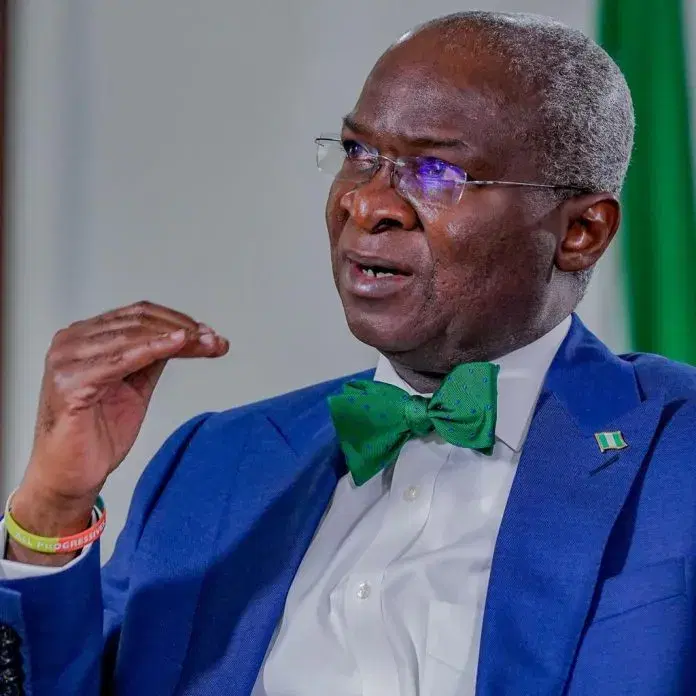
Former Lagos State Governor, Babatunde Raji Fashola, has said Nigeria’s democracy is still developing and will require more time to attain full maturity.
Fashola made the observation during an interview on TVC News’ Beyond the Headlines, where he reflected on the country’s democratic progress, the responsibilities of elected officials and the importance of political maturity.
The former governor noted that many Nigerians expect to experience the direct benefits of electing their representatives, particularly lawmakers, despite the fact that the Constitution primarily assigns them the responsibility of making laws.
He explained that legislators often find it difficult to convince constituents of their performance by pointing only to the number of bills they have sponsored or passed.
“Nigerians want to feel the impact of their representatives, especially lawmakers,” Fashola said.
According to him, a lawmaker who returns to constituents to say, “I have initiated and passed three bills and also sponsored resolutions for you,” may still be perceived as having failed to deliver adequate representation.
“Most Nigerians will simply tell such a lawmaker, ‘We are not feeling you,’” he said.
Fashola argued that this public expectation has led many lawmakers to shift attention from their core legislative duties toward constituency projects and other initiatives designed to satisfy voters.
He, however, expressed confidence that Nigeria’s democracy would eventually reach a stage where elections and political competition are centred on ideas, policies and governance rather than personalities.
Drawing comparisons with the United Kingdom, the former governor cited the policy direction announced by the country’s new Prime Minister on addressing the cost-of-living crisis as an example of how governance should generate constructive public debate.
He said such policy-driven governance also provides the opposition with opportunities to engage meaningfully and enrich democratic discourse through informed debate on government programmes.
Fashola further described the judiciary as a vital institution in Nigeria’s democratic journey, stressing that its role remains critical to the country’s democratic growth.
The former Minister of Works also advised politicians to demonstrate sportsmanship after elections, insisting that not every electoral disagreement should result in litigation.
Recalling an off-cycle election involving his political party, Fashola said internal polling had predicted defeat and, after the official results reflected the forecast, he discouraged party members from seeking redress in court.
“In one of the off-cycle elections that we participated in, we had a poll and it told us we would lose and when the result came out, we lost. I said we should not go to court, and we did not,” he said.
He added, “Something can’t be good only when it favours you. We have to be gracious in defeat.”
Fashola maintained that respecting election outcomes and encouraging issue-based politics would strengthen Nigeria’s democratic institutions and contribute to the country’s democratic advancement.