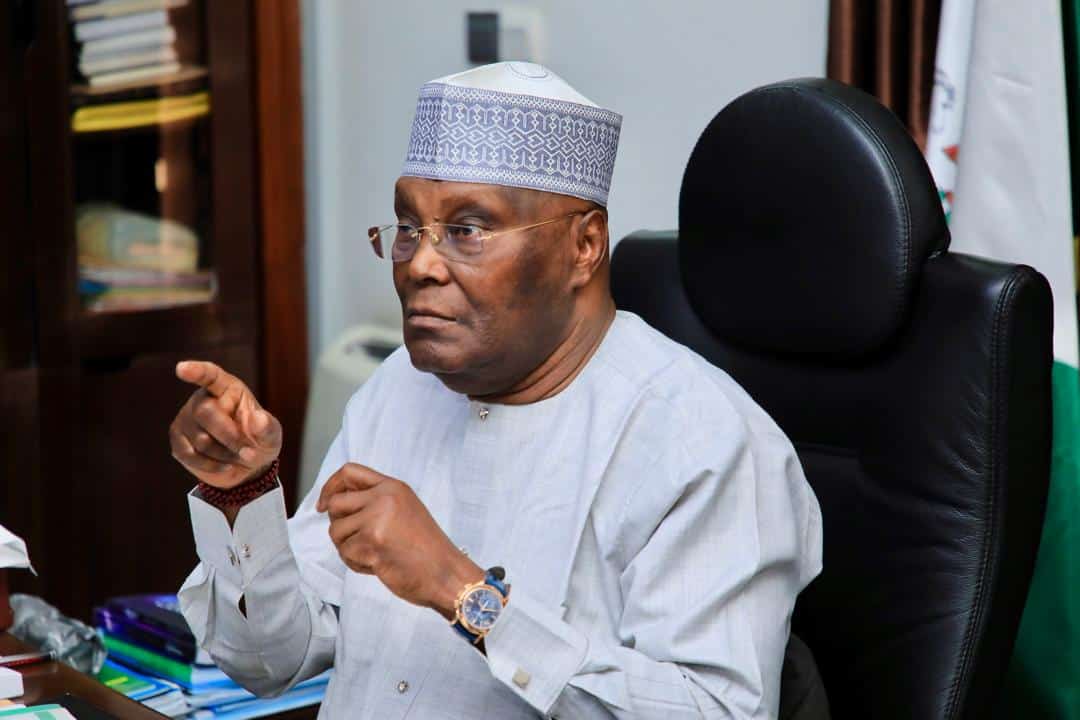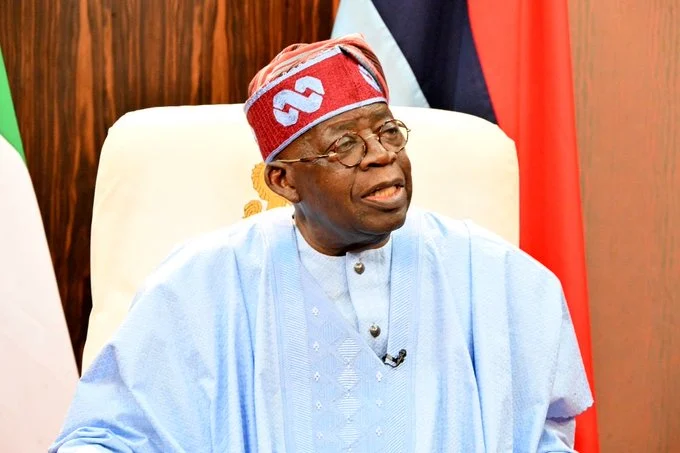
Former Vice-President Atiku Abubakar has responded to President Bola Tinubu’s challenge over the funding of his educational investment, citing a 1993 United States court forfeiture of $460,000 from a bank account in Tinubu’s name as he defended the origins of his business interests.
Atiku, the presidential candidate of the African Democratic Congress, made the remarks in a statement issued on Saturday, November 7, 2026, by his Director of Strategic Communication, Phrank Shaibu, following Tinubu’s comments at a presidential campaign rally in Port Harcourt, Rivers State.
Tinubu had questioned how Atiku established a private university while serving as vice-president under former President Olusegun Obasanjo, alleging that public resources were used to finance the institution.
Speaking at the rally held at Adokiye Amiesimaka Stadium, the President challenged Nigerians to demand an explanation from the former vice-president over the source of the funds used to establish the university.
Responding, Atiku maintained that his investment in education began before he entered public office in 1999, claiming that he started laying the foundation for ABTI Academy in 1993.
He drew a comparison between the year he said he began the educational project and the United States court proceedings involving funds in Tinubu’s bank account.
Atiku said, “In 1993, while a U.S. court ordered the forfeiture of funds in an account in your name, describing them as proceeds of narcotics trafficking or funds involved in unlawful financial transactions, I was laying the foundation for ABTI Academy.”
He added that the academy had subsequently grown into the American University of Nigeria, accusing Tinubu of attempting to undermine his educational investment instead of addressing questions about his own past.
However, the American University of Nigeria’s published history places the establishment of ABTI Academy, a private primary and secondary school, in 2002, nine years after the date Atiku said he began laying its foundation.
The university’s history also states that ABTI University was licensed in 2003, while construction began in October 2004 in Yola, Adamawa State. The institution admitted its first 124 students in the 2005/2006 academic session and adopted the name American University of Nigeria in 2007.
The university’s account does not explain whether preliminary planning or investment activities began in 1993, as claimed by Atiku.
The $460,000 forfeiture cited by Atiku relates to a civil forfeiture case filed by the United States government in July 1993 before the United States District Court for the Northern District of Illinois.
Court documents in the case, United States of America v. Funds in Account 263226700, showed that the funds were held in a First Heritage Bank account in Tinubu’s name.
The United States government alleged that the funds represented proceeds of narcotics trafficking or were involved in financial transactions that violated American money-laundering laws.
A settlement agreement reached in September 1993 provided for the release of funds held in several Citibank accounts, while $460,000 in the First Heritage Bank account was to be forfeited to the United States government.
The court subsequently issued a decree on October 4, 1993, ordering the forfeiture of the $460,000.
The proceedings were civil forfeiture proceedings involving the bank funds and should not be confused with a criminal conviction of Tinubu for drug trafficking.
Atiku also criticised Tinubu’s handling of the economy, accusing his administration of worsening the cost-of-living crisis, unemployment, insecurity and poverty.
He claimed that more than 79 million Nigerians had been pushed into extreme poverty under the present administration and faulted the President for seeking another term without adequately addressing the economic difficulties facing citizens.
On the removal of petrol subsidy, Atiku disagreed with Tinubu’s position that Nigeria could not return to subsidised petrol prices, promising to introduce what he described as a transparent, production-based subsidy linked to local refining if elected president.
He said the proposed arrangement would help reduce energy costs, including the prices of petrol and diesel, while promising increased investment in social welfare programmes.
The former vice-president also defended his Affordable Life campaign, describing it as an alternative to the policies of the Tinubu administration.
The exchange comes as both politicians position themselves ahead of the 2027 presidential election