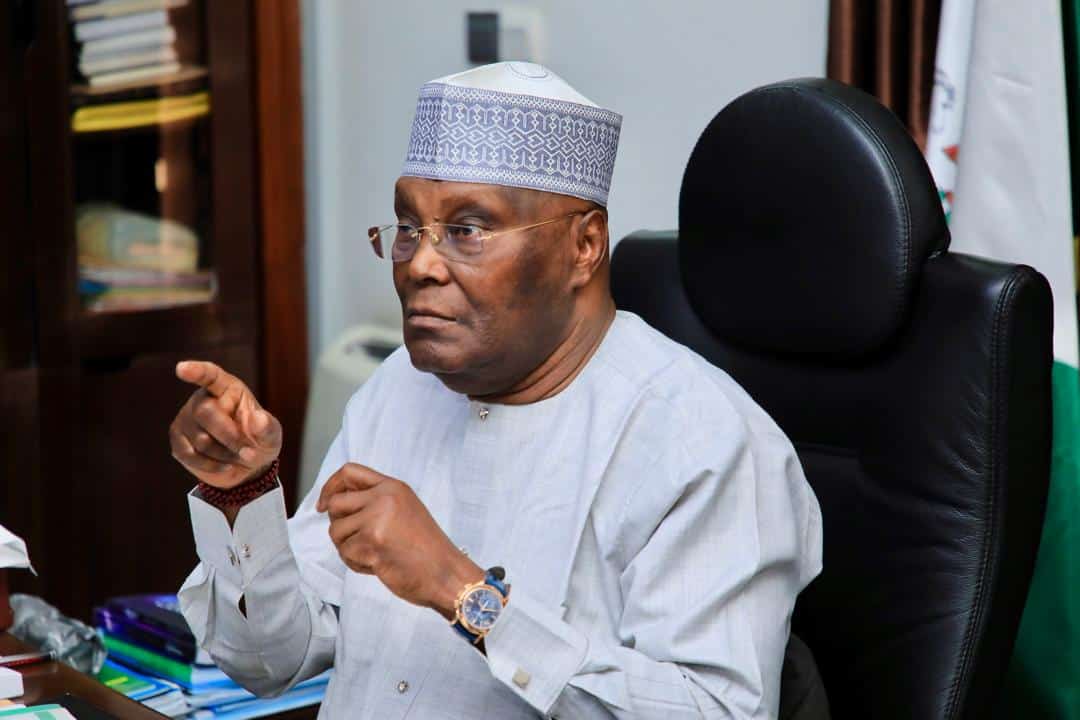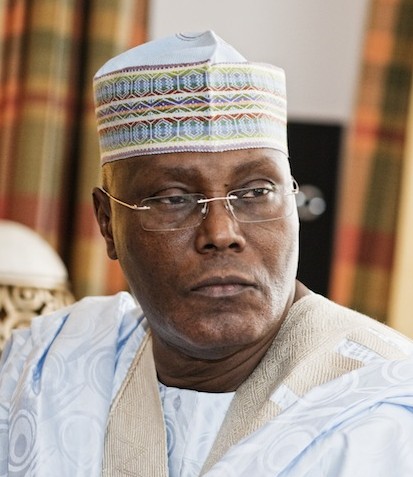
Former Vice-President Atiku Abubakar has reaffirmed his commitment to restoring fuel subsidy if elected president in 2027, insisting that his position on the controversial policy remains unchanged despite fierce pushback from the Tinubu administration.
Atiku, the presidential candidate of the African Democratic Congress, restated his stance in a post on his X handle on Monday, accompanied by a new campaign video.
“My position stands! I will restore subsidy to make life easier and more affordable for Nigerians,” he declared.
The campaign video highlights a staggering statistic: the average price of petrol rose from N238.11 per litre in May 2023, when President Bola Tinubu announced the removal of the subsidy, to N1,596.25 by May 2026—a 570 per cent increase.
Data from the National Bureau of Statistics confirms the trajectory. Petrol prices climbed steadily through 2024 and 2025, breaching N1,000 per litre and eventually hitting N1,596.25 in May 2026, one of the highest monthly averages recorded since deregulation .
Atiku’s campaign argues that this surge has cascaded into every facet of Nigerian life, driving up transportation, food prices, and household expenses.
Atiku has been careful to distinguish his proposal from the corruption-ridden subsidy regime that previous administrations operated. According to his campaign, the intervention would be targeted and temporary, tied to crude oil supplied to local refineries to enable them to produce and sell petroleum products at more affordable prices .
His running mate, Rotimi Amaechi, elaborated on the plan during a town hall meeting in Edo State. He said the subsidy would target owners of refineries and modular refineries in Nigeria, ensuring that only those producing locally benefit.
“We are not bringing back subsidy to produce rich men,” Amaechi said. “If you don’t have a refinery in Nigeria, you will not get subsidy” .
Amaechi explained the mechanics: the government would sell crude oil to domestic refiners at a lower price than the international market rate, and the difference would effectively serve as the subsidy, bringing down pump prices .
The Tinubu administration has pushed back hard, arguing that Atiku’s plan is fiscally unsustainable. The Presidency claimed the proposal would cost Nigeria N19.1 trillion yearly .
Presidential aide Bayo Onanuga questioned the clarity of Atiku’s position, noting that within one week, one aide said the subsidy would be temporary and phased out, another disowned that explanation, and Atiku then reaffirmed the original position. “Nigerians cannot afford another opaque and potentially costly subsidy regime dressed up in new language,” Onanuga said .
President Tinubu himself has ruled out any return to subsidy, comparing it to asking Moses to return to Egypt and insisting that ending the policy was necessary to prevent Nigeria from heading towards bankruptcy .
Atiku has consistently argued that the savings from subsidy removal have not been accounted for. In previous statements, he demanded transparency over the funds, asking: “I did not oppose the removal of the oil subsidy, but where is the money? Where did it go? It was intended to reduce poverty and help children attend school. Where is the money now?” .
He has also pointed to international comparisons, noting that Germany reduced energy taxes on petrol and diesel from October 1 to December 31, 2026, to ease pressure on households. “Germany understands that when fuel prices put families under pressure, government must act. Nigerians deserve the same compassion and urgency,” he said .
The subsidy debate is shaping up as a defining issue of the 2027 presidential campaign. Atiku’s promise of relief resonates with Nigerians who have watched their purchasing power erode over three years of economic reforms.
But the Tinubu administration sees the policy as a dangerous reversal that could undo hard-won fiscal reforms and plunge the country back into the corruption and inefficiency that characterized the old subsidy regime.
For now, Atiku is betting that Nigerians, exhausted by rising costs, will choose relief over reform. His campaign video.
Whether that translates into votes in January 2027 remains to be seen.