





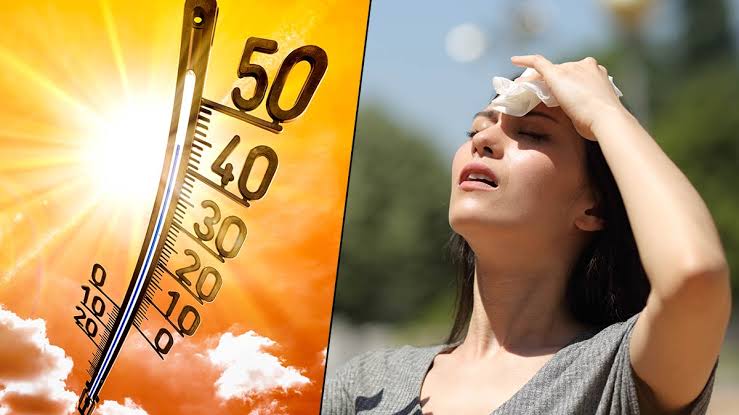
France has placed emergency responders and military personnel on heightened wildfire alert while introducing a series of measures to address an intense heat wave affecting large parts of the country and wider Europe.
Authorities have restricted public alcohol consumption and canceled certain outdoor sporting activities as temperatures continue to rise.
Nearly one-third of the country was placed under the national weather service’s highest heat warning on Sunday.
Temperatures were forecast to climb to 40 degrees Celsius (104 degrees Fahrenheit) in some regions, with even hotter conditions expected on Monday.
The situation poses a significant challenge in a country where air-conditioning remains uncommon in many homes and public spaces.
To help residents and tourists cope with the extreme weather, cooling initiatives have been rolled out across major cities. In Paris, the Eiffel Tower and several other public venues installed misting stations to provide relief from the heat. National and local authorities have also implemented additional precautionary measures aimed at reducing health risks.
The heat wave comes amid growing concern over the impact of rising temperatures across Europe. According to the World Health Organization’s Europe office, more than 200,000 people died from heat-related causes across the continent during the past four years, with the majority of those deaths considered preventable. The agency has warned that above-average temperatures are expected to persist this summer, increasing the risk of heat exhaustion and potentially fatal heat stroke.
In response, WHO Europe has urged governments and institutions to strengthen heat-response strategies, including opening cooling centers and introducing flexible work schedules or breaks that allow workers to avoid exposure during the hottest hours of the day.
Authorities are paying particular attention to France’s annual Music Day celebrations on Sunday. The nationwide summer solstice event traditionally features thousands of concerts in village squares, clubs, and outdoor venues, attracting large crowds from across the country and abroad.
To ease pressure on emergency services, the government instructed event organizers to limit alcohol consumption during celebrations in order to “preserve emergency services and allow medics to concentrate on taking care of the most vulnerable.”
Officials are especially concerned about vulnerable populations, including people living on the streets and elderly residents in nursing homes or isolated at home. The threat recalls the devastating 2003 heat wave, during which approximately 15,000 older people lost their lives, prompting major reforms in France’s approach to extreme heat.
On Saturday, the government announced enhanced wildfire preparedness measures and ordered increased monitoring of water supplies used to cool the country’s nuclear reactors.
While schools will remain open except in exceptional circumstances, authorities said afternoon end-of-year examinations could be postponed until the morning or otherwise adjusted if temperatures become too extreme.
Prime Minister Sebastien Lecornu chaired a government crisis meeting on Saturday and was scheduled to hold another on Sunday as officials respond to what the national weather service described as a “widespread, long-lasting and intense” period of extreme heat.
As France confronts the growing challenges posed by climate-related weather events, Lecornu directed government ministers to develop long-term adaptation plans aimed at improving the country’s resilience to future heat waves, including “via air conditioning, if necessary.”