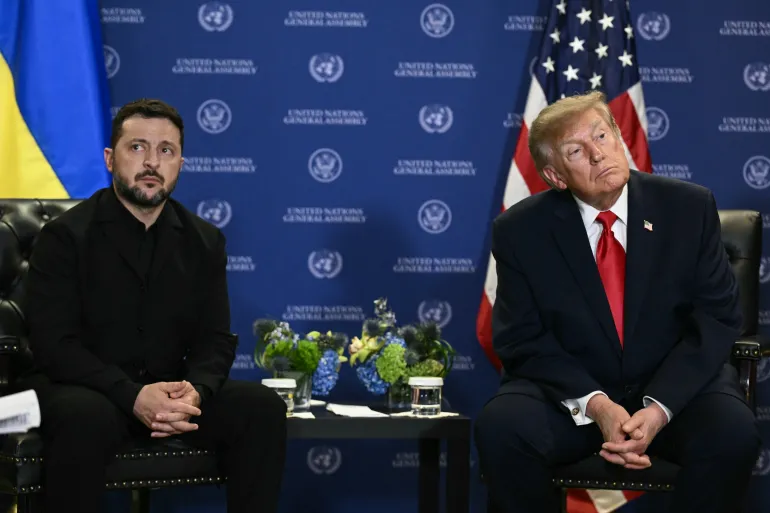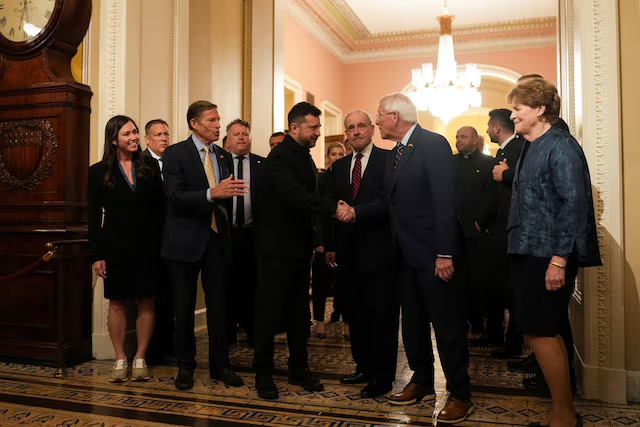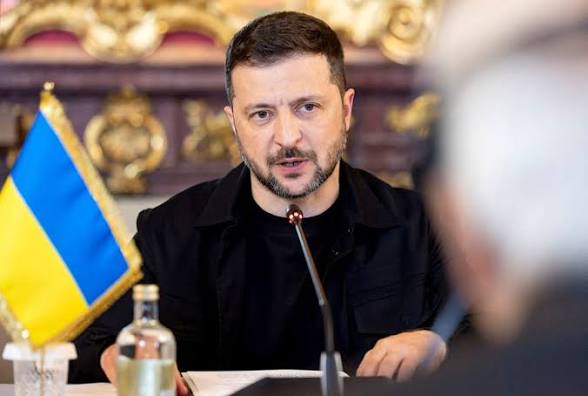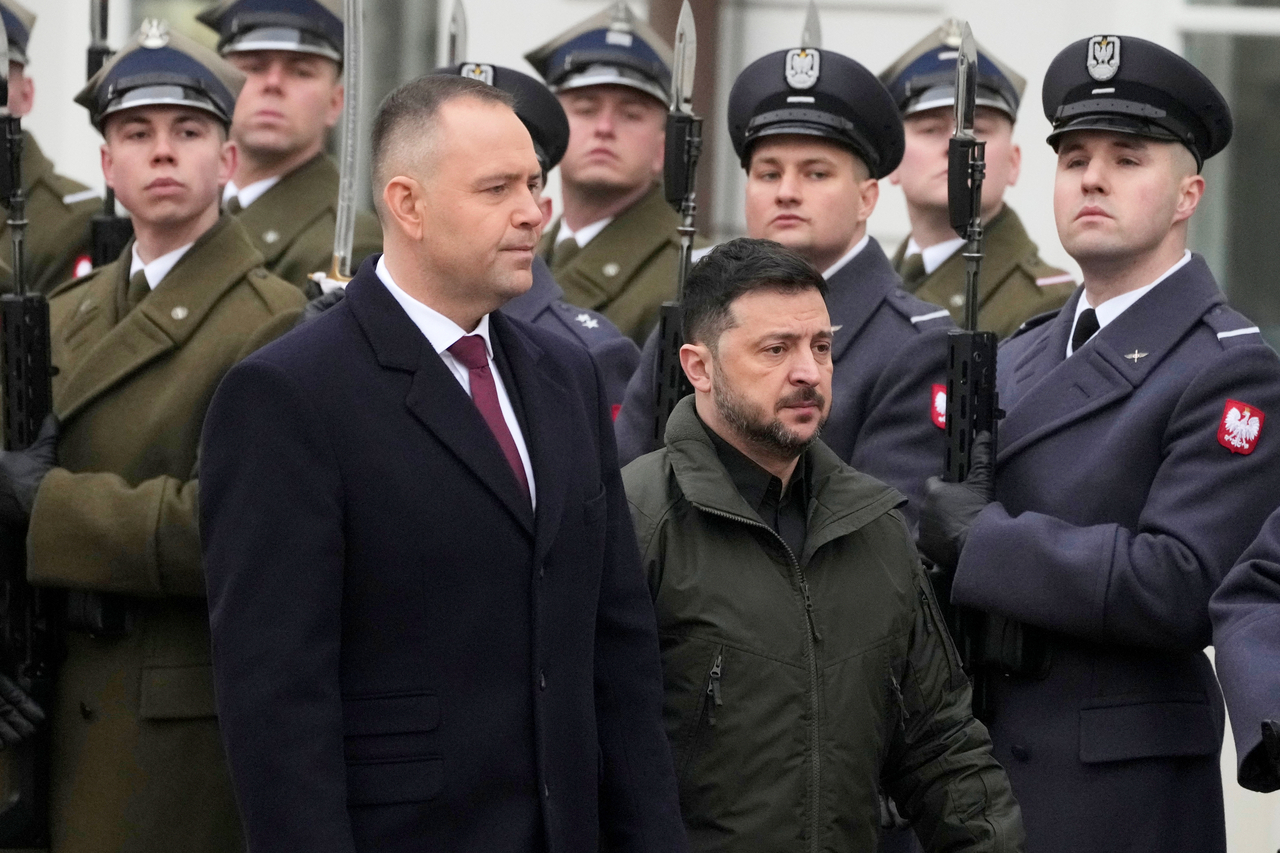
Ukrainian President, Volodymyr Zelenskyy, said on Saturday that he had returned a Polish state honour, one day after Polish President, Karol Nawrocki, announced he had withdrawn the award over a dispute linked to World War II history.
Several former Ukrainian presidents also confirmed they were returning their honours from Poland, alongside other senior Ukrainian officials, as tensions between the two countries continued to rise.
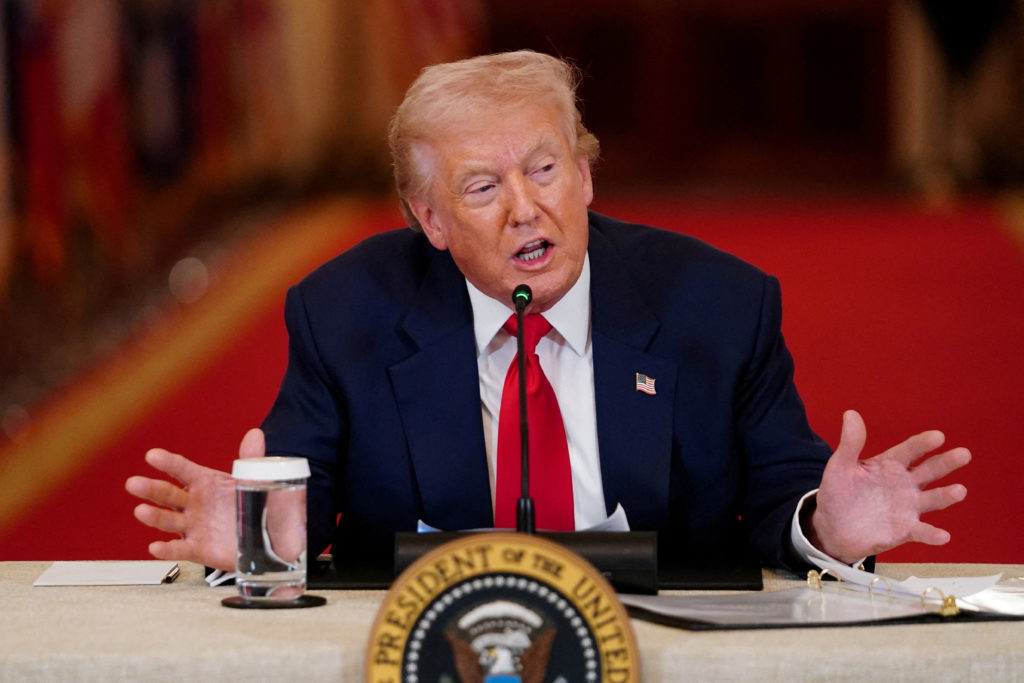
Nawrocki said on Friday that he had revoked the Order of the White Eagle, which was awarded to Zelenskyy in 2023, following controversy over Ukraine’s decision to rename a military unit in tribute to Ukrainian insurgents from the World War II era who have been accused by Poland of carrying out massacres against Poles.
The disagreement over the historical role of the Ukrainian Insurgent Army (UPA) has created fresh strain between the two strategic partners, at a time when Kyiv is seeking continued international support in its efforts to pressure Russia to end its war against Ukraine.
“We believed that the Order of the White Eagle, awarded in 2023, was meant for the Ukrainian People and our army. That is what was said at the time,” Zelenskyy wrote on X. “Today, I sent the Order back to the President of Poland.”
Zelenskyy also shared a photograph showing the decoration being placed into a box before being sent to the Polish president’s office.
He said Ukraine appreciated Poland’s support and emphasized that Kyiv would “remain open to all meaningful formats of engagement with Poland in order to try to avoid conflicting interpretations of the difficult and painful chapters of our shared past.”
Former Ukrainian leaders Leonid Kuchma, Viktor Yushchenko and Petro Poroshenko said they would also return the Order of the White Eagle they had received, arguing that the dispute was damaging efforts they had made to strengthen relations between the two countries.
Other Ukrainian officials, including presidential chief of staff Kyrylo Budanov and Foreign Minister Andrii Sybiha, gave up separate awards they had received from Poland.
Poland has been among Ukraine’s strongest supporters during its war with Russia. However, public attitudes toward Kyiv have become increasingly complicated due to concerns over the large number of Ukrainian refugees, disagreements over agricultural imports and unresolved issues surrounding World War II-era violence.
Some Ukrainians view the UPA as a symbol of national resistance because of its fight against both Soviet and Nazi forces, and see the group as part of Ukraine’s struggle for independence from Moscow.
However, Poland accuses the UPA of involvement in the Volhynia massacres between 1943 and 1945, during which Warsaw says about 100,000 Poles were killed by Ukrainian nationalists. Thousands of Ukrainians also died during retaliatory attacks.
Members of Poland’s government, despite frequently disagreeing with Nawrocki, warned that the dispute over the award could benefit Russia.
“The winner of the war of history and orders can only be Moscow,” Foreign Minister Radoslaw Sikorski wrote on X.
Defence Minister Wladyslaw Kosiniak-Kamysz said the disagreement had pushed relations with Ukraine “in a very bad direction,” adding that “Escalating tensions among allies only benefit the enemy.”
Nawrocki rejected claims that his decision helped Moscow, saying the move was based on Polish national pride and historical concerns.
“We know what the post-Soviet, now Russian, threat is. But we are a proud Polish nation and we have our pain threshold in matters that concern us and our allies,” he said during an event in southern Poland.
“And this pain threshold has been exceeded, which is why I stripped President Zelenskyy of the Order of the White Eagle.”
Earlier, Ukrainian Foreign Minister Sybiha described Nawrocki’s decision as a “strategic error” and said no foreign leader “is going to dictate our history to us.”
Nawrocki, while announcing the withdrawal of Zelenskyy’s award, said the decision was “not directed against the Ukrainian people. It does not signify a change in the strategic direction of Polish security policy.”