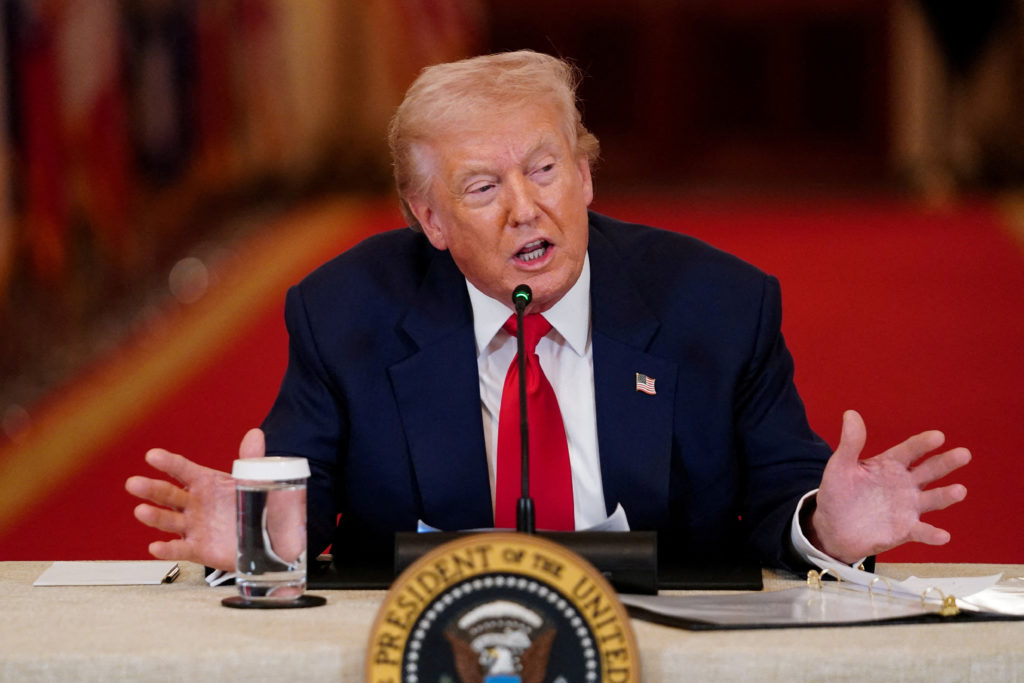
Vietnam has said it is intensifying efforts to conclude a trade agreement with the United States, following a warning from the Donald Trump administration that additional tariffs could be imposed on major export sectors, including garments, footwear and electronics.
The announcement came on Thursday, as concerns mounted over the potential economic consequences of the proposed trade measures.
The Southeast Asian manufacturing powerhouse, which records the largest trade surplus among US trading partners, could face tariffs of up to 35 per cent under measures targeting countries accused of maintaining excessive industrial capacity. The proposed rate places Vietnam among the most exposed nations in the group of 14 countries, with only China facing a higher level of excess capacity.
Responding to Washington’s announcement, Vietnam’s trade ministry disclosed that negotiations were continuing with the US to conclude an agreement “as soon as possible”. The ministry also reaffirmed the country’s willingness to cooperate with the American investigation into allegations of excessive manufacturing capacity.
Vietnam, which serves as a major manufacturing and export destination for multinational corporations, including Samsung and Apple, has been engaged in prolonged trade negotiations with Washington for more than a year. Business representatives had anticipated that an agreement could be reached in December, coinciding with Vietnam’s leader To Lam’s expected participation in a G20 summit in Florida. The latest tariff threat is now being viewed by industry observers as additional pressure on Hanoi to accelerate negotiations.
“I wouldn’t rule out a deal over the coming months,” Bruno Jaspaert, head of DEEP C Industrial Zones, a network of industrial parks in northern Vietnam hosting export-oriented factories run by multinational companies, said.
Under a potential agreement, Vietnam could secure a tariff rate of 20 per cent, according to US officials. Although this would exceed the existing general duty of 12.5 per cent and marginally surpass rates applied to some regional competitors, it would remain considerably lower than the threatened 35 per cent. Such an arrangement would also maintain Vietnam’s competitive position against China, helping the country retain its attractiveness as an alternative manufacturing destination for international investors seeking production bases in Asia.
Garment and Footwear Manufacturers Face Growing Pressure
Prolonged uncertainty surrounding US trade policy has already raised concerns about investment and production decisions across several Vietnamese industries, with some manufacturers reportedly considering alternative locations for their operations.
“Most of the industries facing the highest threats may have already made plans and carried out contingency measures,” Mr Jaspaert said.
John Cambell, head of industrial services in Vietnam at real estate firm Savills, warned that the proposed duties could further complicate business planning and investment decisions among manufacturers dependent on the American market.
The planned new tariffs “add uncertainty for manufacturers serving the American market and could delay sourcing and expansion decisions,” John Cambell, head of industrial services in Vietnam at the real estate firm Savills, said.
“Garments, textiles and footwear producers with significant US exposure would be particularly sensitive to higher costs and pressure on margins,” he said.
The footwear sector appears particularly vulnerable, with industry representatives indicating that Indonesia has already benefited from fresh investment commitments, while expansion activities in Vietnam have slowed. Vietnam hosts substantial manufacturing operations for major global brands, including Nike and Adidas, making the sector especially sensitive to any increase in export costs.
Meanwhile, competing garment and footwear exporters, including Bangladesh, Cambodia and Indonesia, have already negotiated trade arrangements with Washington that establish tariff rates at 18 per cent, potentially giving them an advantage over Vietnamese manufacturers.
Intellectual Property Investigation Adds to Trade Concerns
Beyond the proposed industrial capacity-related tariffs, Vietnam is also facing a separate US investigation into alleged intellectual property violations. The probe carries a February 28 deadline and represents another potential obstacle to the country’s efforts to secure favourable trade terms.
American authorities have also raised concerns that Vietnam is being used as a transit route for Chinese-made products destined for the US market, an allegation that could have serious implications for its manufacturing sector.
The issue is particularly significant for Vietnam’s electronics industry, where manufacturers depend heavily on components imported from China to assemble products such as computers, tablets and video game consoles. Any additional restrictions or tariff increases could disrupt established supply chains and raise production costs.
Major corporations, including Samsung and Tesla, have reportedly appealed to Washington against imposing higher tariffs on Vietnam over intellectual property concerns, warning that such measures could adversely affect interconnected manufacturing and supply networks.
In anticipation of the growing trade scrutiny, Vietnam announced a series of proposed measures to address concerns raised by US investigations in a government resolution released only hours before Washington disclosed its latest tariff plans.
Under the proposed measures, the Vietnamese government intends to assess the country’s dependence on imported manufacturing inputs, encourage the development of domestic suppliers and establish a database for monitoring supply chains across manufacturing industries.
Authorities also pledged to introduce an early warning system designed to monitor and manage trade surpluses, as Hanoi seeks to address Washington’s concerns while protecting its position as one of Asia’s leading export-oriented manufacturing economies.