Fresh political tension has erupted in several states as the ruling All Progressives Congress begins its primaries on Friday ahead of the 2027 general elections.
The development has compelled party leaders and stakeholders loyal to President Bola Ahmed Tinubu to intensify consultations in a bid to avert a deepening internal crisis.
The unrest, marked by protests, failed consensus negotiations, allegations of candidate imposition and ongoing reconciliation efforts, comes as the APC leadership struggles to maintain unity before the nationwide primaries gain full momentum.
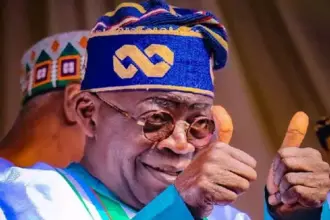
Amid growing concerns, President Tinubu appealed to party members, aspirants and leaders to conduct themselves with maturity and sportsmanship during the exercise.
He warned that divisive behaviour could strengthen opposition parties, advising victorious aspirants against excessive celebration while urging those who lose to accept the outcome peacefully.
In a personal statement issued on Thursday ahead of the House of Representatives primaries, Tinubu described the exercise as more than a process for selecting candidates, saying it represented a test of the APC’s unity, resilience and political strength as it heads into its fourth electoral cycle.
He said, “In every contest, there will be a winner and a loser. I urge the winners not to gloat in victory and the losers to show sportsmanship by taking things in their stride and preparing for another time.
“The ultimate winners are those who don’t choose to wreck the boat but rather work to prepare for another round. Our opponents are waiting for us to be against each other; we should disappoint them.”
The President also cautioned against a return to what he described as outdated political practices.
“We should not play the politics of old, the do-or-die politics that we have put behind us. Politics should never be a zero-sum game. Any candidate that wins does so for all of us as a party,” he stated.
Tinubu encouraged party leaders to embrace consensus arrangements where possible to minimise internal friction.
“I am aware that, in line with the provisions of the Electoral Act 2026 and our party’s constitution, leaders at various levels have initiated conversations to produce consensus candidates.
“It is a commendable option that would help in reducing rancour and bad blood among party members,” said Tinubu.
However, he stressed that where consensus could not be achieved, party members must maintain discipline throughout the process.
“I urge us all to go into the primaries as brothers and sisters,” the President appealed.
Tinubu also directed governors and party leaders to ensure fairness during the primaries and avoid personal bias.
He said, “You must rise above sentiment to offer all aspirants a level playing field that guarantees participation without let or hindrance.
“While only one person will win for every seat contested, we should give eventual losers the satisfaction of a fair contest.”
The President further instructed party leaders and victorious aspirants to reconcile with unsuccessful contenders, advising aggrieved members to channel complaints through the party’s redress committees instead of disrupting the process.
He also called for greater inclusion of women and youths in the political process.
“I appeal to voters in the primaries and leaders at all levels to give special consideration to our women and youth in the contest. We cannot afford to relegate the two significant demographics of our population,” he said.
Tinubu equally warned security agencies deployed for the exercise to remain neutral and focus strictly on maintaining peace.
According to him, “The police and other security agencies must remain professional and avoid acting as interlopers during this exercise. Your duties strictly centre on ensuring peaceful exercise. Nothing more.”
The APC primaries, beginning with House of Representatives aspirants, are expected to continue until the presidential primary scheduled for May 25, 2026.
The exercise is being conducted under the Electoral Act 2026, which reduced the statutory election notice period from 360 days to 300 days. Speaker Tajudeen Abbas had noted that the amendment could pave the way for Presidential and National Assembly elections to hold in January 2027.
Meanwhile, investigations by The PUNCH revealed that while some APC-controlled states successfully adopted consensus arrangements, others witnessed sharp disagreements as aspirants resisted pressure to withdraw for preferred candidates.
The crisis appeared most pronounced in states including Taraba, Kano, Kaduna, Oyo, Yobe and Abia, where disputes over direct primaries, endorsements and alleged automatic tickets have divided party stakeholders.
In Abia State, Deputy Speaker of the House of Representatives, Benjamin Kalu, sought to calm tensions by dismissing claims that certain aspirants had already secured automatic tickets ahead of the primaries.
Speaking during a stakeholders’ meeting in Umuahia on Thursday, Kalu maintained that the party would not impose candidates.
According to him, all aspirants seeking elective office under the APC must emerge through a transparent democratic process.
“We are not going to impose any candidate. We want to ensure that after the primaries, the party is not going to disintegrate. We have worked hard and it is now time to harvest,” Kalu declared.
He added, “There is no automatic ticket and no list by anybody. The party has given us only two democratic options — consensus or direct primaries.”
Kalu stated that party members would ultimately determine who emerged as candidates for the 2027 elections.
Also addressing stakeholders, former Abia State governor and senator representing Abia North, Orji Uzor Kalu, disclosed that President Tinubu had urged party leaders in the state to remain united ahead of the elections.
“The President told me clearly that the only gift Abia APC can give him is to deliver the state,” Orji Kalu said.
He added, “The President also told me not to quarrel with my younger brother. I have no problems with Ben Kalu anymore. The quarrel is gone. Abia APC is now united.”
The APC also announced during the meeting that three governorship aspirants, nine senatorial aspirants, 24 House of Representatives aspirants and 64 House of Assembly aspirants purchased nomination forms in the state.
According to the state Organising Secretary, Emeka Okoroafor, only one House of Representatives aspirant was disqualified for failing to register as a party member.
In Kano State, efforts to secure consensus arrangements for House of Representatives tickets remained unresolved as party leaders continued consultations across the 24 federal constituencies.
The Kano APC Publicity Secretary, Auwal Soja, confirmed on Thursday that negotiations were still ongoing.
“Consensus among the aspirants of the APC for the 24 federal constituency seats is still ongoing, which will hopefully be concluded by 10 pm today,” he said.
He, however, acknowledged that direct primaries would take place where consensus efforts fail.
“As you know, the APC Constitution provides only for direct primaries and consensus as legitimate pathways for selecting candidates,” Soja added.
Although reconciliation efforts continued, indications emerged that some constituencies, particularly Kumbotso Federal Constituency, may resist consensus arrangements as supporters of rival aspirants demanded open contests.
In Taraba State, the APC’s consensus strategy suffered a setback after several aspirants refused to withdraw from races in key constituencies.
The breakdown forced the party to prepare for direct primaries in multiple National Assembly and state assembly constituencies ahead of Friday’s exercise.
In a statement issued by APC State Publicity Secretary, Aaron Artimas, the party disclosed that State Chairman, Alhaji Abubakar Bawa, had constituted another committee to continue discussions with aggrieved aspirants.
According to the statement, “The committees achieved a tremendous amount of success, as many aspirants have already agreed to step down in the interest of party unity.”
The statement added that the new committee would continue engaging aspirants “who may still be holding out for one reason or another.”
However, reports from zonal committees indicated that consensus talks collapsed in constituencies such as Takum, Donga, Ussa, Kurmi, Nguroje and Wukari, where aspirants insisted on direct primaries.
Former lawmaker Tukur El-Sudi, who chaired one of the reconciliation committees, said many aspirants rejected appeals to step down for incumbents.
“All aspirants in Nguroje declined to withdraw for the incumbent lawmaker because they insisted the process must remain competitive,” he said.
Similarly, Dr Philip Duwe, Chairman of the Southern Zone Consensus Committee, noted that some aspirants initially suspected the consensus arrangement was intended to favour selected individuals.
According to him, “Several aspirants believed the process was designed to favour certain individuals, but the consultations later became useful platforms for dialogue and reconciliation.”
He also revealed that substantial financial investments made by aspirants contributed to the collapse of the talks.
Despite the disagreements, APC State Chairman Bawa defended the process, insisting that differing opinions reflected internal democracy rather than failure.
“The inability to achieve consensus everywhere is not a failure. It simply reflects internal democracy because aspirants are expressing themselves freely,” he stated.
In Yobe State, the APC is also preparing for House of Representatives primaries after stakeholders failed to resolve disagreements through consensus.
A senior party source disclosed that Governor Mai Mala Buni had returned to the state to personally supervise reconciliation efforts aimed at reviving negotiations before the primaries.
“The governor has arrived in the state and is expected to meet with party stakeholders to decide whether consensus can still be achieved or whether the primaries will proceed,” the source said.
The source added, “The party is fully prepared for the primaries on Friday, but consultations are still ongoing.”
The development followed earlier intervention by Vice-President Kashim Shettima in the Yobe governorship succession dispute after disagreements emerged among aspirants over alleged endorsement plans.
One of the governorship aspirants, Senator Ibrahim Bomai, had criticised attempts to impose candidates.
“No individual, regardless of influence or past office, has the moral authority to determine the leadership of millions behind closed doors,” Bomai had declared.
“Yobe State is not a private estate. Leadership must emerge through the free and transparent choice of the people.”
In Kaduna State, the government confirmed that Governor Uba Sani had established a high-powered reconciliation committee to address grievances arising from the primaries.
Kaduna State Commissioner for Information and Culture, Ahmed Maiyaki, said the initiative was aimed at preventing internal divisions and sustaining party unity.
“The initiative is designed to deepen mediation and constructive engagement among aspirants across the state while fostering political stability and consensus-building within the party,” Maiyaki said.
According to him, the committee would engage aggrieved aspirants and stakeholders in constituencies where political rivalry had heightened tensions.
Political observers believe the move may be connected to growing complaints from aspirants who felt marginalised during recent party activities.