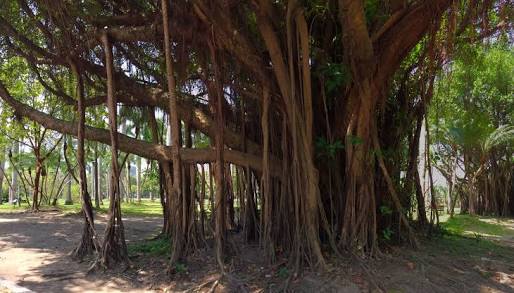
Taiwan’s ancient giant-tree forests are emerging as some of the planet’s most carbon-rich ecosystems, with scientists estimating that one old-growth valley contains about 1,384.5 metric tons of carbon per hectare, not including the carbon stored in the trees’ vast underground root networks.
A report by Science Daily published on Monday stated that the estimate was based on a 2024 assessment of the Tao Tree valley, located between Taichung and Hsinchu County. The area, which contains Taiwan’s third-tallest known tree, was studied by researchers and 15 citizen scientists who measured the forest’s biomass to determine the amount of carbon preserved within the trees’ wood.
Beyond their carbon storage potential, these forests are also notable for their remarkable scale and tree heights. Researchers have documented large concentrations of Taiwania firs, including a location near Mount Benya’s Great Ghost Lake in the southern Central Mountain Range, where a single hectare contains 11 trees exceeding 65 meters in height.
Since 2014, the “Taiwan tree seekers” have combined mountain expeditions, LiDAR technology and citizen-science evaluations to discover and document the country’s tallest trees. Earlier this year, the group recorded 10 Taiwania firs measuring above 70 meters, including an 84.1-meter specimen identified as the tallest known tree in Taiwan and East Asia.
Taiwan’s forests also contribute significantly to global carbon management efforts. According to the Forestry and Nature Conservation Agency, the country’s forests hold approximately 754 million metric tons of carbon dioxide and absorb around 21.85 million metric tons each year.
The research highlights the importance of Taiwan’s remote old-growth forests as critical environmental assets. These ecosystems act as powerful carbon reserves, support biodiversity and may help reduce the rising concentration of greenhouse gases in the atmosphere.
The Science Daily report authors stated: “Taiwan’s giant forests (are) among the most carbon-dense ecosystems in the world, comparable to some of Earth’s most celebrated old-growth forests. The ‘trees that hit the moon’ are more than towering natural monuments. They are also essential guardians of the environment.”