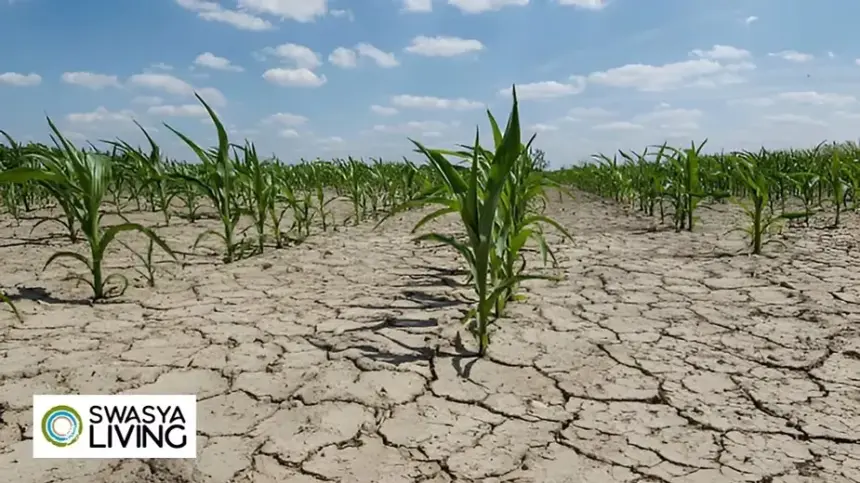
France recorded the most severe impact as Europe endured a record-breaking drought and exceptionally high temperatures during the summer, resulting in significant losses across the continent’s agricultural sector.
European agriculture is projected to lose about $3.6 billion following a 16 million-tonne decline in grain production.
According to the September forecast by the cereals industry, cited by the Energy and Climate Intelligence Unit on Friday, France accounted for 5.8 million tonnes of the reduction, valued at €1.47 billion ($1.65 billion). Hungary, the United Kingdom, Germany and Spain followed in terms of production losses.
“This summer’s extreme heat and drought has been unprecedented, costing Europe production equivalent to the entire grain output of Italy, Belgium and the Netherlands combined,” said Tom Lancaster, farming analyst at the unit.
“At a time of geopolitical uncertainty, climate change is reducing our continent’s productive capacity and food security when we can least afford it.”
European farmers have also faced higher operating costs, with diesel and fertiliser prices rising following the Iran war and remaining elevated amid continued volatility in fossil fuel prices.
High energy prices
Inflation across Europe is forecast to stay above three per cent in September and could rise to nearly four per cent before the end of the year. The situation is expected to increase pressure on governments to expand subsidies aimed at easing public discontent despite constrained public finances.
“We believe that, in the face of rising inflation due to global energy prices, it is necessary to grant [EU] member states additional flexibility to support families and businesses,” Italian Prime Minister Giorgia Meloni said on Monday.
Earlier estimates by Cocereal, a Brussels-based European organisation representing the cereal, oilseed, rice and olive oil industries, had put the agricultural losses at €1.8 billion.
The higher estimate has been attributed to the persistent heat that affected Europe in July and August. Several cities, including Dublin and Prague, experienced their hottest August day since records began.
The extreme weather conditions disrupted wheat kernel development and maize pollination while also contributing to a reduction in the area planted with maize.
“This year, on my farm, all my crops have been affected. Winter crops have been the least affected, despite yield losses of 25 per cent,” French cereal farmer Sebastien Neveux said.
“But for spring and summer crops, it’s quite simply a disaster. Sunflowers, for example, yielded 0.7 tonnes per hectare instead of the usual 1.5 to 2, which is a 60 per cent loss.”
Lancaster urged European governments to “move faster” towards cutting greenhouse gas emissions to net zero in an effort to limit the impact of human-induced climate change.
Scientists with World Weather Attribution have determined that the June heatwave would have been “virtually impossible” 50 years ago without the influence of climate change.
“Governments and business will have to invest in soil health and other regenerative farming measures to boost the resilience of Europe’s farms in the face of these climate impacts,” Mr Lancaster said.
The consequences of the summer’s extreme weather have extended beyond grain production, with a recent estimate by the European Commission Joint Research Centre showing that soybean yields have fallen by 15 per cent, while potato and sugar beet yields declined by seven per cent and 11 per cent respectively.