Hurricane Isaias has claimed four lives and plunged hundreds of thousands of people into darkness after sweeping through parts of the southern United States with destructive winds and torrential rainfall.
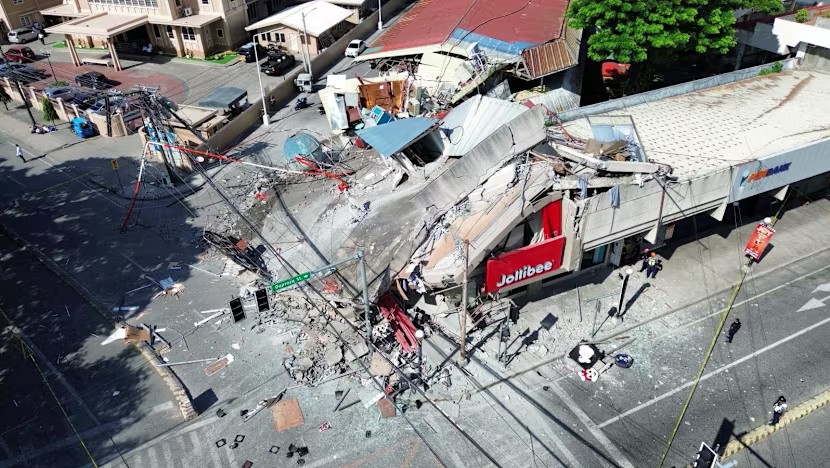
The storm damaged homes and commercial buildings, uprooted trees and prompted warnings of flash flooding and possible tornadoes across several southeastern states.
Authorities confirmed two storm-related deaths in Florida and another two in Alabama. By Saturday evening, approximately 500,000 people across multiple states were without electricity, according to outage-monitoring service PowerOutage. Earlier reports from the BBC indicated that nearly 900,000 customers had lost power in the hours immediately following the storm’s landfall.
In Escambia County, Florida, a woman died after a tree crashed onto her home, while a man suffered fatal carbon monoxide poisoning when a generator was operated inside his garage, Sheriff Chip Simmons said. Four other members of the man’s family, ranging in age from four to 72, received medical treatment and were expected to recover, the Associated Press reported.
Alabama also recorded two fatalities linked to the storm. Fire Chief Cory Moon said one person was killed when a tree collapsed onto a house in Birmingham. The state’s emergency management agency reported a second death in Barbour County following a motor vehicle accident involving a fallen tree, according to agency official Josh Johnson.
Along Florida’s Gulf Coast, Isaias left a trail of destruction, damaging buildings and coastal infrastructure. Powerful winds tore the roof from a hotel in Pensacola, while the city’s mayor confirmed that the local airport “took some damage”. In Destin, a boathouse was flattened by the storm, and sections of the exterior facade of a high-rise building were ripped away in Panama City Beach.
Other coastal communities along the Florida Panhandle also suffered extensive structural damage, with rooftops and exterior walls torn from hotels and condominiums. In neighbouring Alabama, authorities in Mobile reported numerous fallen trees and downed power lines, adding to concerns over electricity supply and public safety.
Ahead of the hurricane’s arrival, Alabama, Florida and Georgia declared states of emergency to facilitate preparations and coordinate emergency responses. Authorities in Florida and Alabama also ordered thousands of residents to evacuate vulnerable areas as the storm approached.
US President Donald Trump approved an emergency declaration for Georgia, following earlier authorisations for Florida and Alabama. The declarations enabled federal assistance to support state and local authorities in responding to the hurricane’s impact and addressing urgent needs.
Meanwhile, the US Department of Energy authorised emergency exchanges of crude oil from the country’s Strategic Petroleum Reserve as officials sought to mitigate potential disruptions to energy supplies caused by the storm. The measure was intended to help address possible supply constraints arising from the hurricane’s effects on infrastructure and operations.
The National Weather Service cautioned that heavy rainfall could affect parts of Georgia and the Carolinas, increasing the likelihood of sudden flooding in vulnerable locations. Residents in affected areas were urged to remain alert as the storm continued moving inland and its associated rain bands threatened communities beyond the immediate coastline.
Forecasts indicated that Isaias would travel into the Tennessee Valley before advancing towards the mid-Atlantic region on Sunday. Meteorologists also warned that rainfall and flooding could extend into the Appalachian region, where conditions could deteriorate as the storm progressed.
Despite concerns about storm surges and coastal flooding, several major routes along the coast remained open by daybreak on Saturday. The roads had largely avoided the extensive damage to trees and electricity infrastructure frequently associated with powerful hurricanes, although conditions remained subject to change as the storm moved inland.
In a separate development in the Pacific Ocean, Hurricane Simon intensified into a Category 4 storm as it approached Mexico’s coastline. Forecasters expected the system to bring substantial rainfall to parts of southwestern Mexico from Sunday, raising concerns about potentially deadly flooding and mudslides.
Tropical Storm Rachel was also forecast to affect northern Mexico and Southern California over the weekend, with strong winds and heavy rainfall expected in some areas. The projected conditions raised further concerns about flooding and weather-related disruptions across the region.