




A chieftain of the African Democratic Congress, Kenneth Okonkwo, has renewed his criticism of former Labour Party presidential candidate Peter Obi, accusing him of lacking the decisiveness required to govern Nigeria.
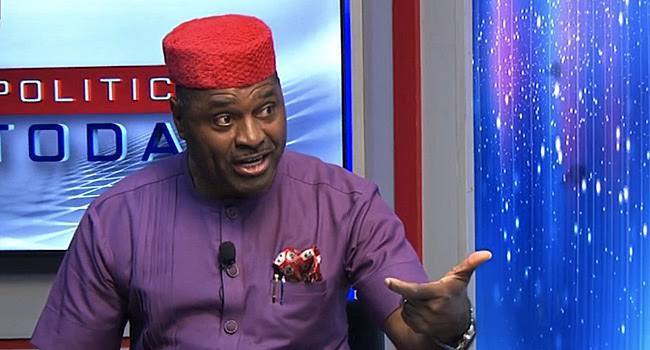
Okonkwo, who recently became spokesperson for former Vice President Atiku Abubakar, made the remarks on Thursday during an appearance on Channels Television’s Politics Today, where he explained the reasons behind his decision to part ways with Obi.
The former spokesperson for the Obi-Datti Presidential Campaign said he had gradually become dissatisfied with Obi’s leadership style, insisting that the former Anambra State governor failed to demonstrate the firmness needed to effectively lead the country.
According to him, he publicly withdrew his support for Obi in 2024 after concluding that the former presidential candidate did not possess the qualities required to occupy Nigeria’s highest office.
He said, “As a public affairs analyst that I have been from 2009 before I ever met Peter Obi, I proceeded with my job. You were one of the earliest interviewers that interviewed me in July 2024 when I said I wasn’t speaking for him anymore because he’s not decisive.”
Okonkwo explained that he publicly announced his exit from Obi’s camp to ensure Nigerians understood he was no longer representing the former Labour Party flag bearer.
He said, “I’ve seen in him certain qualities that make him unfit to be the President of the Federal Republic of Nigeria. I made it public. By then, I had finished my job with him. But in order for the people to know that I am not speaking for him anymore, I made it public, and I went my own way, and I was doing my own job.”
The ADC chieftain also alleged that Obi betrayed him despite the loyalty and commitment he said he had shown throughout their political relationship.
In his words, “He was the one who betrayed me.”
Okonkwo maintained that his decision to align with Atiku Abubakar was influenced by his belief that the former vice president recognised his political value, unlike Obi, whom he accused of failing to appreciate his contributions.