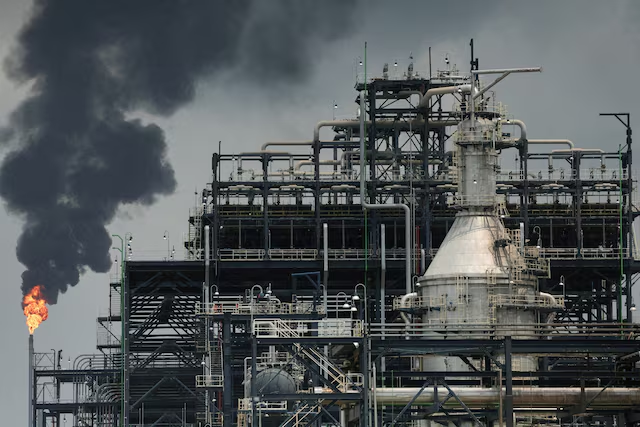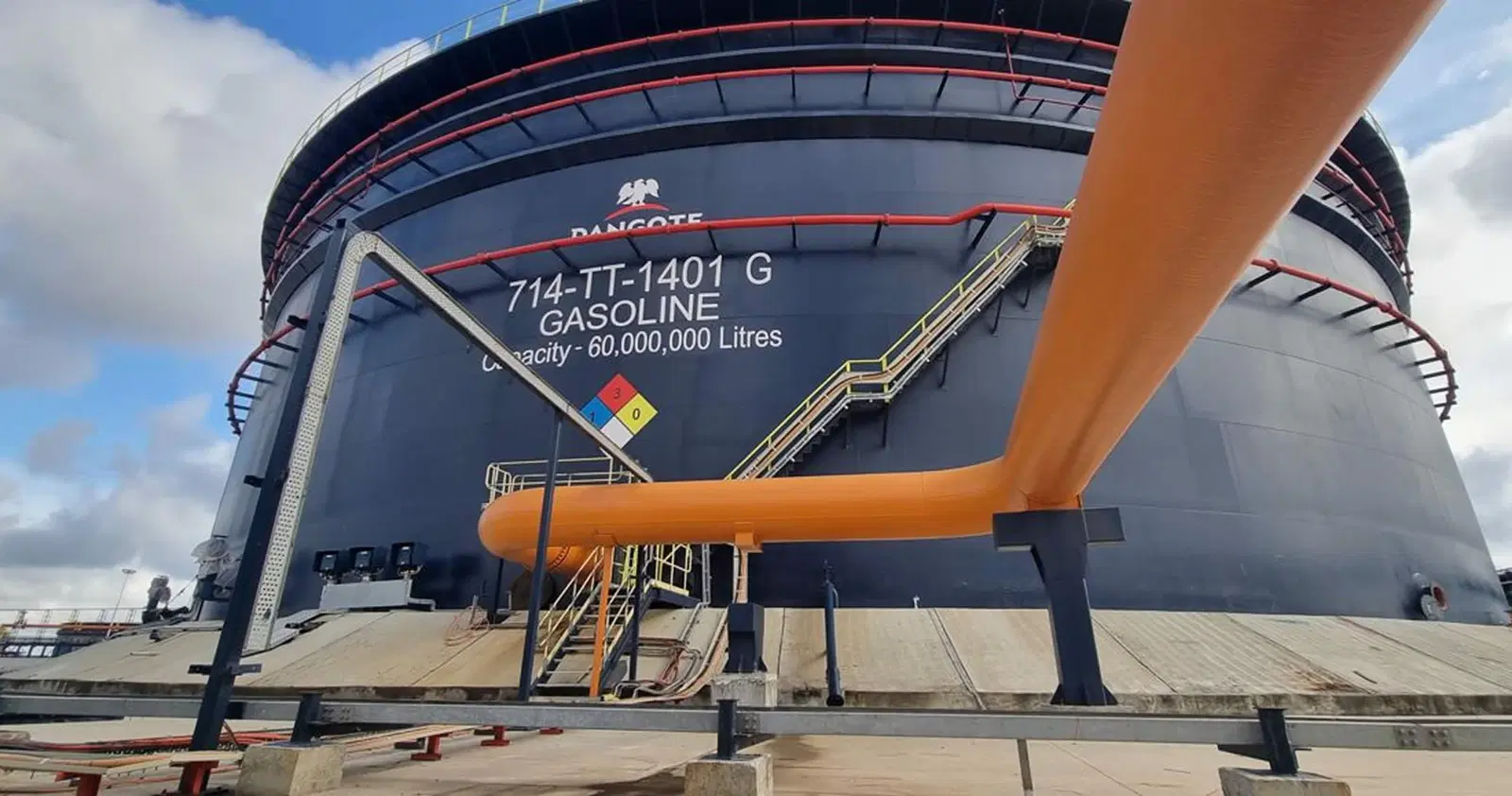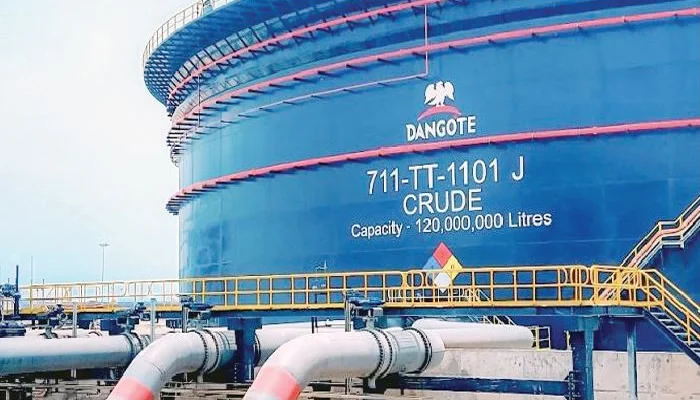
The Dangote Petroleum Refinery has restored naira petrol sales to prevent scarcity and further price increases, accusing importers of deliberately withholding available supplies.
According to The Punch, a refinery management official said the company reversed its brief dollar-denominated sales policy after noticing that importers were holding back stocks while waiting for petrol prices to rise.
The official, who requested anonymity because he was not authorised to speak publicly, clarified that the decision did not mean the refinery’s crude supply challenges had ended. Instead, the company acted to protect the domestic market from tighter supply and additional pressure on consumers.
“We took a decision in the interest of the country to start selling Premium Motor Spirit in naira, since we saw that the importers were holding back their goods, looking for a price rise,” the source said.
The refinery recently informed customers that petrol would again be available in naira. Its commercial department placed the gantry price at N1,215 per litre, while the coastal price stood at N1,602,495 per metric tonne.
The announcement reversed a short-lived policy that required customers to pay for petrol in United States dollars. That decision had created concern across the downstream petroleum industry and prompted the Federal Government to intervene.
Naira petrol sales return after marketers halt loading
Independent petroleum marketers had suspended loading from the Dangote refinery after it introduced dollar-denominated transactions. They said obtaining the foreign exchange needed to complete purchases was difficult and could increase operating costs.
The refinery had defended the dollar policy by pointing to inadequate crude supplies under the Federal Government’s naira-for-crude arrangement. It said the shortage forced it to buy additional crude oil from the international market using dollars.
However, the latest return to naira petrol sales has allowed marketers to resume purchases without sourcing foreign currency for every transaction. The change has also increased competition among depots supplying the local market.
The refinery official said discussions with the Federal Government were still ongoing over crude supply and other unresolved issues.
“We are still in talks with the government, but I hope that they will be sincere,” the official said.
The source also criticised what he described as a preference among some government officials for exporting crude oil and importing refined petroleum products.
“As you know, they like to sell the crude to the traders outside the country and import the petroleum products,” he said.
Depot prices fall after refinery announcement
The Dangote refinery’s return to naira sales has already affected wholesale petrol prices. Some depot owners had raised their gantry prices to as much as N1,275 per litre after the refinery temporarily stopped loading at its gantry.
However, several depots reviewed their prices after Dangote announced a gantry price of N1,215 per litre. Market data showed that depot prices ranged between N1,215 and N1,220 per litre on Sunday.
Retail petrol prices remained higher, with filling stations selling between N1,260 and N1,300 per litre depending on their locations and supply costs.
The recent increase followed renewed tensions in the Middle East, which pushed global crude oil prices higher. Oil traded above $100 per barrel on Thursday before closing at about $96 per barrel on Friday.
Attacks on commercial vessels in the Red Sea also raised concerns about supply disruptions along important global energy routes. Such disruptions often increase freight, insurance and import costs.
Refinery seeks stable domestic crude supply
Before the Dangote refinery began operations in 2024, Nigeria depended heavily on imported petrol despite being one of Africa’s major crude-producing countries.
The government-owned refineries in Port Harcourt, Warri and Kaduna had remained largely inactive, leaving private importers and the Nigerian National Petroleum Company Limited to meet domestic demand.
That period featured repeated fuel shortages, long queues and a subsidy system that placed significant pressure on public finances.
The commencement of operations at the Dangote refinery changed the structure of the downstream market by introducing a major domestic supplier. It also reduced the country’s dependence on imported refined products.
However, the refinery has repeatedly raised concerns about access to sufficient local crude oil. It has argued that stable supply under the naira-for-crude programme is necessary to maintain domestic production and pricing.
Higher global oil prices could increase Nigeria’s export earnings and government revenue. At the same time, they could raise the cost of imported petrol and worsen inflation if local production cannot meet demand.
The refinery’s decision to restore naira petrol sales may ease immediate supply concerns. However, the unresolved crude supply dispute remains central to the stability of Nigeria’s petroleum market.