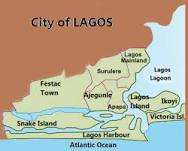
The Lagos State Government has arrested a total of 10,634 residents for various environmental and sanitation-related offences across the state.
Those apprehended include 5,715 individuals caught crossing highways illegally, 3,886 arrested for offences such as street trading, cart-pushing and environmental pollution, 102 for open defecation, while another 931 were detained for violations linked to waste management.
Commissioner for the Environment and Water Resources, Tokunbo Wahab, disclosed this on Thursday during the 2026 Ministerial Press Briefing commemorating the seventh anniversary of Governor Babajide Sanwo-Olu’s administration in the environmental sector. The event took place at the Bagauda Kaltho Press Centre.
Wahab reiterated the administration’s dedication to achieving a zero-waste economy through stronger partnerships, enhanced landfill management, recycling programmes and waste-to-energy initiatives. He also stressed the government’s determination to create a cleaner, healthier, flood-resilient and environmentally sustainable megacity.
According to the commissioner, the ministry recorded major achievements in environmental sanitation, waste management, drainage systems, climate governance, beautification projects, water supply, wastewater management and environmental enforcement during the review period.
He identified the reintroduction of the monthly statewide environmental sanitation exercise as one of the administration’s major milestones, saying the initiative was aimed at reviving environmental awareness and encouraging greater community participation in sanitation efforts throughout Lagos State.
“The exercise recorded massive participation from residents, local governments, private organisations and state officials, demonstrating renewed public commitment to environmental cleanliness,” he said.
Wahab explained that enforcement activities were intensified through agencies under the ministry, resulting in the arrest and prosecution of environmental offenders, removal of illegal traders and squatters, as well as the issuance of environmental abatement notices across the state.
The commissioner further revealed that the ministry inaugurated the Ikosi Waste-to-Energy Biodigester Plant situated within the Ketu Fruit Market. He said the facility transforms organic waste into electricity, cooking gas and agricultural fertiliser.
“The plant processes 0.5 tonnes of organic waste per day and generates 30kWH of electricity daily for lighting and cold storage, delivering an estimated annual emission savings of 9,000tCO2e,” he said.
On waste management operations, Wahab noted that the government had enhanced landfill efficiency and improved waste truck turnaround time. He disclosed that the licences of five poorly performing Private Sector Participant (PSP) operators were revoked after a performance assessment exercise.
He added that healthcare waste management had also been strengthened with the deployment of 35 additional PSP operators to medical facilities across the state’s three senatorial districts. According to him, 3,920 health facilities have so far been registered, with monthly treatment of medical waste ranging between 80,000kg and 105,000kg.
The commissioner stated that the state sustained its enforcement of the ban on Styrofoam and single-use plastics, noting that 137,530.94kg of PET plastics had been removed from the environment within the past year, while recycling and resource recovery efforts were significantly expanded.
Wahab also highlighted progress in climate governance, air quality control and environmental sustainability, adding that Lagos maintained its ranking as Nigeria’s leading state in climate governance for the second consecutive year.
He said, “The ministry continued its tradition of tree planting, recording 16,966 planted trees across the five divisions of the state, while new recreational parks were created and existing ones renovated.”
Addressing flood control measures, the commissioner said drainage infrastructure and flood management remained key priorities for the administration. He explained that extensive dredging, drainage maintenance and channel construction projects were carried out in several parts of the state.
“The ministry maintained and cleaned 18 primary channels covering 76 kilometres and secondary channels spanning 178 kilometres, while also removing illegal structures obstructing drainage alignments,” he said.
Wahab further disclosed that operatives of the Emergency Flood Abatement Gang intervened in flood-prone locations and black spots covering about 210 kilometres across Lagos, as part of efforts to reduce flooding and improve stormwater management in vulnerable communities.
In the water resources sector, the commissioner announced the commissioning of the rehabilitated one million gallons-per-day Akilo Mini Waterworks. He added that work was progressing steadily on the Adiyan Phase II Water Treatment Plant project and the expansion of potable water infrastructure across the state.