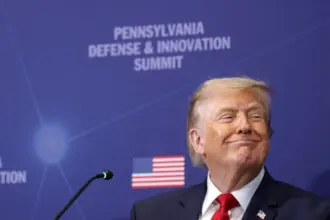



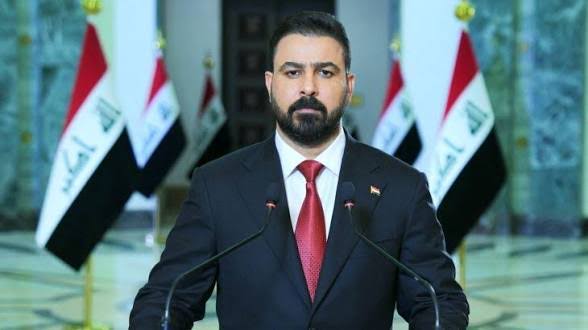
Iraqi Prime Minister Ali al-Zaidi will meet United States President Donald Trump in Washington on Tuesday. This meeting comes as the US government increases pressure on Baghdad to reduce Iranian influence.
According to AFP, Zaidi arrived in Washington on Monday for his first international trip since taking office. During the week-long visit, he will also meet senior US officials and representatives of major oil companies.
The visit comes as renewed fighting between the United States and Iran places Iraq in a difficult diplomatic position.
Washington and Tehran have long competed for influence in Iraq, forcing successive governments to balance relations with both countries.
Zaidi promises state control of weapons
Zaidi, a businessman who took office this year with US support, has promised to revive Iraq’s economy. He also pledged to disarm armed groups linked to Iran.
In an opinion article published by The Washington Post before his visit, Zaidi said his administration remained committed to ensuring that the Iraqi state held exclusive authority over the use of force.
His government has ordered armed groups that Washington classifies as terrorist organisations to surrender their weapons by September 30.
The deadline coincides with the planned end of the US-led coalition’s mission against jihadist groups in Iraq.
However, a senior Iraqi politician told AFP that closer cooperation with Washington would not mean Baghdad had turned against Tehran.
The official said Iraq must continue balancing its relationships with both allies.
That challenge became more visible last week. Iraq’s holy cities hosted a large funeral procession for Iran’s late supreme leader, Ali Khamenei, who died in a US-Israeli strike on Tehran.
Iran-backed groups resist disarmament
Zaidi’s government believes that ending the influence of non-state armed groups will improve security and encourage foreign investment.
He told the United States that Iraq wanted to distance itself from regional conflicts and focus instead on economic development.
In response, Washington recently resumed cash shipments linked to Iraq’s oil earnings. The Federal Reserve Bank of New York has managed these funds since 2003.
The US government had suspended the payments earlier this year while pressuring Baghdad to disarm Iran-backed groups.
Although some armed factions have expressed a willingness to cooperate, others have rejected the government’s demand.
Over the years, Iran-backed groups have gained considerable political, military and financial influence in Iraq. They have also repeatedly demanded the withdrawal of American troops serving under the anti-jihadist coalition.
During the Middle East conflict, the groups launched more than 600 attacks against US facilities in Iraq in support of Tehran.
An Iraqi political figure said some groups would probably retain their weapons while the regional conflict continued.
Last week, the Islamic Resistance in Iraq, an alliance of Iran-backed factions, opposed Zaidi’s journey to Washington.
The alliance said its members would strengthen their capabilities. Furthermore, it warned against replacing military occupation with what it called economic occupation.
Iraq seeks US investment
Besides security talks, Zaidi will use the visit to attract American investment into Iraq’s energy and infrastructure sectors.
Despite its vast oil wealth, Iraq continues to struggle with poor infrastructure, weak public services, corruption and economic mismanagement.
Zaidi said he wanted his Washington engagements to create measurable economic benefits. He also hopes to encourage leading American companies to invest in Iraq.
In recent months, Baghdad has signed several agreements with US companies in the oil and gas industry.
During the visit, officials expect Zaidi to sign additional deals. These include an arrangement that would allow Iraq to deposit 500,000 barrels of oil daily into a special fund. In exchange, Iraq would receive support to improve electricity generation.
However, the continuing US-Iran conflict also threatens Iraq’s economy.
Oil accounts for about 90 per cent of the country’s government revenue. Most Iraqi crude exports pass through the Strait of Hormuz.
Any prolonged disruption to the waterway could therefore weaken Iraq’s finances. It could also complicate Zaidi’s plans to attract investment and rebuild the country.