

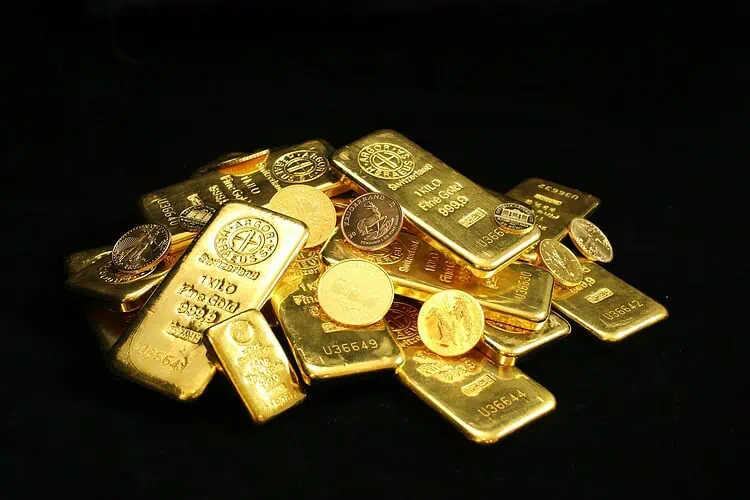
Gold prices climbed 2% on Monday, rising above $4,300 per ounce and marking a third straight session of gains.
The rally came after the United States and Iran reached a peace agreement, a development expected to lead to the reopening of the Strait of Hormuz and reduce tensions in global energy markets.
The precious metal found support as oil prices tumbled to their lowest level in two months following news of the agreement.
The decline in crude prices eased fears that rising energy costs could fuel inflation and prompt major central banks to keep monetary policy restrictive for longer.
On Sunday, US President Donald Trump announced that a deal with Iran had been concluded and revealed plans to authorize the reopening of the Strait of Hormuz, along with the removal of a US naval blockade.
“The Deal with the Islamic Republic of Iran is now complete. Congratulations to all!,” Trump said in a post on his Truth Social platform.
The Strait of Hormuz, regarded as one of the world’s most critical energy shipping corridors, is expected to resume normal operations under the agreement. Its reopening is anticipated to ease supply concerns that intensified during the conflict and contributed to significant volatility across commodity markets.
While lower oil prices improved investor confidence and helped temper inflation expectations, gold continued to attract buyers seeking safe-haven assets amid lingering uncertainty over how the agreement will be implemented.
Attention is also turning to the US Federal Reserve’s policy meeting scheduled for this week, the first to be held under new Chair Kevin Warsh. Financial markets broadly expect the central bank to keep interest rates unchanged.
As a non-yielding asset, gold is particularly sensitive to interest rate expectations. Stable or lower borrowing costs tend to enhance the appeal of bullion by reducing the opportunity cost of holding the metal.
Investors are also monitoring decisions from other major central banks. The Reserve Bank of Australia is expected to maintain its current policy settings, while the Bank of Japan is widely anticipated to raise interest rates as part of efforts to strengthen the yen.
Market participants will be watching central bank signals, movements in energy prices, and further developments surrounding the US-Iran agreement for clues on the next direction of the precious metals market.


