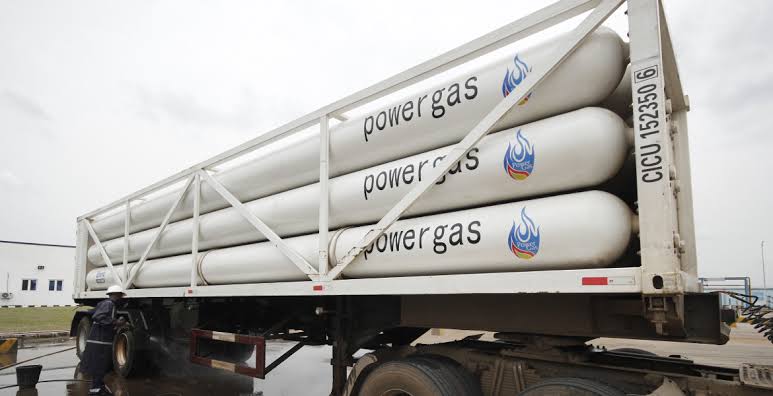
The Federal Government is expected to take delivery of the first batch of 500 Compressed Natural Gas stations by the end of October as part of its ongoing efforts to expand CNG infrastructure and provide wider access to cheaper transportation fuel across Nigeria.
Executive Chairman of the Presidential Compressed Natural Gas Initiative, Ismael Ahmed, disclosed this in an interview with Sunday PUNCH on Saturday, explaining that the government plans to procure an additional 500 stations after the first batch, bringing the total number of stations being acquired to 1,000.
The latest development follows President Bola Tinubu’s directive in August for the deployment of another 500 CNG refuelling stations across the country. The additional facilities are expected to complement the 500 stations earlier ordered by the Midstream and Downstream Gas Infrastructure Fund. Tinubu had said the expansion was intended to enable more Nigerians to benefit from reduced transportation costs, particularly for intra-state journeys.
Ahmed said the initial batch of 500 stations had already been ordered, but explained that their deployment would require several stages, including construction, transportation, installation and connection to the necessary infrastructure.
“There were already 500 stations that were ordered early, and in October the first batch would come in. In his (Tinubu’s) commitment to the governors, he said he would order another 500 added to the other 500 already, making it 1,000 in total.”
The PCNGI chairman noted that the stations could not be deployed immediately after procurement because of the technical and logistical processes required to establish them.
“Filling stations are not something you order today and get it tomorrow. It has to be built, it has to be brought in, and it has to be installed and connected. The process has begun. The first batch will be at the end of October.”
He said the government would determine where to deploy the facilities based largely on demand, adding that a nationwide assessment was underway to identify locations where additional CNG stations were most needed.
“Wherever there is demand, we will take it. For now, the stations are coming in, and we are profiling the whole country. We already have many stations all across the country, but there are places where there is more demand than others, so it is where the demand is that is where we will push it.”
Ahmed stressed that the distribution of the stations would be guided by economic factors rather than political considerations. He said variables such as vehicle concentration and traffic levels would be considered when deciding where to establish the facilities.
“It is not a political decision; it is an economic decision. So you can’t just say, ‘Go and put it in this village when there are no cars there.’ So you have to check the traffic, the cars; these are things to be taken into consideration.”
According to the PCNGI boss, the government’s ongoing assessment covers several parts of the country as it works to determine where additional infrastructure should be located.
“We are looking all over the country. Lagos, Kano, Abuja, Portharcourt, Zamfara, Borno, Enugu, Anambra, Lafia.”
Ahmed also revealed that Abuja currently has 26 operational gas stations, making the Federal Capital Territory the location with the highest number of operational CNG stations at present. He added that major industry operators, including NNPC and Nipco, account for several of the facilities.
“There are 26 operational gas stations in Abuja. It is the highest in terms of gas stations. NNPC alone has about four, Nipco has about three.”
However, he identified access to suitable land as one of the major obstacles limiting the establishment of more CNG stations in Abuja. According to him, although there is significant interest from prospective operators, finding land suitable for the facilities remains a challenge.
“The problem with Abuja is the land that will accommodate the station. So many people are interested in opening gas stations, but getting the land is a problem.”
The PCNGI chairman maintained that gas was available in different parts of the country, but said the government needed to increase the number of dispensing stations to make CNG more accessible to motorists.
“Everywhere there is gas, but we need more stations, and we are working on it.”
The Federal Government has continued to promote CNG as part of its broader strategy to increase domestic gas utilisation and provide an alternative to petrol-powered transportation.
Tinubu had earlier said the government was investing in vehicle conversion centres and CNG refuelling infrastructure as part of measures to expand the adoption of the fuel and ease transportation costs. According to the President, vehicles operating on CNG could spend between 60 and 80 per cent less on fuel than petrol-powered vehicles, with the government targeting reductions in transport fares from October 1.
In May, Tinubu commissioned four CNG infrastructure projects in Lagos, Abuja and Owerri. The projects included a high-capacity CNG daughter booster station in Jahi, Abuja, as the Federal Government intensified efforts to expand domestic gas utilisation and provide motorists with alternatives to petrol.
The State House said the CNG programme was also intended to lower transportation expenses and support Nigeria’s transition towards cleaner fuel sources.