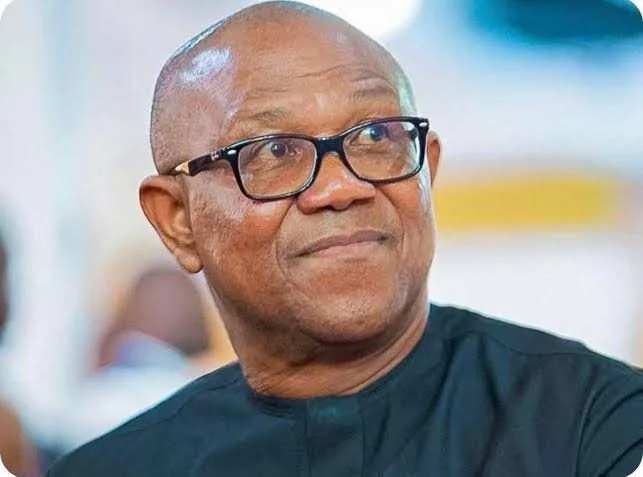
Former Minister of Education, Oby Ezekwesili, has again declared her support for former Anambra State Governor, Peter Obi, ahead of the 2027 presidential election, citing his character, competence and capacity as the basis for her position.
Ezekwesili made this known during an interview with ARISE NEWS on Monday, where she spoke on Nigeria’s political trajectory, democratic development and the urgent need to reform the country’s institutions.
According to the former minister, her backing of Obi is not influenced by ethnicity, religion or other primordial sentiments, but by the leadership standards she believes Nigerians should apply when choosing their representatives.
She recalled supporting Obi in the 2023 presidential election after evaluating the major contenders according to their capacity to deliver effective leadership.
“In 2023, I made it very clear that, using the criteria on which I see leadership either fail or succeed to govern well… the other two candidates score considerably lower than what you would assign to former Governor Obi, and so I was going to stand with Governor Obi,” she said.
Ezekwesili maintained that her evaluation of the former Anambra governor has not undergone any significant change since the last presidential election.
“I don’t think that anything has really significantly changed,” she said.
However, she warned against reducing the 2027 political conversation to Obi or any other individual, stressing that Nigeria’s problems require a wider focus on political and institutional transformation.
“Don’t make this about Peter Obi. I don’t want us to personalise. I’m interested in the construct,” she said.
The former minister urged Nigerians to scrutinise aspirants for elective positions across the country based on their character, competence and capacity, rather than relying on ethnicity, religion or other narrow considerations.
She further advocated the emergence of more credible Nigerians possessing these qualities to seek legislative and executive positions at the local, state and federal levels.
Ezekwesili said Nigeria’s persistent challenges would not be adequately addressed merely by replacing one set of political leaders with another during elections.
She argued that the country must undertake fundamental reforms of its political and institutional structures, strengthen the social contract between government and citizens, and cultivate common national values that can foster accountability and responsible governance.
The former minister also called on Nigerians to reject the notion that the country’s decline is predetermined, describing the current situation as the consequence of a national system that can and should be changed.
“The greatest tragedy of the country is this resignation—that this is our destiny. I say no, this is by design. This design needs to be challenged,” she said.