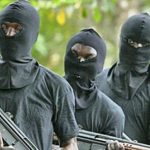






Jalisco New Generation Cartel, widely regarded as Mexico’s most powerful criminal group, has suffered a major setback after the Mexican military arrested one of its senior figures in the country’s northwest.
The development comes two months after the cartel’s leader was killed.
Authorities confirmed that Audias Flores Silva, also known as “El Jardinero,” or The Gardener, was taken into custody. He had been considered a potential successor within the cartel’s hierarchy, with the United States offering a $5 million reward for information leading to his capture.
Mexican officials said the CJNG regional commander was apprehended while hiding in a roadside ditch near El Mirador, a community in Nayarit state. The operation was carried out without casualties, according to government sources.
Flores Silva had been viewed as a likely successor to Nemesio Oseguera Cervantes, known as “El Mencho,” who was killed during a high-profile military operation in February. His death triggered a surge in cartel-related violence, including coordinated attacks on businesses, vehicle burnings and road blockades that resulted in more than 70 deaths, among them 25 National Guard personnel.
Despite the spike in violence, the killing of Oseguera Cervantes was seen as a significant achievement for the administration of Claudia Sheinbaum, which has adopted a tougher stance on organized crime amid pressure from Donald Trump, who has raised the possibility of U.S. intervention.
Last year, the U.S. government under Trump formally designated CJNG and five other Mexican cartels as foreign terrorist organizations.
The arrest of Flores Silva represents another blow to a criminal network that has rapidly expanded its influence across the region. Mexican security officials say he previously served as head of security for Oseguera Cervantes and played a central role in coordinating drug production and trafficking activities across several states, including Nayarit, Jalisco, Mexico State and Zacatecas.
Local media in Nayarit reported incidents of vehicles and businesses being set ablaze in the aftermath of his detention.
The arrest drew praise from U.S. Ambassador to Mexico Ronald Johnson, who described it as a meaningful step in efforts to curb fentanyl trafficking.
“Actions like this strengthen security and help dismantle criminal networks that threaten our communities. Together, we achieve results that make our nations safer,” he added.
Flores Silva’s criminal history dates back to his youth, when he was arrested in the United States and served a five-year sentence for drug trafficking before returning to Mexico. In 2016, he was again detained by Mexican authorities for his alleged involvement in an ambush against police in Jalisco, but was released three years later.
Since 2021, U.S. authorities have sought his extradition to face charges related to drug conspiracy and illegal firearms possession.
Security analyst David Saucedo described the arrest as a “significant blow” to the CJNG leadership, which has been restructuring following the death of its founder on February 22. However, he cautioned that criminal organisations often adapt quickly.
Saucedo told The Associated Press, however, that criminal groups “can quickly reinvent themselves despite the arrest of their leaders,” and that even when they suffer major blows, “they can continue” their criminal activities.
The Drug Enforcement Administration has reported CJNG’s presence in 21 of Mexico’s 32 states, surpassing the reach of the Sinaloa Cartel, which operates in 19 states. Some analysts estimate the CJNG’s footprint extends to as many as 25 states, with a strong base in Jalisco, and operations spanning roughly 100 countries, including the United States.