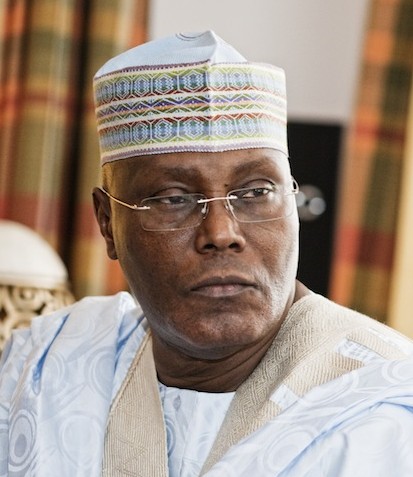
Former Vice President Atiku Abubakar has criticised the Federal Government’s plan to raise a N4 trillion bond to settle outstanding liabilities in the power sector, describing the move as a sign of “fiscal recklessness and brazen contempt for public accountability.”
In a statement issued on Sunday through his Senior Special Assistant on Public Communication, Phrank Shaibu, Atiku expressed concern over what he described as persistent borrowing and a lack of transparency under the administration of President Bola Tinubu.
President Tinubu had announced during his Democracy Day address on Friday that the Presidential Power Sector Task Force had been granted approval to raise N4 trillion through a bond programme aimed at clearing verified legacy debts within the electricity sector.
Reacting to the development, Atiku argued that no government operating in good faith would continue to seek fresh funding for the same challenge while allegedly failing to provide an account of how earlier interventions were utilised.
According to him, “The facts are as disturbing as they are damning. On December 20, 2025, the Federal Government announced the issuance of a ₦590 billion power sector bond to clear debts owed to generation companies and gas suppliers. Nigerians were told that the intervention would address the liquidity crisis in the sector and restore confidence in the electricity market.
” Barely a month later, the government announced that a ₦501 billion bond issued under the same programme had recorded full subscription and would be deployed to settle verified obligations. Then, in April 2026, President Bola Ahmed Tinubu approved yet another ₦3.3 trillion plan to clear power sector debts. On each occasion, government officials spoke triumphantly, projecting the image of an administration that had finally found solutions to the sector’s perennial problems.”
The former Vice President, who is also the African Democratic Congress (ADC) 2027 presidential candidate, further stated that “yet, in a stunning contradiction of those claims, the Association of Power Generation Companies has publicly disclosed that the debts remain largely unpaid.
“What makes this development even more troubling is that President Bola Ahmed Tinubu, in his June 12 Democracy Day address, publicly touted a fresh debt-clearing initiative for the power sector as evidence of his administration’s commitment to reform.
” Yet, before the applause from that announcement could die down, Nigerians were confronted by the uncomfortable reality that previous debt-clearing bonds remain shrouded in unanswered questions. Democracy is not sustained by grand declarations; it is sustained by accountability.
” A government cannot celebrate a new solution while refusing to explain the fate of the old one. The irony is striking: on a day set aside to honour democratic accountability, Nigerians were presented with yet another borrowing proposal for the same problem that previous borrowings supposedly addressed.”
Atiku also accused the Tinubu administration of failing to clarify what became of earlier funds raised to offset debts in the power sector, while noting that Nigerians continue to bear the burden of an underperforming electricity industry.
“What makes this scandal particularly alarming is the emerging pattern. The government announces a crisis. It raises debt in the name of solving the crisis. It celebrates the intervention. It refuses to provide a detailed account of how the funds were utilised. The problem remains.
“Then another borrowing programme is unveiled to solve the same problem all over again. That is not reform. That is not economic management. That is not governance. It is a revolving door of debt and opacity that would trigger investigations in any serious country.
“The tragedy is that while government officials move from one announcement to another, ordinary Nigerians continue to suffer the consequences of a dysfunctional power sector.
‘Businesses are collapsing under crushing energy costs. Manufacturers are struggling to remain competitive. Families spend a significant portion of their income on alternative power sources. Darkness remains a permanent feature of daily life. Yet, despite trillions committed to interventions, the only thing that appears to grow consistently is the size of the debt and the frequency of borrowing,” he stated.