


Federal Capital Territory Minister Nyesom Wike has ordered the demolition of houses and other structures built on designated waterways in Abuja. He gave this order following recent flooding in parts of the capital. This action stems from the Abuja flood inspection conducted by the minister.
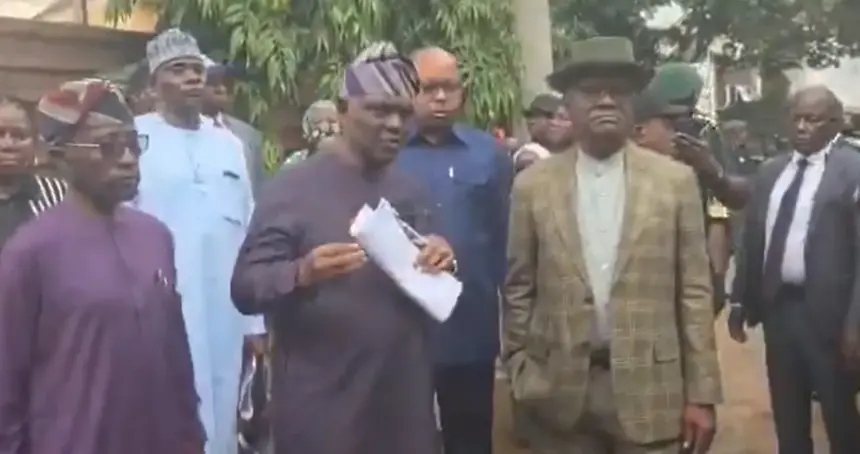
According to The Punch, Wike issued the directive on Tuesday during a press briefing after inspecting flood-affected areas. The Abuja flood inspection revealed that some structures had blocked channels designated for water flow under the Abuja Master Plan.
Wike orders immediate demolition
The minister said his inspection revealed that some property owners had developed areas intended to serve as water channels. As a result, he warned that the FCT Administration would no longer tolerate such violations.
“Unfortunately, we have gone there, and we have seen how people have blocked channels where in the master plan, that is the right way where a channel is supposed to be,” Wike said.
He said the recent flooding had drawn the administration’s attention to the consequences of allowing buildings to remain on waterways. Importantly, the Abuja flood inspection demonstrated the impact of these unauthorised constructions.
“Now you have done your own by blocking the water channel, and nothing has happened. Thank God the flood has come; it has drawn our attention to the place. Now, something will happen. I am going to bring those houses down. Any house that falls on the water channel will go down,” he said.
Wike gave the FCT Development Control Department until Saturday to identify and act against affected structures.
Senators, prominent owners won’t be spared
Wike said the exercise would go ahead regardless of the political or social status of property owners. Furthermore, he revealed that some of the affected buildings belonged to senators and other prominent Nigerians.
“Some of them are Senators, some of them are big men,” he said.
The minister dismissed concerns that the exercise could become politically controversial. Nevertheless, he insisted that the administration would enforce development regulations without favour. As seen during the Abuja flood inspection, enforcement is considered essential.
“All those houses will go down. Heaven will not fall; rather, heaven will fall if that peace, that right thing, has not been done,” Wike said.
Flood inspection exposes blocked channels
Wike’s directive followed his inspection of areas affected by flooding in Maitama. There, officials discovered a structure erected on a designated drainage area despite the plot having been revoked in 2011.
His Senior Special Assistant on Public Communications and Social Media, Lere Olayinka, said the land had previously been allocated. However, it was later revoked because it was required as a drainage channel.
“The spot here is a Drainage Area. It was allocated, but REVOKED in 2011. Structure was built on it,” Olayinka said.
The inspection followed heavy rainfall that flooded several parts of Abuja. This flooding disrupted movement and left residents concerned about the city’s drainage infrastructure.
FCTA moves against flooding
The FCT Administration has said it is taking measures to reduce the risk of future flooding. These measures include reviewing drainage systems and addressing structures obstructing waterways.
Wike also acknowledged that human activities, including construction on water channels, blocked drainage systems and indiscriminate dumping of refuse, had worsened the impact of flooding.
The minister directed relevant agencies to begin desilting identified drainage systems and urged residents to stop dumping waste into waterways.
He maintained that the administration had the political will to enforce the Abuja Master Plan. Moreover, he said it would continue taking action against developments that threaten public safety.