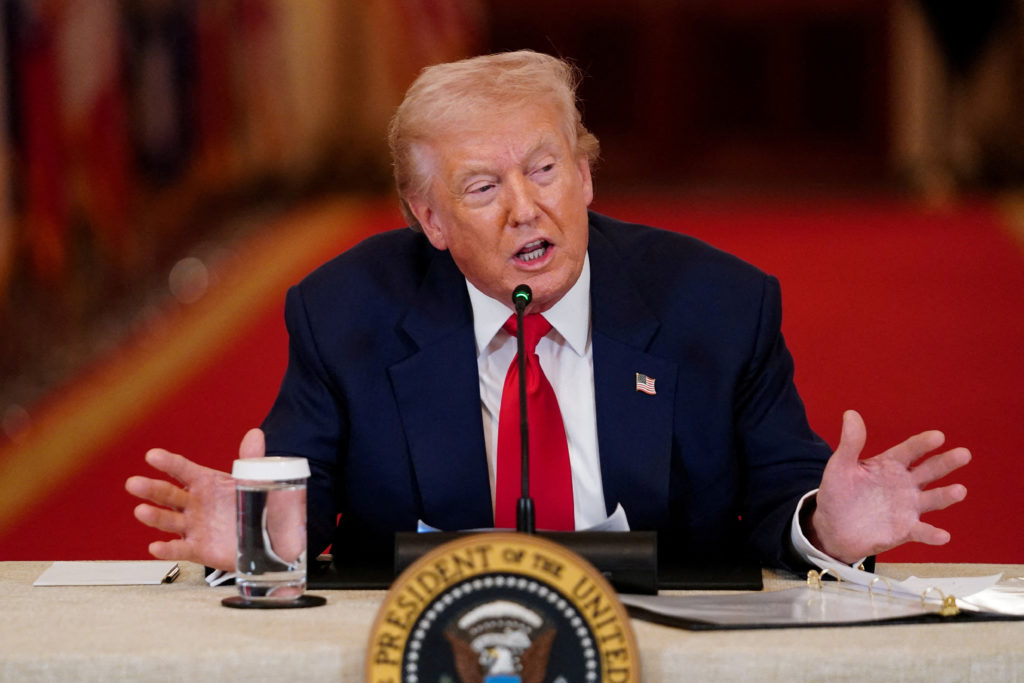
United States President Donald Trump has unveiled fresh tariff proposals targeting 14 major trading partners, including China, the European Union, Japan and South Korea, as his administration intensifies efforts to reshape international trade.
The proposed import duties, announced on Wednesday, November 25, 2026, could reach 40 per cent on certain Chinese goods if existing trade arrangements expire, while Vietnam faces potential tariffs of up to 35 per cent.
According to BBC News, the measures follow months of investigations into foreign trade practices after the US Supreme Court struck down Trump’s previous sweeping tariffs imposed under emergency presidential powers.
The latest proposals will not take effect immediately, as they remain subject to public consultations and regulatory hearings scheduled for early 2027.
China faces highest potential tariff
The Office of the United States Trade Representative announced that the proposed measures would affect China, the European Union, Singapore, Switzerland, Indonesia, Malaysia, Cambodia, Thailand, South Korea, Vietnam, Taiwan, Bangladesh, Japan and India.
China could face a tariff rate of up to 40 per cent if the current trade truce expires without an agreement, although existing arrangements are expected to limit the new rate to 20 per cent.
Vietnam faces a potential 35 per cent tariff, which could be reduced to 20 per cent if it reaches a trade agreement with Washington.
India faces proposed duties of up to 25 per cent, while several other trading partners could face rates of between 15 and 20 per cent under existing agreements.
The actual charges will depend on the products involved, exemptions and trade arrangements already negotiated with Washington.
US defends new trade restrictions
US Trade Representative Jamieson Greer defended the proposals, accusing several countries of adopting industrial policies that undermine American manufacturers.
Greer argued that foreign governments had used state subsidies, labour policies and other measures to give their industries an unfair advantage over American businesses.
He said the new measures would “level the playing field for American workers and chart a new, more sustainable course for the world economy.”
The administration maintained that the proposed tariffs would encourage domestic production, protect American jobs and reduce the country’s trade deficit.
Trump has repeatedly defended tariffs as an important instrument for strengthening the US manufacturing sector.
New tariffs follow Supreme Court ruling
The latest measures come after the US Supreme Court invalidated Trump’s earlier tariffs, introduced under emergency economic powers.
Unlike the previous duties, the administration is relying on Section 301 of the Trade Act of 1974, which permits trade action against foreign practices considered harmful to US commerce.
The US Trade Representative began investigating the industrial policies of several economies in March 2026.
The latest proposals follow those investigations, with the administration arguing that excessive industrial production and government support abroad have weakened American manufacturing.
The proposals are open for public comments, with hearings scheduled to begin on January 25, 2027.
China, EU reject US tariff proposals
Several affected trading partners have criticised the announcement.
China’s Foreign Ministry spokesperson, Guo Jiakun, rejected Washington’s claims about excessive Chinese production, describing the allegations as politically motivated.
The European Commission also questioned the proposals, insisting that tariffs on European goods should remain within the previously agreed 15 per cent limit.
Vietnamese Deputy Prime Minister Bui Thanh Son said the proposed duties did not reflect the existing economic relationship between Vietnam and the United States.
Japan described the measures as regrettable, while Singapore said it disagreed with Washington’s assessment of its trade practices.
South Korea, meanwhile, expressed optimism that its existing trade agreement would prevent additional charges beyond the agreed rate.
Brazil faces separate tariff threat
In a separate development, the Trump administration proposed a 10 per cent tariff on finished aircraft imported from Brazil.
Washington also proposed additional duties on certain Brazilian sugar imports, citing alleged unfair trade practices.
The Brazilian government rejected the move, arguing that the measures were intended to pressure the country into changing its domestic regulations.
Economists warn of potential price increases
Despite the administration’s arguments, economists have warned that additional tariffs could increase costs for American businesses and consumers.
Import tariffs are paid by companies bringing goods into the United States, although businesses may transfer some of the additional costs to customers through higher prices.
Stephen Brown, chief North America economist at Capital Economics, said the latest announcement was less alarming than the headline tariff rates suggested.
He explained that many of the proposed duties would effectively replace earlier measures rather than create entirely new charges on all imports.
However, he cautioned that the measures could still contribute to higher consumer prices.
The announcement comes amid continuing trade tensions between Washington and Beijing, with their existing tariff truce scheduled to expire on January 10, 2027.
The two countries remain engaged in negotiations over trade restrictions, technology exports and access to critical minerals.