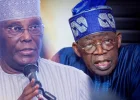
A lawyer representing the African Democratic Congress, Kalu Kalu, has dismissed suggestions that the Federal High Court judgment setting aside the leadership of the party under Senator David Mark has affected the presidential candidacy of former Vice-President Atiku Abubakar ahead of the January 16, 2027 election.
Kalu explained that the ruling delivered by Justice Peter Lifu did not contain any directive invalidating Atiku’s nomination or those of other candidates selected under the Mark-led leadership.
He argued that interpretations suggesting otherwise were based on assumptions rather than the specific decisions contained in the court’s orders.
Speaking during an interview on Channels Television on Thursday, the lawyer addressed growing concerns about the possible consequences of the judgment for the ADC’s participation in the 2027 general elections. He maintained that the ruling did not provide any legal basis for declaring Atiku’s candidacy invalid.
“There is no portion of that judgment that voids the candidacy of Atiku Abubakar and the other candidates of the party,” he said.
Reiterating his position, Kalu stressed that the court did not issue any specific order withdrawing or nullifying Atiku’s emergence as the ADC’s presidential candidate. He maintained that the judgment should be interpreted strictly within the limits of the orders issued by the presiding judge.
“The judgment of Honourable Justice Peter O. Lifu does not in any way void the candidacy of Atiku Abubakar for the presidential election coming up on the 16th day of January 2027,” he added.
The ADC lawyer also attributed the controversy surrounding the judgment to what he described as misleading interpretations being circulated across social media platforms. He accused commentators of reading conclusions into the ruling that were not expressly stated by the court, insisting that such interpretations had contributed to public uncertainty over the party’s electoral prospects.
“It’s just people, the social media we have in Nigeria, just imported what is not explicitly stated in that judgment,” he added.