




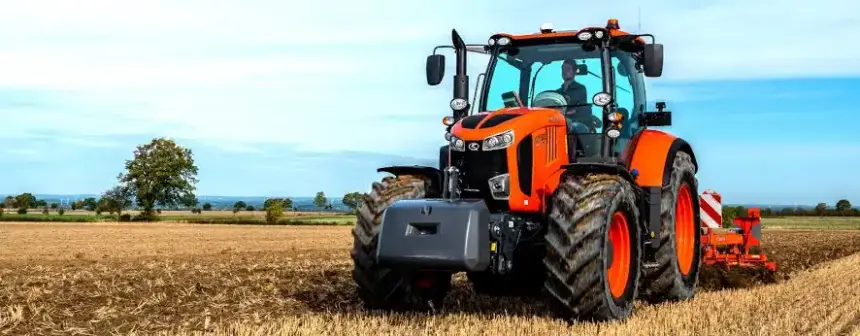
Kaduna State Governor, Uba Sani, has commenced the distribution of 500 truckloads of free fertiliser and tractors to 150,000 smallholder farmers across the 23 local government areas of the state, reaffirming his administration’s commitment to boosting agricultural productivity and improving the livelihoods of rural farmers.
The initiative is the third consecutive annual fertiliser support programme by the Kaduna State Government. In 2025, the administration provided 400 truckloads of fertiliser to 100,000 farmers, while the 2024 dry-season farming programme saw the distribution of more than 500 truckloads of fertiliser alongside other agricultural inputs.
Speaking at the flag-off ceremony held on Saturday at Murtala Mohammed Square, Governor Sani described the intervention as one of the largest fertiliser distribution programmes undertaken by any state government in Nigeria. He explained that the scheme was designed to ease the burden of rising farming costs and sustain food production across the state.
The governor disclosed that although he had been advised to sell each bag of fertiliser at a subsidised rate of ₦20,000 after purchasing it for ₦56,000, his administration decided to distribute the fertiliser free of charge because many smallholder farmers would still have struggled to afford the subsidised price.
He further noted that selling the fertiliser, even at a discounted rate, could have enabled large-scale farmers and middlemen to purchase large quantities and resell them at higher prices, undermining the purpose of the intervention.
Governor Sani stated that agriculture contributes about 43 per cent to Kaduna State’s Gross Domestic Product and provides employment for between 60 and 80 per cent of the state’s active workforce. He added that improved security had allowed thousands of displaced farmers to return to cultivation, with about 5,000 hectares of farmland reclaimed through collaboration between local communities and the Federal Government.
Highlighting the state’s agricultural strengths, the governor said Kaduna remains one of Nigeria’s leading producers of maize, tomatoes and ginger, stressing that the sector plays a critical role in ensuring food security, driving industrialisation, creating jobs and promoting rural development.
He recalled that when his administration assumed office in 2023, the agriculture sector received only ₦1.48 billion, representing about 0.4 per cent of the state budget. According to him, the allocation increased to ₦23.4 billion in 2024 and ₦74.02 billion in 2025, while the 2026 budget earmarks more than ₦100 billion for agriculture and food security.
Governor Sani said the allocation accounts for approximately 11.65 per cent of the state’s total expenditure, surpassing the 10 per cent benchmark for agricultural investment under the Malabo Declaration.
He attributed the achievements recorded in the sector to the support of the Federal Government under President Bola Ahmed Tinubu, noting that Kaduna State has continued to invest across the entire agricultural value chain.
According to the governor, the administration is expanding farmers’ access to improved seeds, mechanisation, irrigation, extension services, agricultural finance, insurance and market opportunities to improve productivity and increase incomes.
He also disclosed that the government has strengthened livestock development through investments in veterinary services, disease surveillance, vaccination campaigns, dairy and poultry production, feed improvement and pastoral infrastructure.
Governor Sani further revealed that over 100,000 farmers have been enrolled in agricultural insurance schemes to shield them against losses caused by floods, drought, pests and other natural disasters.
He added that the state government has improved rural road networks to link farming communities with aggregation centres, processing facilities and urban markets, thereby reducing post-harvest losses and improving market access.
The governor also announced that Kaduna State is implementing the Special Agro-Industrial Processing Zone in partnership with the Federal Government and the African Development Bank to enhance value addition. He added that plans are underway to establish the Africa Quality Assurance Centre to ensure agricultural products from the state meet international standards and remain competitive in regional and global markets.