




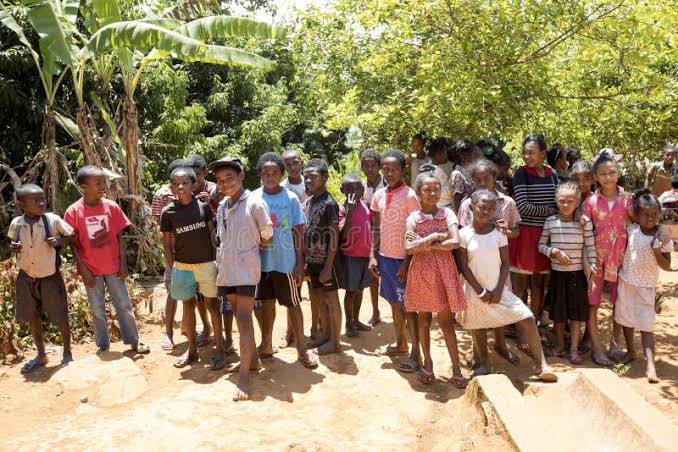
The Federal Government has unveiled plans to undertake a new nationwide assessment of out-of-school children in a bid to generate accurate and up-to-date data on the number of Nigerian children currently outside the formal education system.
The Minister of Education, Dr. Tunji Alausa, announced the initiative on Wednesday at the 2026 Annual Education Summit of the Education Correspondents Association of Nigeria in Abuja.
Alausa said the exercise would be carried out in collaboration with the National Bureau of Statistics (NBS) through an extensive household survey across the country.
He explained that the decision was informed by concerns that existing estimates on the number of out-of-school children may no longer accurately reflect the current reality.
According to the minister, the government is seeking credible and verifiable data to support effective policymaking and ensure that educational resources are directed to communities facing the greatest challenges.
He said the survey would identify the actual number of children out of school, where they are located and the factors preventing them from accessing formal education.
Alausa acknowledged that estimates of Nigeria’s out-of-school population have varied significantly over the years, with figures commonly placed between 15 million and 20 million. He stressed that the government intends to replace assumptions with evidence-based statistics in addressing the challenge.
The minister further disclosed that various government interventions had returned more than one million out-of-school children to classrooms over the past two years.
He, however, maintained that obtaining reliable data remains critical to accurately measuring progress and identifying areas that require immediate intervention.
Alausa said President Bola Tinubu’s administration remains committed to using credible data to drive decision-making across all sectors, including education. He added that accurate information would also empower citizens, stakeholders and the media to hold government officials accountable.
The minister urged education correspondents to adopt more investigative and in-depth reporting, noting that journalists should go beyond covering official events by monitoring policy implementation, exposing gaps and assessing the impact of government programmes using verifiable evidence.
He stated that responsible journalism supported by credible data could contribute significantly to improving educational outcomes and strengthening public trust in government initiatives.
Highlighting ongoing reforms in the education sector, Alausa said the Renewed Hope Agenda is driving investments in Technical and Vocational Education and Training (TVET), expanding Science, Technology, Engineering and Mathematics (STEM) education, advancing digital transformation, improving quality assurance, strengthening governance and widening access to education.
The minister also said the tertiary education sector has recorded improved stability, noting that universities, polytechnics and colleges of education have enjoyed three consecutive years without major disruptions to academic activities. He attributed the achievement to sustained dialogue between the government and education unions.
On global university rankings, Alausa disclosed that Nigeria now has 24 universities among the world’s top 1,000 institutions, up from 21 previously, adding that public universities currently occupy the country’s top four positions.
Also speaking at the summit, the Minister of State for Education, Prof. Suwaiba Ahmad, urged journalists to support ongoing education reforms through fair and balanced reporting.
She said, “Education is the foundation upon which we build a productive economy, strengthen democratic institutions, reduce poverty and promote social cohesion.”
The Executive Secretary of the Universal Basic Education Commission (UBEC), Dr. Aisha Garba, reaffirmed the commission’s commitment to ensuring that every Nigerian child has access to quality basic education, irrespective of location, background or economic status.
She stated, “The most important objective is that no child should be left behind. Regardless of background, location or income level, every child must have access to quality education.”
Chairman of the Nigeria Union of Journalists (NUJ), FCT Council, Grace Ike, called on stakeholders to strengthen efforts aimed at promoting accountability and increasing public awareness on issues affecting the education sector.