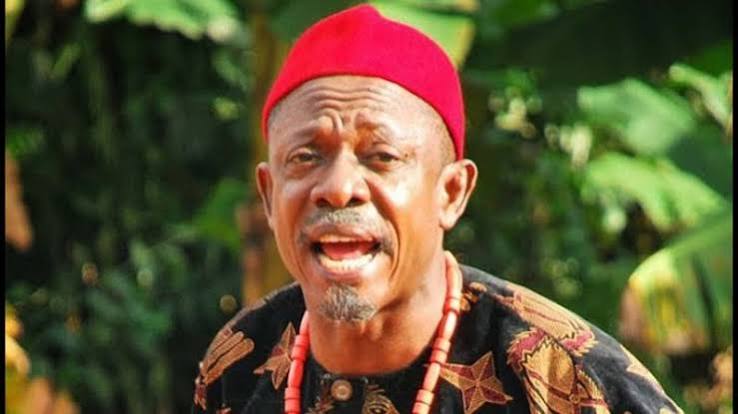
Veteran Nollywood actor Nkem Owoh, popularly known as Osuofia, has clarified his position on the origins of Nigeria’s film industry, maintaining that Yoruba filmmakers pioneered home-video productions but did not establish Nollywood.
The actor explained that Yoruba filmmakers were already producing and popularising films long before the name Nollywood emerged.
Owoh made the clarification during an appearance on Curiosity Made Me Ask, a YouTube interview programme hosted by comedian Adebayo Abidemi, popularly known as Isbae U.
His remarks, which were also shared on X by Instablog9ja, followed renewed discussions about the contributions of Yoruba and Igbo filmmakers to the development of the Nigerian movie industry.
Osuofia explains difference between Nollywood, home video
During the interview, the veteran actor dismissed suggestions that he had previously claimed Yoruba filmmakers founded Nollywood.
He explained that the Nigerian film industry existed before the name Nollywood became widely recognised.
“When we started the thing, there was no Nollywood as a name,” Owoh said.
According to him, the name emerged after discussions among filmmakers seeking a common identity for the growing industry.
The actor maintained that his earlier comments had been misunderstood, explaining that he was referring specifically to the pioneering contributions of Yoruba filmmakers to home-video productions.
“The Yoruba did not start Nollywood. They started Home video,” he clarified.
Osuofia praises Ogunde, Oga Bello
Owoh acknowledged the contributions of veteran Yoruba filmmakers, particularly the late Hubert Ogunde and Adebayo Salami, popularly known as Oga Bello.
He described them as influential figures whose productions contributed to the growth and popularity of indigenous Nigerian filmmaking.
The actor also recalled watching their productions, stressing that Yoruba entertainers had established a significant presence in theatre and filmmaking before the emergence of the modern Nollywood industry.
He rejected an attempt by the interviewer to suggest that Ogunde was Igbo, maintaining that the late filmmaker belonged to the Yoruba film tradition.
His remarks highlighted the contributions of early Nigerian entertainers whose stage performances and film productions laid the groundwork for subsequent developments in the industry.
Debate over Nollywood’s origins continues
The clarification comes amid longstanding discussions about the contributions of different ethnic groups to the establishment and growth of Nollywood.
The debate resurfaced in August 2026 following comments by late actor Francis Duru, who argued that Igbo entrepreneurs played an important role in building the modern Nollywood industry.
Duru also acknowledged the growing influence of Yoruba filmmakers, particularly their ability to organise, promote and distribute indigenous productions.
Historical accounts of Nigerian cinema trace Yoruba filmmaking to travelling theatre groups led by figures such as Hubert Ogunde and Duro Ladipo.
The commercial growth of Nigeria’s modern direct-to-video industry, however, is widely associated with the 1992 Igbo-language film Living in Bondage, produced by Kenneth Nnebue.
The film became a major milestone in the emergence of the commercially successful home-video industry that later gained international recognition as Nollywood.
Owoh’s latest comments underline the distinction between the early development of Nigerian filmmaking and the emergence of Nollywood as a recognised industry.
His clarification also acknowledges the contributions of filmmakers from different backgrounds to the growth of Nigerian cinema.