The conflict between the United States and Iran intensified on June 11 as both countries exchanged fresh military strikes, further straining efforts to secure a negotiated end to the three-month war.
The renewed hostilities marked the second consecutive day of retaliatory attacks and contributed to another rise in global oil prices.
Iran launched strikes against U.S. military installations across the Gulf after American forces carried out new attacks. According to Iran’s Islamic Revolutionary Guard Corps (IRGC), ballistic missiles were fired at a U.S. command centre in Jordan. State media reported that the operation targeted Al-Azraq Air Base and its control centre.
Describing the action as a response to aggression, the Guards said the operation involved 12 ballistic missiles aimed at the facility. The Tasnim news agency quoted the IRGC as claiming that the attack destroyed the targeted installations along with a significant number of fighter aircraft.
U.S. President Donald Trump accused Tehran of deliberately delaying negotiations, despite earlier expressing optimism that talks were nearing a conclusion. Speaking on Wednesday, Trump said Iran continued to manipulate the process and warned that it would now face consequences.
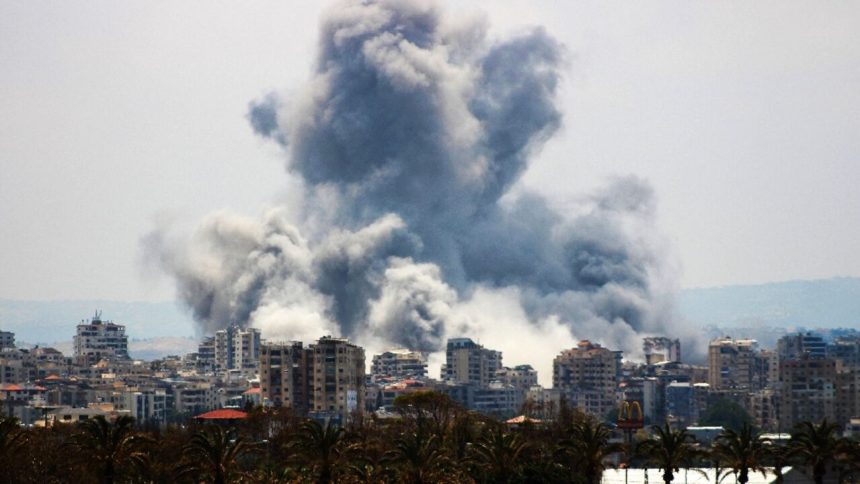
Shortly afterward, U.S. Central Command (CENTCOM) announced that American forces had begun what it described as “additional self-defense strikes” at 5:15 p.m. Washington time on Wednesday, corresponding to early Thursday in Iran. The military said the operation was carried out in response to Tehran’s “unwarranted and continued aggression”.
Iranian media reported explosions in several southern regions near the Strait of Hormuz, including Bandar Abbas, Qeshm and Minab. Reports also indicated that “enemy projectiles” struck areas in Kargan and Sirik.
CENTCOM later confirmed the completion of the operation, stating that Iranian military surveillance assets, communication systems and air defence facilities had been targeted.
According to the command, American forces “fired precision munitions on Iranian targets that posed a threat to U.S. forces and international commercial ships transiting regional waters”.
The latest escalation came as U.S. Defence Secretary Pete Hegseth suggested military action could continue if directed by the president. He remarked that if Trump required it, “we’ll negotiate with bombs, and we’re very good at it”.
In retaliation, the IRGC announced strikes on American military facilities in Kuwait and Bahrain. Iran’s state-run IRNA news agency reported that the attacks also targeted and destroyed Sheikh Isa air bases.
Iranian media further claimed that drone operations were conducted against communications antennas and radar installations associated with the U.S. Fifth Fleet in Bahrain.
Authorities in Bahrain responded by issuing an air raid alert and advising residents to seek shelter immediately. The warning was communicated by the Gulf state’s Interior Ministry through social media.
Kuwait also temporarily shut its airspace as its military reported that air defence systems had been activated to intercept what it described as “hostile aerial targets”.
Iran renewed its threats concerning the Strait of Hormuz, a critical route for global oil and gas shipments, which Tehran has effectively closed amid the conflict.
“Are you making the sacred Strait of Hormuz unsafe?! We will make the region hell for you,” Majid Mousavi, the head of the Iranian Guards’ aerospace force, said in a social media post.
Iranian state television IRIB and the Mehr news agency reported that the country’s navy had attacked two vessels attempting to navigate through the strategic waterway.
The Tasnim news agency also quoted Iran’s military operational command as declaring that the Strait of Hormuz was “completely closed” and warning that “any vessel traffic” in the area would be targeted.
CENTCOM disputed those claims, insisting that “commercial ships are continuing to transit in and out of the Strait of Hormuz tonight”.
Trump, meanwhile, said on Wednesday that the U.S. military had quietly assisted in ensuring the passage of 100 million barrels of oil through the contested maritime corridor.
Earlier in the day, Fox News reported that Trump claimed Iranian officials had contacted him directly in the White House Situation Room as U.S. strikes were underway.
The allegation was swiftly rejected by Iran’s Revolutionary Guards, with IRNA reporting that Tehran denied making any such contact.
According to Fox News, Trump also said U.S. forces launched 49 Tomahawk missiles at Iranian targets, some of which were located approximately 40 miles (60 kilometres) from Tehran.
Fox News correspondent Trey Yingst, citing his conversation with Trump, reported that the president warned Iran that if it refused U.S. conditions for ending the war, “We’ll bomb the S out of them tomorrow night”.
The latest military exchanges followed a similar round of strikes earlier in the week, which were partly linked to Iran’s downing of an American helicopter.
The renewed attacks came after Trump publicly expressed frustration over what he described as delays by Iranian negotiators, despite previously indicating that an agreement could be reached within days.
“We hit them hard yesterday. We’re going to hit them again hard today,” Trump told reporters Wednesday morning.
“We were really close to a deal, but they keep tapping us along.”
Hegseth signalled that military operations could continue beyond a second night, saying future strikes would be “strong” and “clear”.
The worsening conflict prompted renewed international appeals for restraint, particularly with the World Cup approaching and both the United States and Iran set to participate in the tournament.
United Nations Secretary-General Antonio Guterres warned against the possibility of a return to “full war”.
Iran’s Ambassador to the United Nations, Amir Saeid Iravani, rejected Trump’s threats, arguing that “no sustainable deal can be reached through threats, intimidation, or the use of force”.
Despite the military escalation, diplomatic efforts have continued. A diplomat familiar with the talks said Qatari mediators had travelled to Tehran “to meet with the Iranians in an effort to bridge the remaining gaps”.
The conflict began in February following joint U.S.-Israeli strikes on Iran, a development that reshaped geopolitical dynamics in the Middle East and rattled global financial markets before a ceasefire took effect on April 8.
Financial markets reacted negatively to the latest developments, with Asian stocks following declines on Wall Street and oil prices climbing by as much as two per cent on Thursday after recording similar gains a day earlier.
Iran has also maintained that any agreement to end the war must include a ceasefire in Lebanon, which became involved in the conflict after the Iran-backed Hezbollah movement launched rockets at Israel on March 2.