United States President Donald Trump has withdrawn his proposed 20 per cent charge on cargo passing through the Strait of Hormuz but retained the naval blockade on Iranian ports.
According to BBC, Trump said trade and investment agreements with Gulf countries would replace the controversial fee as Washington and Tehran continued exchanging attacks over control of the strategic waterway. Reuters also reported that Trump abandoned the proposal after discussions with Middle Eastern leaders.
Trump replaces fee with investment deals
Trump had announced on Monday that the United States would charge 20 per cent on all cargo transported through the strait to recover the cost of securing the route.
However, he reversed the decision on Tuesday after receiving several calls from Gulf leaders.
“I have decided to replace the 20% United States Reimbursement Fee with Trade and Investment Deals that the various Gulf States will be making into the United States,” Trump wrote on Truth Social.
“Those Investments will be MASSIVE but, at the same time, extraordinarily good for them, and their future,” he added.
Trump did not disclose the countries involved, the value of the proposed investments or when officials would sign the agreements.
Speaking after meeting Iraqi Prime Minister Ali al-Zaidi in Washington, Trump said he did not favour charging vessels but argued that other countries should contribute to the cost of protecting the strait.
“I don’t like the concept of a fee, but at the same time, it’s not fair that we’re protecting this Strait for the entire world,” he said.
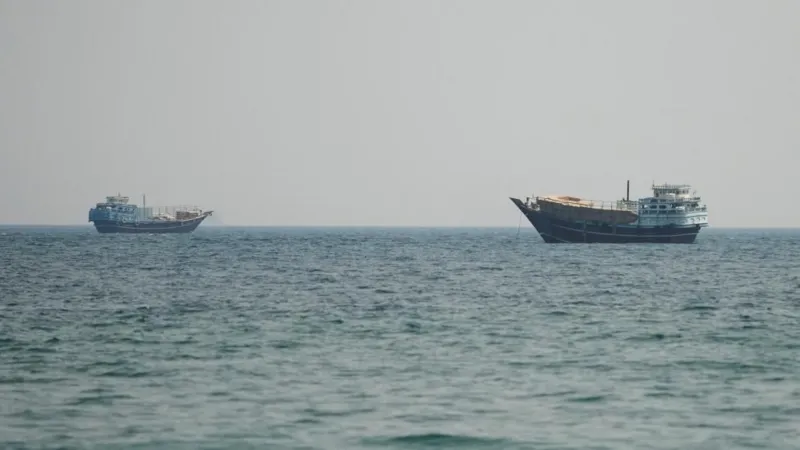
Trump claimed the waterway remained open to all commercial traffic except ships connected to Iran.
US resumes attacks and blockade
The policy reversal came shortly before the United States resumed its blockade of Iranian ports as part of efforts to increase economic pressure on Tehran.
US Central Command also announced another round of strikes against Iranian targets, saying the operation aimed to weaken Iran’s ability to attack commercial vessels using the Strait of Hormuz. CENTCOM had conducted earlier strikes after accusing Iranian forces of targeting ships in the waterway.
Iranian media reported explosions in several locations, including Bushehr, which hosts the country’s nuclear power plant.
Tehran also said it attacked US military facilities in Bahrain and Jordan after accusing Washington of escalating the conflict.
The renewed strikes have disrupted tanker traffic and placed further pressure on global energy markets. Oil prices rose sharply as traders feared that prolonged fighting could restrict supplies through the vital shipping route.
Iran rejects US control of strait
Iran responded to Trump’s announcement by insisting that it would retain control of the Strait of Hormuz.
Deputy Foreign Minister Kazem Gharibabadi said the renewed US blockade had effectively undermined the truce agreement previously reached between both countries.
The United States first imposed a naval blockade on Iranian ports in April before lifting it in June under a memorandum of understanding intended to reduce hostilities.
However, disagreements over control of the strait and attacks on commercial vessels have since weakened that arrangement.
Both Washington and Tehran now claim authority over navigation through the waterway, raising concerns over international shipping and the possibility of a wider conflict. Recent ship-tracking figures have shown a sharp decline in vessels passing through the strait compared with normal traffic levels.
Israeli Prime Minister Benjamin Netanyahu also warned Iran against attacking Israel, saying his country would respond with greater force to any fresh assault.
“Do not count on things remaining quiet if you attack us,” Netanyahu said.