Soldiers are exhausted after years of deployment, need rest – Defence minister
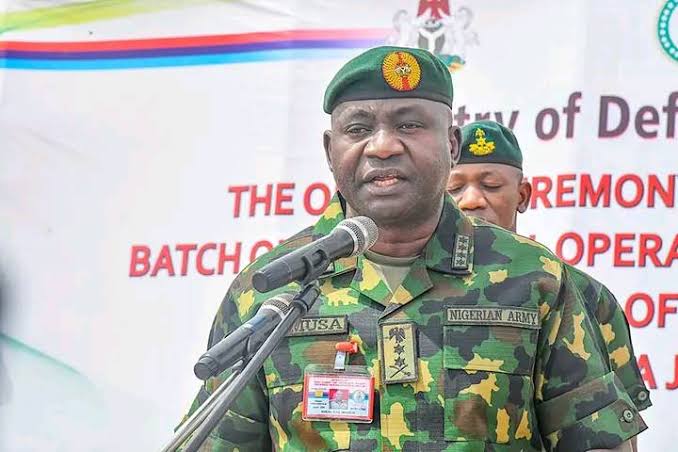
The Minister of Defence, General Christopher Musa (retd.), has expressed concern over the exhaustion of Nigerian soldiers following prolonged deployments across the country, revealing that some personnel spend years away from their families while battling insecurity.
Musa disclosed that the military was working to strengthen the Nigeria Police Force to enable soldiers to gradually withdraw from routine internal security operations and return to their barracks.
According to The PUNCH, the minister made the remarks on Thursday, November 5, 2026, during the All Progressives Congress Abuja Roundtable in the Federal Capital Territory.
Musa laments prolonged military deployments
Speaking about the challenges confronting military personnel, the former Chief of Defence Staff acknowledged that soldiers were overstretched by repeated deployments to different parts of the country.
“We’re looking at how we can enhance the police, because my men are tired. I can tell you for free,” he said.
The minister explained that some personnel spend up to two years in one location before being transferred to another area affected by insecurity.
“You will spend two years in one place, then you are moving to the northwest. Sometimes you don’t even see your family. It’s not like they’re enjoying it, but there’s a necessity that we have to be there,” Musa stated.
He lamented that the demands of military operations often prevented soldiers from spending time with their families or taking regular holidays.
“We hardly go on holidays,” he added.
According to the minister, the increasing involvement of military personnel in domestic security responsibilities has placed considerable pressure on the armed forces.
FG moves to strengthen police
Musa disclosed that the Federal Government was working with the Nigeria Police Force to improve its operational capacity and reduce dependence on military intervention.
He explained that the military had become increasingly involved in responsibilities traditionally handled by police officers because of persistent security challenges.
“If there are issues that are beyond the police, the military can come in. But the idea is, as you said, it is too much. We are too exposed,” he said.
The minister also revealed that he had recently participated in a security assessment meeting involving police authorities, including the Inspector-General of Police.
He said discussions focused on improving police effectiveness and addressing challenges affecting security operations.
According to Musa, additional recruitment into the police force forms part of efforts to strengthen its capacity.
“We feel if they get these things right, there’s no need for the military,” he stated.
Military plans gradual withdrawal from internal security
The defence minister explained that strengthening the police would allow military personnel to return gradually to their primary responsibilities.
“We’re assisting the police as they are building their capacity. Gradually, we too will start pulling out and going back to the barracks so that we can have time to rest,” he said.
He maintained that military intervention should primarily support the police when security threats exceed their operational capacity.
Musa also stressed the importance of improving security coordination and restoring public confidence in law enforcement institutions.
His remarks come amid continuing military operations against insurgency, banditry, kidnapping and other security challenges across Nigeria.
The minister did not announce a specific timetable for withdrawing troops from internal security operations, indicating that the process would depend on improvements in police capacity.