


Prices of sheep have surged to as high as N1.2 million ahead of Eid-al-Adha, as economic hardship, rising petrol costs and insurgency drive up expenses for traders and buyers alike.
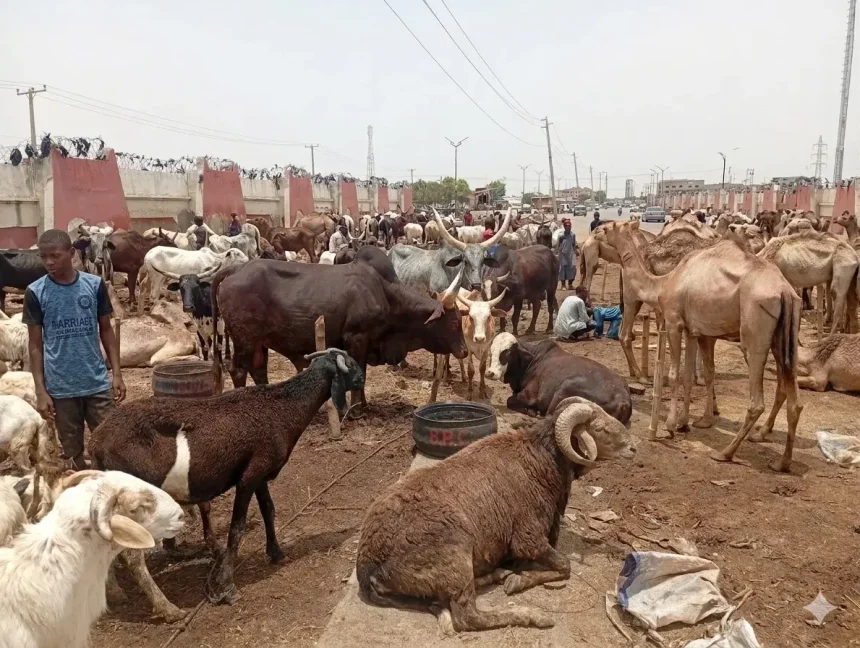
At the sprawling Kara Market along the Lagos-Ogun border, thousands of sheep stood in pouring rain on Friday but traders lamented that sales had been slow this year.
Prices of sheep, which are favoured for the celebrations, now range from N250,000 to N1.2 million, depending on size. Comparable animals sold for between N150,000 and N1 million last year, said trader Abdullahi Bukar.
Bukar said insurgency in the country’s northeast, multiple taxes and illegal toll collections by security officials have driven up prices. He had travelled from northeastern Yobe State to trade at the market.
“We are always scared when we go to the market to buy livestock because terrorists usually attack the markets where we buy stock,” said the 29-year-old trader. “Sometimes people don’t come to the market to sell to us because of fear.”
More than 2,100 civilians were killed in violent incidents including attacks from terrorists in the first quarter of the year, according to SBM Intelligence, a Lagos-based risk consultancy.
One shopper, Ibrahim Kosoko, said he was told to bring N1.2 million for a sheep that was not very big. “I had to look for something I can afford,” he said. He settled for one that cost him around N400,000 in a country where the monthly minimum wage is N70,000.
Transport costs have also added to the pain. Some traders travel more than 1,000 kilometres to sell sheep in southwest Nigeria, but the cost of transporting livestock to the market has more than doubled.
Petrol prices have nearly doubled in many parts of the country, from around N850 per litre to more than N1,320 – a record high in a country where gasoline sold for around N195 at the start of 2023.
“Truck drivers collect about N2.7 million from us to transport our livestock down,” said Abubakar Dauda, 33, from northeastern Adamawa. That is nearly three times what the same service cost him in 2025. “We even spend up to N300,000 on police checkpoints and taxes to every state we pass through,” he said.
Dauda, who brings in most of his sheep from Chad, said exchange rate volatility had pushed up import and sourcing costs, driving prices even higher.
A civil servant, Taibat Bashir, said she would need to spend at least N80,000 on travelling to and from her hometown with her child. “That’s not something I can afford,” the 40-year-old said. She added that an uptick in violent attacks in her home state of Kwara in recent months made the prospect of travelling less appealing.
Shopper Kosoko said there were ways around the price problem. “It is not compulsory to buy sheep for Ileya. If we cannot afford one, we will find ways to celebrate regardless,” he said.