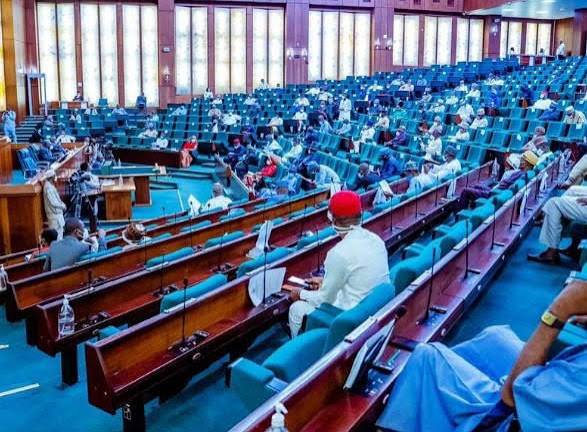
The House of Representatives has called for stronger action against human trafficking in Nigeria. They are urging government agencies, international partners and civil society organisations to work together. These groups should protect trafficked Nigerians rescued from Mali and other West African countries.
According to Vanguard, lawmakers made the call on Wednesday. It took place during a high-level stakeholders’ technical meeting organised by the House Committee on Humanitarian Services in Abuja.
Chairperson of the committee, Tolulope Akande-Sadipe, said Nigeria must move beyond repatriating trafficking victims. She added that the focus should be on long-term rehabilitation and reintegration.
She said many victims, especially women, children and young people, suffer forced labour, sexual exploitation and other forms of modern slavery across West Africa.
Akande-Sadipe said trafficked Nigerians often face abuse, deprivation and abandonment in foreign countries. These Nigerians are left without proper legal protection or access to basic services.
“Behind every statistic is a human story. Trafficking is not merely a migration issue; it is a grave violation of human rights. Furthermore, it is an assault on human dignity that demands a coordinated national response,” she said.
The lawmaker said successful reintegration must include healthcare, psychosocial support, legal assistance, education, vocational training, family reunification and sustainable economic opportunities.
She added that the House would continue to provide the legislative, policy and oversight support needed. This support will help strengthen humanitarian response systems and improve coordination among relevant institutions.
Akande-Sadipe also urged stakeholders to develop practical recommendations based on prevention, protection, prosecution and partnerships to improve Nigeria’s anti-trafficking framework.
At the meeting, the National Council of Child Rights Advocates, Nigeria, presented findings from its work on the trafficking and exploitation of Nigerian girls in Mali. The findings also covered other West African countries.
NACCRAN’s Operations Consultant on Diaspora Issues, Prince Adefioye Gbolagade Simeon, said the organisation carried out an 11-month fact-finding mission in Mali. During this, they identified concerns over repatriation, documentation and the welfare of rescued victims.
He alleged that some officials at the Nigerian Embassy in Mali and some Nigerians based in the country engaged in questionable practices. These practices were linked to the rescue and repatriation of trafficked victims.
Simeon also claimed that some rescued girls stayed at the embassy for long periods while waiting for repatriation through the International Organization for Migration. This wait happened despite funds allegedly collected to facilitate their return to Nigeria.
He said some rescued girls reported physical and emotional abuse after refusing prostitution. Meanwhile, many Nigerian migrants allegedly paid between 10,000 and 15,000 CFA francs for identification cards. However, border officials did not recognise these cards.
The consultant urged the committee to investigate the handling of repatriation activities at the Nigerian Embassy in Mali. Additionally, he asked to strengthen coordination among the Ministry of Foreign Affairs, NAPTIP, security agencies and civil society organisations.
He also appealed for official support to allow NACCRAN to continue humanitarian rescue operations in Mali. He requested support for operations in other West African countries as well.
Simeon commended the House Committee on Humanitarian Services. He said its intervention led to the deployment of a Federal Ministry of Foreign Affairs fact-finding team to Mali in July 2025.
He added that with the committee’s support, NACCRAN repatriated more than 10 underage Nigerian girls between September and December 2025. With this support, several victims were handed over to NAPTIP and reunited with their families.
The meeting brought together lawmakers, government officials, development partners, diplomatic missions, security agencies, international organisations and humanitarian experts. The goal was to discuss ways to strengthen Nigeria’s response to human trafficking and protect vulnerable citizens abroad.