




The Centre for the Promotion of Private Enterprise has warned that restoring petrol subsidy could cost Nigeria about N20tn annually and plunge the country back into severe fiscal and foreign exchange pressures.
The CPPE said the rising cost of petrol was already hurting households and businesses, but returning to the former subsidy regime would not provide a sustainable solution.
The Chief Executive Officer of the organisation, Muda Yusuf, disclosed this in a policy brief issued on Sunday.
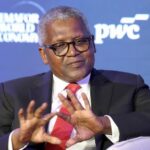
The warning comes amid renewed calls for government intervention in petrol pricing, including a pledge by former Vice-President Atiku Abubakar to introduce a targeted subsidy if elected President in 2027.
But the CPPE said the subsidy debate should not be limited to the price of petrol at filling stations, arguing that the policy has far-reaching implications for Nigeria’s finances, foreign exchange, investment, domestic refining, employment and energy security.
Using an estimated petrol consumption of 50 million litres daily and a subsidy requirement of N1,050 per litre, the organisation projected a potential subsidy cost of N52.5bn per day, N1.575tn monthly and N19.16tn yearly.
The actual cost, it noted, would depend on crude oil prices, exchange rates, consumption, refining or landing costs and the pump price approved by government.
The CPPE warned that such expenditure could take resources away from critical sectors, including infrastructure, education, healthcare, agriculture, security and social protection.
It also said financing the subsidy through borrowing could increase the fiscal deficit and debt-servicing burden while reducing the availability of credit to businesses.
According to the organisation, Nigeria could end up replacing a petrol-price crisis with a much larger fiscal, debt, foreign exchange and investment crisis.
The CPPE said Nigeria previously spent between $10bn and $15bn annually on petroleum-product imports before the subsidy reform.
It argued that the old system also encouraged fuel arbitrage and cross-border diversion because artificially low domestic petrol prices made it profitable to move subsidised products to neighbouring countries.
The group said the former regime was therefore not simply a mechanism for keeping petrol affordable but also a major drain on public finances and foreign exchange.
The organisation further warned that restoring a universal subsidy could weaken the investment incentives created by the shift to market-based petrol pricing.
It said stronger domestic refining capacity would generate economic opportunities across several industries, including diesel, aviation fuel, petrochemicals, fertiliser, plastics, chemicals, logistics and storage.
According to the CPPE, expanding local refining would reduce dependence on imported petroleum products, conserve foreign exchange and create jobs.
It urged the government to maintain policies that could transform Nigeria into a regional refining and petrochemical hub.
Although the CPPE acknowledged that subsidy removal had increased revenues available to the Federal Government, states and local governments, it said the additional income must translate into visible improvements in citizens’ lives.
It called for greater investment in public transportation, electricity, healthcare, education, food security, infrastructure and social protection.
The organisation also challenged the three tiers of government to provide greater transparency on how the additional revenues generated by the reform were being spent.
It said the focus should now shift towards the quality of government expenditure and measurable outcomes.
The CPPE also cautioned against attributing the entire increase in petrol prices to subsidy removal.
It said petrol sold for about N774 to N800 per litre before the latest surge in international energy prices, with prices later moving above N1,300 per litre.
The organisation attributed part of the increase to higher global crude and refined-product prices amid tensions in the Middle East.
It said the two developments should be treated separately, explaining that subsidy removal was a domestic structural reform, while the latest international price surge was an external commodity shock.
Rather than restoring a blanket subsidy, the organisation recommended targeted measures to cushion vulnerable Nigerians and reduce production costs.
It called for affordable public transport, improved rail freight and logistics infrastructure, better electricity supply and faster adoption of compressed natural gas, solar and other alternative energy solutions.
The CPPE also urged the government to strengthen agricultural security, irrigation and rural infrastructure to boost food production and reduce distribution costs.
It recommended targeted support for vulnerable households and measures to lower energy, logistics and financing costs for businesses, particularly micro, small and medium enterprises.
Nigeria ended its petrol subsidy regime in May 2023 after President Bola Tinubu declared during his inauguration on May 29 that “the fuel subsidy is gone.”
The policy was followed by nationwide petrol-price adjustments by the Nigerian National Petroleum Company Limited in June 2023.
The CPPE said the priority should now be to preserve the gains of the reform while reducing its social and economic impact.
It maintained that Nigeria’s long-term objective should be lower structural costs, stronger domestic production, improved competitiveness and greater energy security, rather than a return to a subsidy regime that could impose another multitrillion-naira burden on public finances.