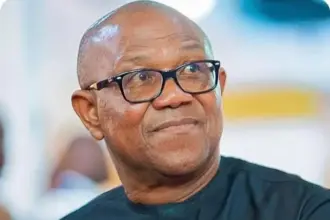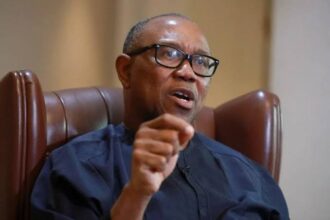
The presidential candidate of the National Democratic Coalition, Peter Obi, has criticized the Federal Government over what he described as the lack of transparency in the management of Nigeria’s rising public debt, warning that citizens who will ultimately repay the loans are being kept in the dark.
In a statement issued on Thursday, Obi expressed concern that Nigeria’s debt profile has nearly doubled under the current administration, climbing from about ₦87 trillion in 2023 to almost ₦200 trillion, without a clear explanation of how the borrowed funds have improved the lives of ordinary Nigerians.
He said, “Public debt has risen dramatically under the current administration, and its deployment is shrouded in secrecy from the people who will indeed pay back the loan.”
The former Anambra State governor argued that Nigerians deserve a detailed account of how the growing debt stock has been invested, particularly in critical sectors such as education, healthcare, electricity, security, and infrastructure.
While acknowledging that borrowing is a common practice among nations, Obi stressed that the real issue lies in the use of the funds and the ability of citizens to see tangible results from the loans obtained in their name.
Speaking further, he said, “Borrowing, in itself, is not a bad thing. Every nation borrows.
“The critical issue is not the act of borrowing, but what the borrowed funds are used for and whether citizens can clearly see and measure the impact of such borrowing in their daily lives,” he said.
Obi maintained that every borrowing decision should be linked to clearly identifiable projects capable of stimulating economic growth, creating jobs, reducing poverty, and improving the welfare of citizens.
To illustrate his point, he referenced South Africa’s recent $1 billion loan from the New Development Bank, noting that the government openly disclosed the purpose of the facility and the projects it was intended to finance, including improvements to water supply systems, sanitation infrastructure, electricity distribution, and waste management services across major cities.
According to him, such openness enables citizens to track the use of public funds and assess the benefits derived from government borrowing.
“This is indeed what accountable borrowing should look like; the purpose is clear, the projects are identifiable, and the expected benefits to citizens are measurable,” Obi said.
He warned against accumulating debt without clear developmental outcomes, emphasizing that governments must be able to justify every loan through measurable improvements in the lives of the people.
Obi also called for greater fiscal discipline and prudent management of public resources, especially as Nigerians continue to grapple with inflation, unemployment, insecurity, and declining purchasing power.
“Every borrowing decision should answer one simple question: How does this improve the life of the ordinary Nigerian? If that question cannot be convincingly answered, then we risk merely transferring today’s burdens to future generations,” Obi stated.