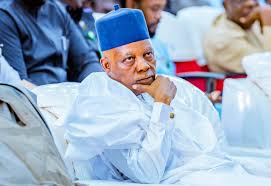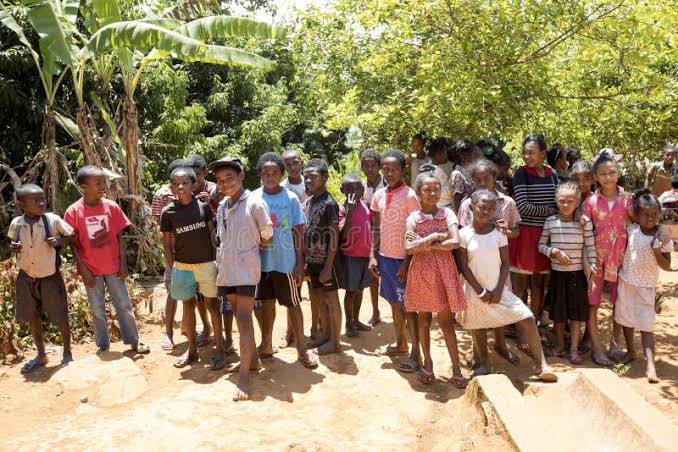
Former Inspector General of Police, IGP Mohammed Abubakar, has raised concerns over the rising number of out-of-school children in Nigeria, describing the situation as a ticking time bomb that requires urgent intervention.
Abubakar said recent figures indicate that the number of children out of school has risen beyond 30 million, calling on the Nigeria Governors Forum (NGF) and the National Commission for Almajiri Education and other relevant stakeholders to collaborate in tackling the crisis before it worsens.
The retired police chief made the remarks in Abuja on Wednesday during the graduation ceremony of the “Almajiri-to-Tech Foundation” training institute. He warned that the country’s future could be at risk if the challenges associated with the Almajiri system and out-of-school children are not addressed by governments at all levels.
Abubakar, who is the chairman of the Arewa Consultative Forum (ACF) Fund Raising Committee for the out-of-school children/Almajiri intervention, said he had been actively involved in efforts to find lasting solutions to the challenge, not only in Northern Nigeria but across the country.
He urged governors, the National Commission for Almajiri and other key stakeholders to unite and take decisive action against the growing threat posed by the increasing number of Almajiris and children outside the formal education system.
The former IGP said: “Let us look at the security angle to the problem. There is no state in Nigeria today that you don’t have Almajiris. And there is no state without Internally Disposed Persons, (IDP) camps. So it is not a regional problem. The numbers of the out of school children have grown beyond 30 million.
“Because as far back as 2006, we conducted a research and discovered that there were over three million Okada riders in Kano. So, this 30 million, we have been mentioning it for years. Now, if you have a beautiful house, you have cars and other good things of life with your family, you may not have peace when millions of other children are on the streets, some begging for food, others begging for jobs. Some children have graduated for years, yet no jobs.
“This is a big problem. The governors, the Commission, and other well meaning Nigerians should do the needful to address the issues around Almajiris and out of school children. This problem was as a result of system breakdown within the country’s governance structures.”
Speaking at the event, the founder of the school, Mr Tim Akano, called on the Federal Government and members of the National Assembly to take immediate steps to address the challenges of Almajiri education and the increasing number of out-of-school children.
Akano said he personally took on the responsibility of equipping 21 Almajiri children with technical skills as part of efforts to contribute to building a better society. He noted that “six months ago, some of the 21 children graduating today could not write their names in English.”
“Today they build computers, robots and drones with their own hands. They repair over 10 types of electrical appliances — all in months”, Mr Akano added.
He expressed concern that if urgent measures were not taken to address the growing population of Almajiri and out-of-school children, their numbers could become the fourth largest population in West Africa by 2031, behind Nigeria, Ghana, Benin and Togo.
Akano also noted that the population of these children was already larger than the combined populations of Taiwan and Singapore, urging Nigerian leaders to treat the issue as a national emergency.
Describing the graduating students as talented young people with promising futures because of the skills and knowledge they gained, Akano said Nigeria must move beyond conferences and seminars and focus on practical solutions to its challenges.
He said Nigeria and the international community should adopt Vision 2031, which would ensure that “No Child is Left on the Street (NCLS).”
Akano further advocated the criminalisation of child abandonment, provision of free and compulsory education, and enforcement of basic education nationwide.
He also called for the decentralisation of Islamiyya education to communities, criminalisation of street begging after providing alternatives, and the introduction of Skills for Employment and Enterprise programmes, including two free years of post-secondary ICT training similar to programmes implemented in Saudi Arabia.