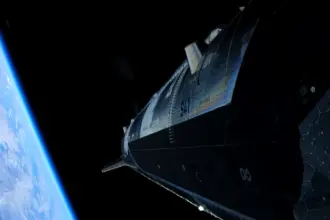
A failure involving a nose landing gear component caused a plane to crash into a hangar shortly after take-off, killing a flight instructor and his student pilot while leaving nine others injured in Australia.
The Australian Transport Safety Bureau said in its preliminary report that the two occupants of the Diamond DA42 aircraft encountered “a very peculiar emergency at a very crucial stage” during the aircraft’s departure from Adelaide’s Parafield Airport on April 29.
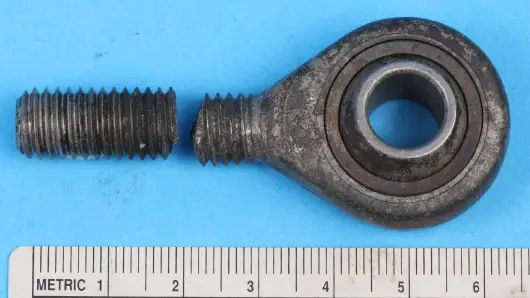
According to ATSB chief commissioner Angus Mitchell, an actuator rod on the aircraft fractured into two parts, preventing the nose landing gear from retracting during the 42-second flight.
“The failure … is known to have caused in-flight controllability issues with this aircraft type in the past,” he said on Tuesday.
“(It) is one of a number of scenarios, including loss of engine power in one engine, that the investigation is examining.”
The crash claimed the lives of flight instructor Robert Hoyle, 29, and his 24-year-old trainee after their aircraft struck the Flight Training Adelaide hangar at Parafield Airport, triggering a fire that injured nine people and destroyed several aircraft.
Mr Hoyle’s father, Scott Hoyle, said the family was struggling with the loss of their son.
“Remains heartbroken by the loss of our beloved Robert,” he said.
“Whilst we take some comfort in the confirmation that the accident appears to have been caused by mechanical error, it does not lessen our grief,” he said.
“Robert dedicated his life to aviation and we trust that the full findings of the ATSB’s investigation, when announced, will serve as his lasting and final contribution to the industry he loved so much, by helping to ensure that such a tragic event is never repeated.”
The ATSB has since issued a safety notice regarding the component failure, warning that the issue could have “international ramifications” for about 600 similar aircraft operating worldwide.
Investigators said Mr Hoyle and his trainee, who had recently obtained his commercial pilot’s licence, were conducting simulated engine failure circuits when the incident occurred.
CCTV footage reviewed by investigators showed the aircraft turning left after take-off before being corrected back toward the runway. It then began drifting left again.
Although the main landing gear was successfully retracted, the nose landing gear remained extended.
“Notably, 27 seconds after getting airborne, the pilot instructor made an emergency engine failure radio call,” Mr Mitchell said.
No additional radio communication was received from either pilot following the emergency call.
Mr Mitchell said the pilots were likely dealing with a highly demanding situation, adding that the possibility of cognitive overload “would have been very real” as they attempted to manage the emergency.
The fractured actuator rod had “the potential to interfere with rudder controls”, but investigators believe the pilots may have interpreted the situation as an engine-related problem.
“The situation probably looked more like engine failure,” Mr Mitchell said.
Investigators later determined that the aircraft’s left engine was not operating when the crash occurred moments after the emergency began.
The aircraft manufacturer had previously released safety bulletins in 2013 and 2019 following separate incidents involving the same fractured component. In one case, a pilot was able to regain control after extending the landing gear again.
A metallurgical examination of the failed rod is still underway, but an initial inspection identified “indications of fatigue cracking prior to complete failure of the component”.
The ATSB said it issued the safety advisory notice because the failure involved a critical aircraft component with the potential to cause loss of control, particularly given the large number of similar aircraft used in flight training worldwide.