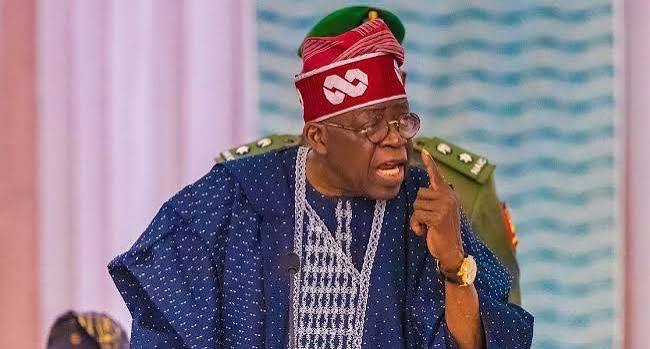
President Bola Tinubu has said his administration rejected demands for ransom payment and the release of detained members of a criminal gang before the abducted Oriire schoolchildren and teachers in Oyo State could be freed.
The President disclosed this on Thursday while receiving a delegation of Oyo State traditional rulers led by the Olubadan of Ibadanland, Oba Rashidi Ladoja, at the Presidential Villa, Abuja.
He said the kidnappers’ demands were rejected outright, leading to a military-led rescue operation that secured the victims’ freedom after 56 days in captivity.
According to Tinubu, the abductors requested both financial payment and the release of arrested members of their gang, but the government refused to negotiate with criminals. He described the rescue operation as intelligence-driven and successful, stressing that no ransom was paid.
The President said his directive to increase the Nigerian Army’s divisions from eight to 12 was a direct response to the security challenges exposed by the Oriire abduction. He explained that the expansion was aimed at reducing response time and improving the military’s numerical and geographical capacity to tackle terrorism and banditry.
Tinubu, who was speaking publicly on the incident for the first time since the victims were rescued on July 10, said the government remained firm in its decision not to compromise with criminal elements.
“We refuse to negotiate for ransom. These criminals wanted us to release from detention members of their criminal gangs that were already arrested. That was one of their conditions, outside of the money they were looking for.
“And we said no deal. We are not going to negotiate with criminals. They committed murder, and we were ready to finish with their families, members of their own communities. They grew up somewhere.
“I think we succeeded with your support and prayers. I agree that we should commend the men and women of the armed forces for their excellent performance.
“On behalf of them, I accept your message, and I will forward the same thing and the same message on,” the President added.
Tinubu said the success of the rescue mission was linked to the military’s knowledge of the terrain where the victims were held.
He said the incident provided important lessons for the country’s security architecture and required adjustments in strategy, operations and deployment.
“As we emphasise the question of security, each event teaches us new methods, opens our eyes, challenges us to examine and re-examine our architecture, our strategy, our map and operations.
“And you would have seen we’ve given a geographical and numerical answer to the challenges. We refused to pay ransom. We have the geography of the forest.
“We know what it is, and in answer to it, you’ve seen that from eight divisions, we are now moving to 12 divisions, to shorten the response time, to give that response time the teeth that is needed for us to defeat terrorism and banditry,” he said.
The President also announced plans to strengthen local security through the establishment of state police structures, promising safeguards to prevent abuse.
“It is very necessary, and we are doing so. We have equally embarked upon what was missing; several decades of fears and uncertainty about what to do about security at the local level will be corrected.
“There will be state police, and that state police will have guardrails from abuses. We will protect it from abuses, and you traditional rulers too will have a role to play more,” he said.
Tinubu attributed the rising security threats in parts of Nigeria to instability in neighbouring Sahel countries, noting that some of the criminals involved in attacks were foreigners.
“Some of them (terrorists) are non-Nigerians. You see the problem of insecurity in Mali, Burkina Faso, Niger Republic is adding more fuel to our challenges.
“In fact, that is why we must enhance the capacity of the forest guards as well as create the state police,” he argued.
He added that forest guards would be retrained and equipped to serve as part of the country’s frontline security network rather than focusing only on conservation duties.
“We are equally enhancing the capacity and capability of the forest guards. They are not just to chase antelopes and animals. We are going to have them chase the criminals and deal with them in various forests,” he noted.
The President urged traditional rulers to encourage residents to support security agencies by providing useful information about suspicious activities within their communities.
“The mention of intelligence is very important, and I want you to take it to our people, to be extra vigilant, to look at things critically, know their neighbourhoods, know their areas, report strange people,” he said.
Tinubu also appealed to state governments to invest improved federal allocations in infrastructure, particularly road networks that could enhance security operations and improve access to remote communities.
Referring to the period when Oba Ladoja served as governor of Oyo State, the President said better road infrastructure would support economic growth and security efforts.
“The economy of operation is high. But the money that I’m pushing to the states, if you had it during your own time, or during my time, it would have been different.
“They are taking four to five times their money. Nobody is borrowing money to pay salaries now. Pensioners are receiving their pay.
“They should do more; instead of flying over where there is no numerical traffic, build roads and artery networks to really enhance the quality of life and the accessibility of the security agencies to penetrate those areas,” he said.
The President promised to hold wider consultations with traditional leaders across the country, acknowledging the scale of the security challenge.
“I will be calling meetings of so many of you traditional leaders to listen to you and offer some suggestions throughout the country. I’ll find time to listen to them.
“The immediate challenge is monumental. It’s not an easy job, but I asked for the job, and I got it. You gave me the support, and I got to do it.
“I accept the assets and liabilities of my predecessor, so that’s the challenge of today,” he said.
He further praised security personnel for their efforts and asked traditional leaders to appreciate soldiers and police officers working in their communities.
“I’m glad you are here. I congratulate you on the peace and stability of the region and the state.
“The security challenge is getting better. We are getting the hang of it much better.
“Any time you come across some of our soldiers and police officers, please pat them on the back and say thank you. They are doing a good job,” the President said.
Speaking on behalf of the delegation, Oba Rashidi Ladoja, Chairman of the Oyo State Council of Obas and Chiefs, said the visit was to commend Tinubu and security agencies for the release of the Oriire victims.
He said although there was confidence in the ability of security operatives to rescue the victims, there were concerns over the outcome of the operation.
“We are here to thank you, Mr President, over the recent release of Oriire kidnapped victims from captivity.
“This is why we believe that the efforts of both President Tinubu and all stakeholders are commendable,” he said.
Ladoja also commended the administration’s efforts in addressing the condition of federal roads linking Ibadan and other parts of Oyo State with neighbouring states.
In a statement issued by his media aide, Adeola Oloko, in Ibadan, the Olubadan listed major road projects, including the proposed dualisation of the Ibadan-Ijebu-Ode road, the Ogbomoso-Ilorin road and the Badagry-Sokoto road through Ibarapa and Oke-Ogun areas.
He said the completion of the projects would open up communities along the routes and boost economic activities, adding that the importance of quality road infrastructure could not be overstated.
The council pledged the support and cooperation of residents at the grassroots level to ensure the successful implementation of the projects.
Other traditional rulers present at the meeting included the Olugbon of Orile-Igbon, Oba Francis Alao; Aseyin of Iseyin, Oba Sefiu Oyebola; Balogun of Ibadanland, Oba Tajudeen Ajibola; Osi Olubadan, Oba Abiodun Kola-Daisi; Alajawa of Ajawa, Oba Adeyeye Oyetunji; Soun of Ogbomoso, Oba Ghandi Olaoye; and Onigbeti of Igbeti, Oba Abioye Olalekan, who represented the Okere of Saki.
The Oriire abduction occurred on May 15, 2026, when gunmen attacked three schools — Community Grammar School, Baptist Nursery and Primary School and L.A. Primary School — in Esiele and Yawota communities in Oriire Local Government Area of Oyo State.
About 39 pupils and seven teachers were taken hostage during the attack, while Mathematics teacher Michael Oyedokun was killed.
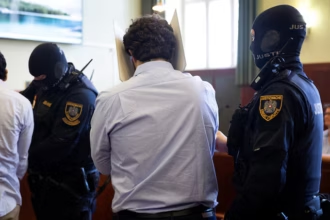
The rescue operation, which ended on July 10 after 56 days in captivity, led to the arrest of eight suspected abductors and the neutralisation of others. The Presidency said the mission was an intelligence-led operation involving both kinetic and non-kinetic strategies and was completed without ransom payment.