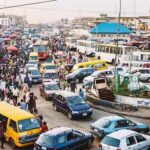






The National Assembly has vowed to end Nigeria’s status as a destination for foreign used vehicles, with plans to fast-track the proposed National Automotive Industry Bill 2026 as part of efforts to protect local manufacturers and boost vehicle production within the country.
The Chairman of the Senate Committee on Industry, Senator Francis Fadahunsi, disclosed this yesterday during an inspection of the facilities of PAN Nigeria Limited in Kaduna by members of the committee and officials of the National Automotive Design and Development Council (NADDC).
Fadahunsi, a retired Customs officer, said his years of experience had given him insight into the significant economic losses Nigeria was incurring through the continuous importation of foreign used vehicles. According to him, the trend was putting additional pressure on the nation’s foreign exchange reserves.
“Nigeria has become a dumping ground. So we have to reject it,” Fadahunsi said.
The senator called for stronger government measures to encourage Nigerians to buy vehicles produced locally, arguing that the country’s engineers had already shown that they possessed the technical capacity to manufacture vehicles and other forms of transportation suited to domestic needs.
Fadahunsi said the committee’s inspection of the Kaduna facility provided evidence that locally manufactured tricycles and vehicles could compete favourably with imported alternatives. He noted that some of the products had undergone tests and were found to be stronger and better adapted to Nigerian operating conditions.
“Today, the Federal Government will be aware that there are better alternatives that Nigerian engineers can do, can produce, to ameliorate all these imported vehicles, imported tricycles that are being used by the rural population,” Fadahunsi said.
He described the PAN facility as a strategic national industrial asset with the potential to generate employment, stimulate economic activity and provide affordable transportation if adequate government support was provided.
According to him, the facility covers nearly 300,000 square metres and retains functional production and training infrastructure. He added that the plant could provide employment for more than 3,000 people if it returned to full production capacity.
Fadahunsi further disclosed that PAN’s training programmes had produced approximately 12,000 artisans across Nigeria, including roadside mechanics, forklift operators and other categories of technicians, which he described as a significant contribution to the national economy.
He urged President Bola Ahmed Tinubu to increase government support for the automotive sector, arguing that greater patronage of locally produced vehicles would help conserve foreign exchange while creating additional employment opportunities for Nigerians.
He said: “Mr. President, you should know the gravity of this, the drain on our foreign reserve caused by this particular product”.
Fadahunsi also assured stakeholders in the sector that the National Assembly would support the proposed National Automotive Industry Bill 2026, saying the legislation would establish the legal framework required to protect local investments and curb indiscriminate vehicle imports.
Earlier, the Managing Director of PAN Nigeria Limited, Mrs Taiwo Oluleye, called on the National Assembly to urgently pass the proposed legislation, stressing that the automotive industry needed stronger policy protection to remain viable and attract new investment.
Oluleye said PAN, which was established in 1972 and began operations in 1975, had an installed annual production capacity of 90,000 vehicles. However, she said the company’s output had declined significantly because of rising operating expenses, foreign exchange instability, expensive borrowing and inconsistencies in government policies.
She explained that PAN had transformed from a single-brand vehicle assembly plant into a multi-brand automotive manufacturing facility capable of producing SUVs, sedans, buses and pick-up vehicles. Some of its buses, she added, had also been converted for use as ambulances.
According to Oluleye, PAN was able to attain 40 per cent local content in its production at a time when government policies provided a more supportive environment for the automotive industry. She noted that local content across the sector had since dropped to below four per cent.
She said the proposed bill would safeguard investments made by existing vehicle assembly companies while addressing the imbalance between manufacturers that commit substantial resources to domestic production and businesses that focus primarily on importing completely built vehicles.
“We appeal to you by this visit that you review and legislate. The legislation of this policy will protect investment and develop local production as opposed to importation of vehicles,” Oluleye said.
She warned that the absence of adequate policy protection would leave local vehicle assemblers at a disadvantage against importers, thereby undermining efforts to establish a sustainable automotive manufacturing industry in Nigeria.
Oluleye described the automotive sector as “a gold mine”, pointing out that its activities had significant connections with several other areas of the economy, including steel, aluminium, plastics, rubber, finance, ICT, logistics, engineering and research.
She said the industry could become an important driver of Nigeria’s industrialisation agenda, adding that passage of the proposed legislation would also position the country to take advantage of opportunities created by the African Continental Free Trade Area.
Oluleye further stated that Nigeria had the potential to become a major exporter of vehicles to other African markets if it increased local content and established policies capable of creating a favourable operating environment for manufacturers.
Also speaking during the inspection, the Director-General of NADDC, Oluwemimo Joseph Osanipin, said the condition of the PAN facility demonstrated that Nigeria possessed the capacity to meet a significant portion of its domestic demand for vehicles through local assembly.
“What we have seen here is evidence that we have the capacity,” Osanipin said.
He noted that PAN’s installed capacity of 90,000 vehicles annually, when combined with production facilities in other parts of the country, particularly Lagos, could provide enough capacity to satisfy a substantial proportion of domestic demand if the available facilities were fully utilised.
Osanipin said NADDC was already taking steps to tackle some of the major challenges limiting the growth of Nigeria’s automotive industry, including the need for appropriate legislation, stronger patronage of locally produced vehicles and improved access to credit.
He said the Federal Government’s Nigeria First policy presented an opportunity to revive domestic manufacturing, adding that NADDC was collaborating with the Credit Corporation to broaden vehicle financing beyond cars and motorcycles.
According to him, a combination of effective legislation, increased government patronage, improved access to finance and stronger protection for domestic investments would help revitalise Nigeria’s automotive industry and reduce the country’s reliance on imported vehicles.
The delegation also inspected the facilities of Dangote Peugeot Automobiles Nigeria (DPAN), where various vehicle models are undergoing assembly.