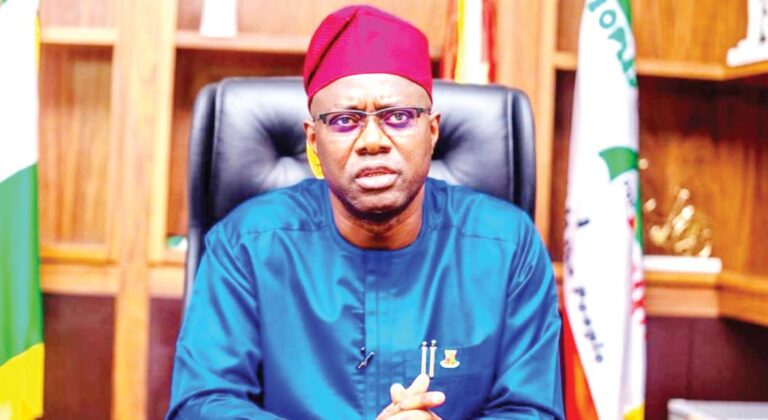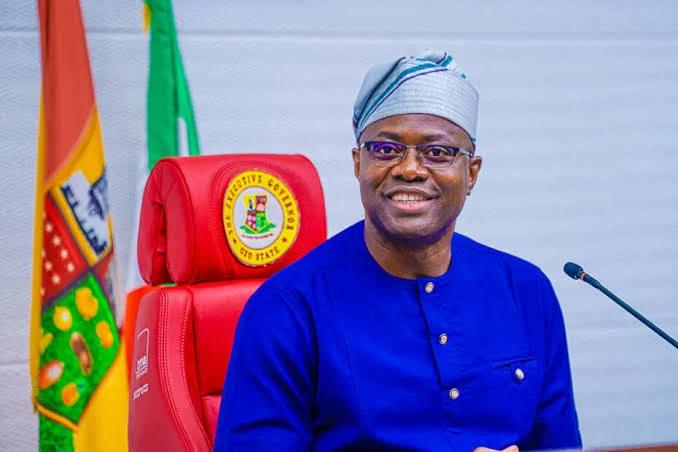
Oyo State Governor and Allied Peoples Movement presidential candidate, Seyi Makinde, has released his manifesto for the 2027 general election, titled the “Reset Agenda.”
Makinde announced the document’s release on his X handle on Wednesday, sharing a link to download the full policy document.
“Our manifesto, the Reset Agenda is available for downloads here,” he wrote, adding the hashtags #ResetAgenda, #ResetNigeria and #MakindeDaura2027.
The 74-page document, subtitled “A governing programme for a productive, secure, capable and accountable federation,” outlines a four-pillar plan to restructure Nigeria’s economy, security architecture, education system and federal structure.
In a message at the start of the document, Makinde said Nigerians did not need another manifesto to tell them the country was not working as it should.
“They experience it in the rising cost of food, transport, energy and housing. We see it when hard work does not produce a better life, when children spend years in school without acquiring the capabilities they need, when insecurity keeps farmers from their land and when public institutions make simple things difficult,” he wrote.
He argued that Nigeria’s problems could be traced to institutional failures but insisted the country was not born broken.
“Over time, particularly under military rule, authority became increasingly concentrated at the centre. When democracy returned, we did not sufficiently restore the federal balance. We continued building on institutions designed for centralised government, even when they no longer served a democratic federation effectively. Reset Nigeria means correcting that course and building a federation capable of making our unity work.”
The Reset Agenda is organised around four connected outcomes:
The Economic Reset: Building a productive economy that reduces the structural cost of living, rewards enterprise and improves household prosperity. Key proposals include identifying priority freight corridors, completing value chains for staple foods, publishing an independent assessment of government-owned refineries, and introducing a Domestic Energy Value Credit to give Nigerians a direct share of the value of crude oil refined and consumed locally.
The Security Reset: Establishing a security system that brings responsibility closer to threatened communities. The plan commits to completing and implementing the constitutional framework for state policing, establishing a common “Threat-to-Action Standard” across security agencies, and implementing coordinated security and economic recovery plans in areas facing sustained attacks.
The Education Reset: Creating an education system that makes learning, capability and opportunity the measure of success. The plan includes a National Foundational Learning Guarantee targeting literacy and numeracy by the end of Primary 3, reforming teacher development, and connecting skills training and tertiary education to actual work and enterprise.
The Socio-Political Reset: Protecting a basic social floor, restoring functional federalism and rebuilding trust in public institutions. Proposals include an essential primary-care guarantee, a unified social protection gateway, a Federal Responsibilities Review to reassign functions between federal and state governments, and electoral reforms.
Makinde said the plan would be judged by what changes in the lives of Nigerians, not by the number of policies announced.
Within the first 100 days, his administration would publish a consolidated Reset Delivery Plan, with every commitment assigned to one lead institution and a clear reporting timeline.
“I am not asking Nigerians for trust without evidence. Judge us by whether hard work begins to produce a better life; whether businesses can produce and compete; whether children remain in school and learn; whether warnings of danger produce action; and whether public institutions accept responsibility for their decisions,” he wrote.
The document also cites examples from Makinde’s tenure in Oyo State, including the Fasola Agribusiness Industrial Hub, the operationalisation of the 615 emergency number, the recovery of LAUTECH from a joint-ownership crisis, and the equipping of 264 primary healthcare centres.