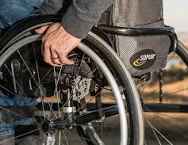
The Kaduna State Government has commenced the distribution of assistive devices to children with disabilities under the Reaching Out-of-School Children Project, an initiative of the state Ministry of Education aimed at strengthening inclusive education.
The programme is designed to improve access to learning opportunities for children living with disabilities while advancing equitable basic education across Kaduna State.
Speaking during the distribution exercise on Tuesday at LGEA Sheikh Gumi Model Primary School, Tudun Wada, the RoOSC Project Coordinator, Ezra Angai, disclosed that the intervention would be extended to all 23 local government areas of the state.
According to him, the beneficiaries were identified through enrolment and medical assessment exercises conducted under the project. He revealed that approximately 400 learners are expected to benefit from the initiative.
Angai listed the items being distributed to include bilateral back slabs, wheelchairs, ankle weights, standing boxes, protective spectacles, prescription distance glasses and cleaning cloths. He added that more than 30 children had already received prescription eyeglasses following recommendations from medical professionals who participated in the assessment process.
He explained that the provision of the devices followed extensive medical screening conducted among out-of-school children, with healthcare experts determining the specific support required by each child.
He stated, “The devices are provided based on the specific needs identified during the medical assessments to support the children’s participation in learning activities. ”
The coordinator noted that the RoOSC project is being implemented with support from Save the Children International, the Education Above All Foundation, the Islamic Development Bank, the Kuwait Fund for Arab Economic Development and UNICEF. He said the initiative seeks to return 100,000 out-of-school children to classrooms across the state.
He further stated that beneficiaries would be drawn from Kaduna’s three senatorial districts and appealed to communities to assist in identifying and enrolling children who are not currently in school. He added that caseworkers had already been deployed to various communities to support the exercise.
Also speaking, a representative of Save the Children International, Emmanuel Umbusa, said the intervention goes beyond school enrolment by providing specialised support for children with disabilities.
Umbusa explained that beneficiaries were selected following extensive mapping and medical assessment exercises carried out in partnership with hospitals and other relevant agencies. He added that the project also incorporates catch-up learning programmes tailored to learners at different academic levels.
According to him, the intervention is aimed at ensuring that children, particularly those living with disabilities, have access to quality education and the support required to succeed in school.
The Kaduna State Chairperson of the Joint National Association of Persons with Disabilities (JONAPWD), Suleiman Abdullaziz, encouraged recipients to make effective use of the assistive devices provided to them.
He stressed that disability should not be regarded as a barrier to educational attainment or personal success. Abdullaziz also warned beneficiaries and their families against selling the items, noting that they were intended solely to enhance learning and improve the well-being of the children.
In his remarks, the traditional leader of Sabon Gari Tudun Wada, Mohammed Usman, praised the initiative and urged parents and beneficiaries to ensure the devices are properly utilised.
Parents of the beneficiaries also expressed gratitude to the Kaduna State Government and its development partners for the intervention.
One of the parents, Jonathan Embraham, said the support would significantly enhance both the quality of life and educational development of the children. He commended the government and its partners for their commitment to supporting learners with disabilities.
The RoOSC project forms part of Kaduna State’s broader strategy to expand educational access, promote inclusion and reduce the number of out-of-school children across the state.