Intensifying wildfires across Indonesia are threatening some of the world’s oldest known cave paintings, with researchers warning that rising temperatures and smoke could speed up the deterioration of prehistoric artworks estimated to be more than 67,000 years old.
The fires, fuelled by extreme heat and reduced rainfall associated with a severe El Niño weather pattern, are Indonesia’s most intense forest and land fires since 2015. The conditions have left forests and peatlands increasingly susceptible to burning.
Although Sumatra and Borneo have suffered the worst impacts, the fires have also reached Sulawesi, raising concerns about the preservation of ancient rock art in South Sulawesi’s Maros-Pangkep region and other locations across the island.
The threatened heritage includes a prehistoric painting in Maros-Pangkep showing human-like figures interacting with a pig. Researchers from Australia’s Griffith University determined that the artwork is at least 51,200 years old.
Another significant discovery is located on Muna Island, off Sulawesi, where scientists dated a reddish hand stencil to at least 67,800 years ago, making it one of the oldest known examples of human artistic expression.
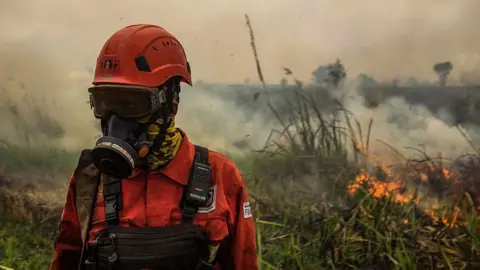
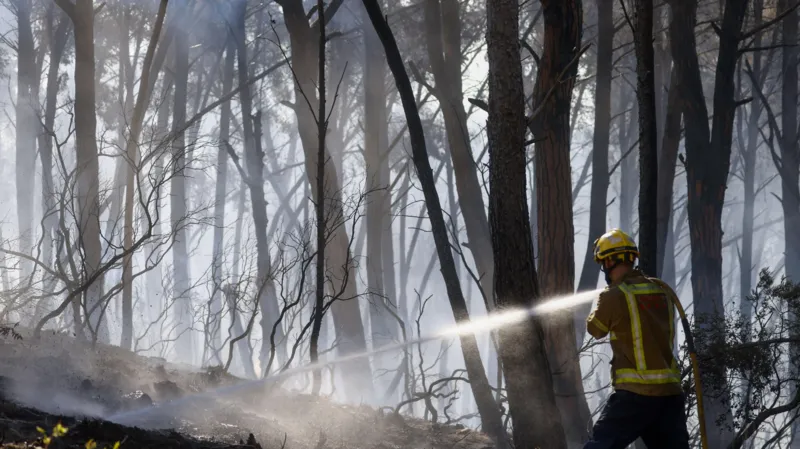
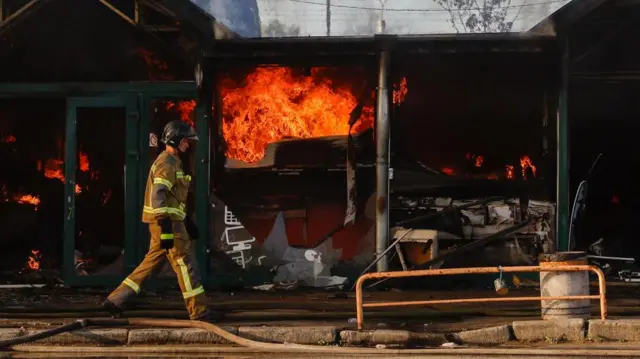
The immediate danger became apparent near the Maros-Pangkep cave, where firefighters battled flames as smoke spread across the area’s distinctive limestone formations. The landscape forms part of a national park and UNESCO Global Geopark renowned for its geological features and prehistoric heritage.
Firefighter Muhammad Ikfar said the blaze remained active near the archaeological site for more than a week earlier this month, approaching within 800 metres of the cave.
According to Ikfar, fires destroyed more than 270 hectares of the national park between September 30 and October 18.
Beyond the risk of flames reaching the caves, researchers are concerned that prolonged exposure to elevated temperatures could damage the fragile surfaces bearing the ancient artwork.
Griffith University archaeologist Basran Burhan warned that heat could trigger deterioration even if the flames never directly reach the paintings.
“The first and most destructive effect is the heat. Even without direct fire touching the paintings, it could ruin them because it changes the temperature around the paintings and accelerates the process of corrosion,” Burhan said.
Smoke presents another threat, as soot can accumulate on the painted surfaces, obscuring details that have survived for tens of thousands of years.
“They create soot on the paintings and cover them, so that the paintings will become blurred and difficult to identify,” he said.
Firefighting operations continued elsewhere in the national park on October 22 and 23, as dry conditions persisted without rainfall, Ikfar said.
The continuing threat has heightened concerns about the long-term survival of the archaeological sites, whose paintings offer important evidence of early human creativity and cultural expression.
Burhan urged authorities to act swiftly to prevent further damage, warning that the loss of the artworks would represent a major blow to humanity’s understanding of its past.
“If we don’t do something about this quick, if there isn’t any tactical mitigation efforts for this incident we will lose one of the most amazing evidence of human history in Maros-Pangkep,” Burhan said. “And that is a great shame.”