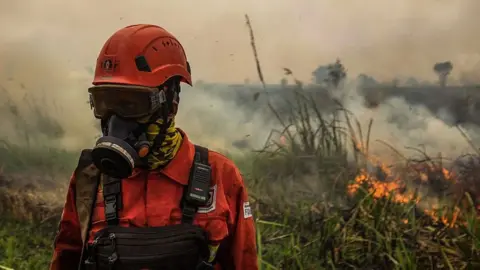
Indonesia has recorded about 175,000 cases of respiratory illness since August as weeks of wildfires continue to blanket parts of the country in toxic haze.
According to BBC, more than 40,000 of the cases involve toddlers, with reported illnesses ranging from coughs and bronchitis to more serious conditions such as pneumonia.
The fires have also sent smoke into neighbouring Malaysia and Singapore, pushing air quality levels into unhealthy ranges.
Indonesia has deployed more than 54,000 officials and dozens of aircraft to Borneo and Sumatra to fight the fires through water bombing and ground operations.
Indonesia battles widespread wildfires
Cabinet Secretary Teddy Indra Wijaya said authorities were continuing efforts to bring the fires under control and reduce the impact of the smoke.
“From the air to the ground, all forces continue to move,” he said.
“Everything is being done to extinguish the fires, reduce the impact of the smoke, and, most importantly, protect the public from the threat of forest and land fires.”
Indonesia regularly records wildfires during its dry season, which usually runs from July to October.
However, authorities say this year’s fires have worsened because of extremely dry conditions linked to a powerful El Nino weather pattern.
Hotspots surge across Indonesia
The independent monitoring platform Nusantara Atlas detected about 734,000 hotspots across Indonesia as of Wednesday.
That figure is more than 30 per cent higher than the level recorded in 2019, one of the country’s worst wildfire years.
Since January, at least 895,657 hectares of land have burned.
The fires have forced schools to close and increased hospital admissions in several parts of the country.
Health ministry figures showed wildfire-related respiratory cases had already more than doubled to 113,336 by September 9, up from 50,891 on September 1.
Wildlife also suffers from toxic haze
The haze has also affected wildlife, including critically endangered orangutans.
Last month, a wildlife foundation released footage of an orangutan found in distress on a palm oil plantation in West Kalimantan.
Rescuers treated the animal for hypoxia, but it later died.
Meanwhile, indigenous and civil society groups in West Kalimantan have filed a class action against the central government and local authorities.
The groups accused officials of failing to adequately address recurring forest and land fires.
Haze spreads across Southeast Asia
Indonesia has carried out several cloud-seeding operations in recent weeks to encourage rainfall and reduce the fires.
Some operations involved members of Japan’s Self-Defense Forces, who arrived in Borneo to support firefighting efforts.
Malaysia’s Sarawak state has also conducted cloud-seeding operations as authorities prepare for a potentially hotter and drier October.
The haze has spread as far as parts of the Philippines, while Singapore has begun issuing daily air quality advisories.
Authorities across the region have urged residents to limit outdoor activity when pollution levels become dangerous.