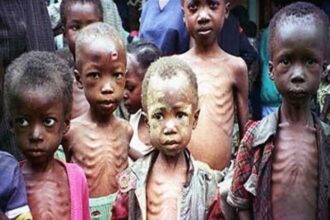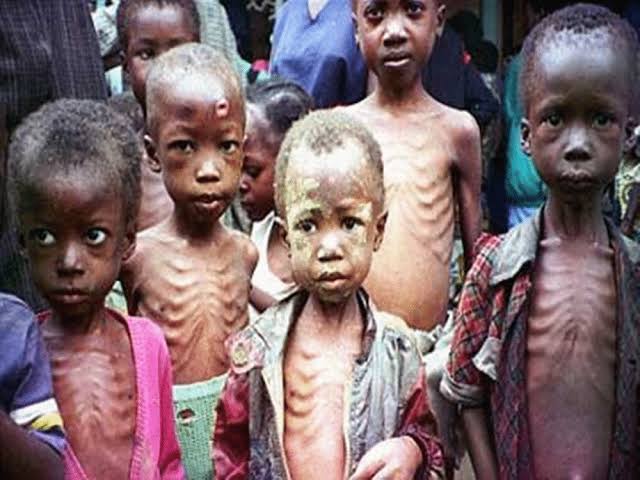
The Federal Government has mobilised more than N7.6 billion to improve child nutrition, a move that has enabled the distribution of essential micronutrients to millions of women and children across the country.
Vice-President Kashim Shettima disclosed this on Thursday while receiving a delegation from UNICEF, led by its Executive Director, Catherine Russell, at the Presidential Villa in Abuja.
He explained that the funding was secured through the Presidential Nutrition Intervention Fund.
Shettima said the Tinubu administration remained focused on programmes designed to improve the welfare and future of Nigerian children despite the country’s current economic and social challenges. He stressed that investing in children was indispensable, warning that denying young people opportunities would amount to a national tragedy.
The vice-president praised UNICEF for its longstanding collaboration with Nigeria, describing the organisation as a reliable partner that continues to provide technical expertise and practical support for child-centred interventions. He added that global developments increasingly influence the well-being of children, making sustained investment in their future even more imperative.
Highlighting the administration’s interventions, Shettima identified the Nutrition 774 Initiative, the Renewed Hope Child Support Programme and the Nigeria 2050 Child Foresight Analysis as key programmes aimed at improving child welfare nationwide.
He said the Nutrition 774 Initiative is intended to strengthen nutrition governance across all 774 local government areas, while noting that UNICEF is supporting the Nigeria 2050 Child Foresight Analysis through horizon scanning, scenario planning and evidence-based policy recommendations.
According to the vice-president, the foresight initiative is advancing towards implementation at the subnational level through a multi-stakeholder technical working group.
Shettima further stated that Generation Unlimited Nigeria is targeting the creation of livelihood opportunities for 20 million young Nigerians by 2030. He added that the National Human Capital Development Programme seeks to position Nigeria among the top 80 countries on the Human Capital Index by 2030.
According to him, the programme prioritises investments in health, nutrition, foundational learning and pathways to productive employment.
Shettima said the initiatives underscore President Bola Tinubu’s commitment to placing human capital at the heart of national development. He also reaffirmed Nigeria’s commitment to the Universal Child Benefit, noting that 2026 has been designated as the Year of Family and Social Protection.
He said the Renewed Hope Baby Support Initiative would spearhead implementation, adding that governors from the North-West had already endorsed the programme, while Lagos State was preparing to begin implementation.
Speaking at the meeting, Russell commended President Tinubu and Vice-President Shettima for pursuing reforms that are expanding opportunities for Nigerian children. She reaffirmed UNICEF’s commitment to supporting Nigeria through improved healthcare, financing and social protection programmes.
Minister of Health Ali Pate also lauded UNICEF’s partnership with Nigeria, describing its contributions as vital across several critical sectors.
Pate said UNICEF had continued to procure vaccines for the country while also providing technical support to strengthen Nigeria’s health institutions.