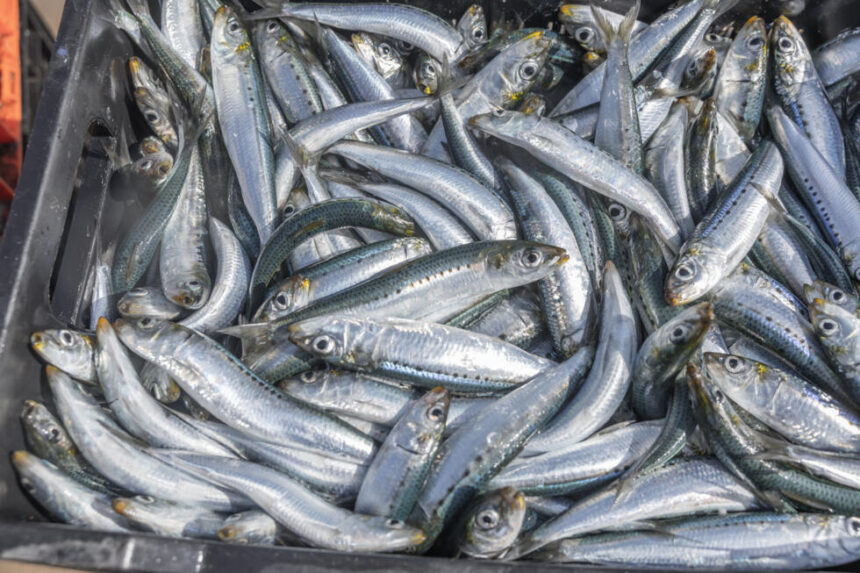
Thousands of dead sardines have washed up on South Africa’s beaches in recent weeks, raising alarm over a virus never before detected in the country’s waters that devastated fish populations in Australia during the 1990s.
The mass stranding along the south and west coasts has prompted an urgent investigation by authorities and conservation groups, with fears that the outbreak could trigger an ecological disaster.
The Department of Forestry, Fisheries and the Environment has confirmed that pilchard herpesvirus remains the leading explanation for the die-offs, which have affected large stretches of coastline from the Western Cape to Gqeberha in the Eastern Cape .
The virus was first identified in South African waters in July after sardines collected off Saldanha Bay, Cape Canyon, Elands Bay and Gansbaai tested positive .
Genetic sequencing showed more than 99 per cent similarity to the strain linked to mass mortality events in Australia and New Zealand in the 1990s, where the virus wiped out up to 70 per cent of sardine stocks .
“This is the first time it has happened in South African history,” said Professor Nadine Strydom, a zoology expert at Nelson Mandela University .
The mortality event has already had practical consequences. At the Koeberg nuclear power station near Cape Town, dead sardines clogged a cooling-water intake basin, forcing Eskom to halve power output at one of its two units . Officials later restored output to 70 per cent after clearing the blockage .
Authorities have established an intergovernmental task team to coordinate the response, covering surveillance, testing, disposal of dead fish and assessment of the impact on sardine stocks .
The Small Pelagic Scientific Working Group is due to meet on September 4 to review findings and consider whether additional fisheries management measures are warranted .
Sardine strandings have also been reported along the Namibian coast, with Namibian authorities agreeing to provide samples for PHV testing .
Craig Smith, a senior technical specialist at WWF South Africa, expressed deep concern over the outbreak’s potential impact on the marine ecosystem, noting that sardines are a crucial prey species for dolphins, seals, seabirds and the critically endangered African penguin .
The DFFE has confirmed that PHV poses no known risk to human health and that commercially produced canned sardines remain safe to consume . However, the public has been warned not to collect or eat dead or dying fish found on beaches due to decomposition-related risks .