




Astronomers have detected a type of sugar in space that is also found in raspberries and self-tanning lotions.
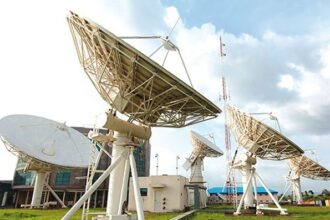
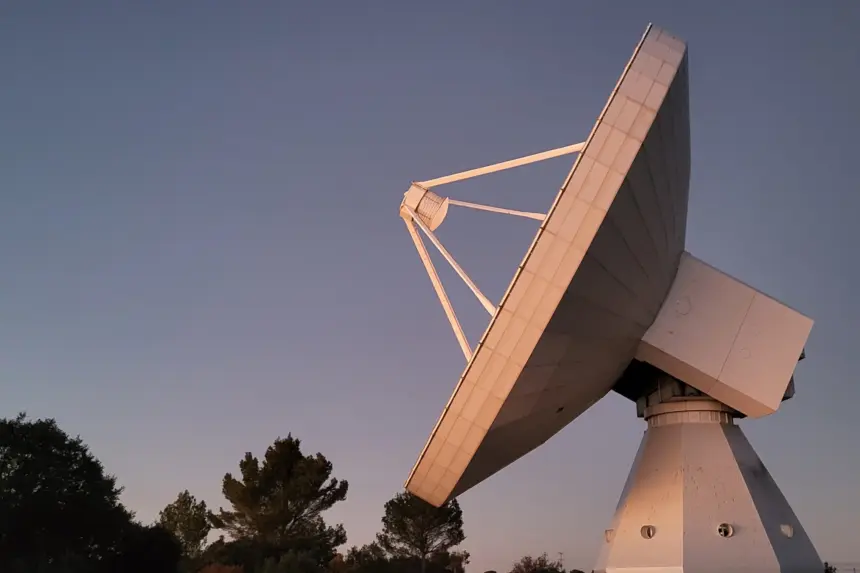
The sugar, called erythrulose, lurks in what is known as the interstellar medium: thin clouds of gas and dust scattered between stars. Using two dish-shaped radio telescopes in Spain, researchers collected data from a large gas cloud near the centre of the Milky Way and identified the sugar in gas form by comparing telescope signals to samples in the laboratory.
The findings were published Monday in the journal Nature Astronomy.
Sugar does more than sweeten tea and powder doughnuts. Different varieties fuel our cells and even make up DNA. Scientists are eager to understand how sugars form because they are a key ingredient for life as we know it.
The latest sugar is not essential for life, but it can easily convert to a form that is thought to be crucial to kick-starting life on Earth. It is also one of the most complex sugars spotted so far, said astrophysicist Erika Hamden with the University of Arizona, who had no role in the new research.
“It’s a pristine example of the stuff that’s just floating out in the galaxy,” Hamden said.
Scientists have previously found interesting chemistry in our galaxy, including building blocks for genetic material and parts of the cell. They spotted a cousin to table sugar near the centre of the Milky Way about 25 years ago. Black grains from asteroid Bennu retrieved by NASA’s Osiris-Rex spacecraft also yielded other sugars, including a key DNA ingredient.
These interstellar investigations are all about understanding how life got started. Did faraway comets or space rocks deliver the essential ingredients to us? Or were the essential components already here that eventually gave rise to our solar system? The new sugar lends evidence to the latter theory.
Researchers now want to look for more sugars in space and learn about how they convert to different forms. Finding them in one spot means they are likely also hiding in distant corners of the galaxy along with other important bits, said study author Izaskun Jiménez-Serra, an astrophysicist at the Centre for Astrobiology in Spain.
“The key ingredients for the origin of life could be present in other regions across the galaxy, opening the possibility for life to develop elsewhere in the universe,” Jiménez-Serra said.
The sugar was detected in a region crossed by NASA’s twin Voyager spacecraft, the farthest man-made objects to ever travel from Earth. This discovery marks the latest kind of sugar detected in space and adds to the growing evidence that the building blocks of life are widespread throughout the universe.