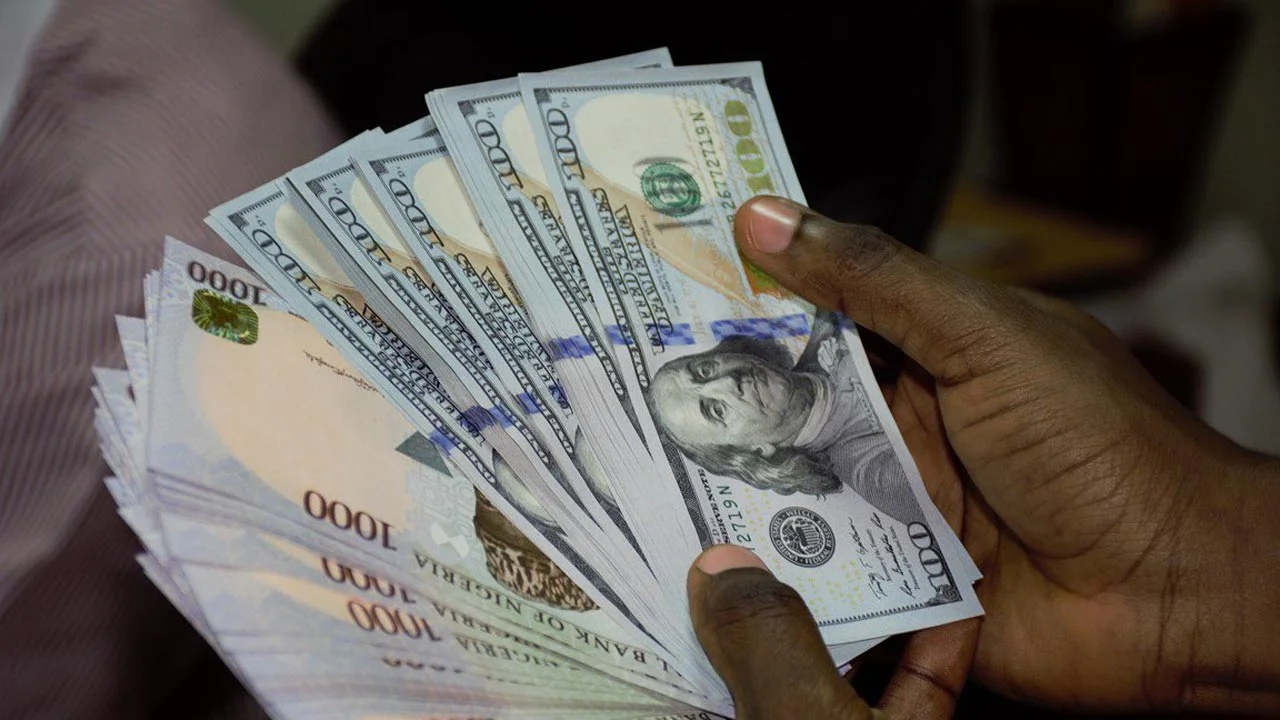
The naira weakened further in Nigeria’s foreign exchange market on Wednesday, November 25, trading at N1,455 per dollar in the parallel market amid increased demand for foreign currency.
The decline coincided with a $108m reduction in the country’s external reserves, raising concerns about renewed pressure on the local currency.
According to The PUNCH, the naira had traded at N1,440 per dollar the previous Thursday and approximately N1,375 a month earlier.
Official exchange rate also weakens
At the official foreign exchange market, the naira depreciated marginally to N1,397 per dollar on Wednesday from N1,396.50 recorded on Tuesday.
The latest movement followed a series of losses in both the official and parallel markets.
Nigeria’s external reserves also declined to $54.25bn on Tuesday from $54.358bn on Monday.
Analysts identify election-related demand
Some currency traders linked the increasing demand for dollars to political activities ahead of the 2027 general elections.
A Bureau de Change operator in Abuja claimed that individuals identifying themselves as representatives of politicians had been purchasing foreign currency.
However, the extent to which political spending contributed to the depreciation could not be independently quantified.
The Chief Executive Officer of the Centre for the Promotion of Private Enterprise, Muda Yusuf, also warned that election-related spending and uncertainty over future economic policies could intensify pressure on the naira.
CBN downplays currency volatility
Meanwhile, the Governor of the Central Bank of Nigeria, Olayemi Cardoso, described recent fluctuations in the foreign exchange market as largely seasonal.
Cardoso attributed some of the pressure to year-end investment adjustments, demand from domestic businesses and election-related spending.
The governor expressed confidence that the country’s foreign exchange position would improve as the market adjusted.
He also disclosed that diaspora remittances exceeded $900m in the preceding month.
The CBN maintained that it would continue taking measures to support exchange rate stability.