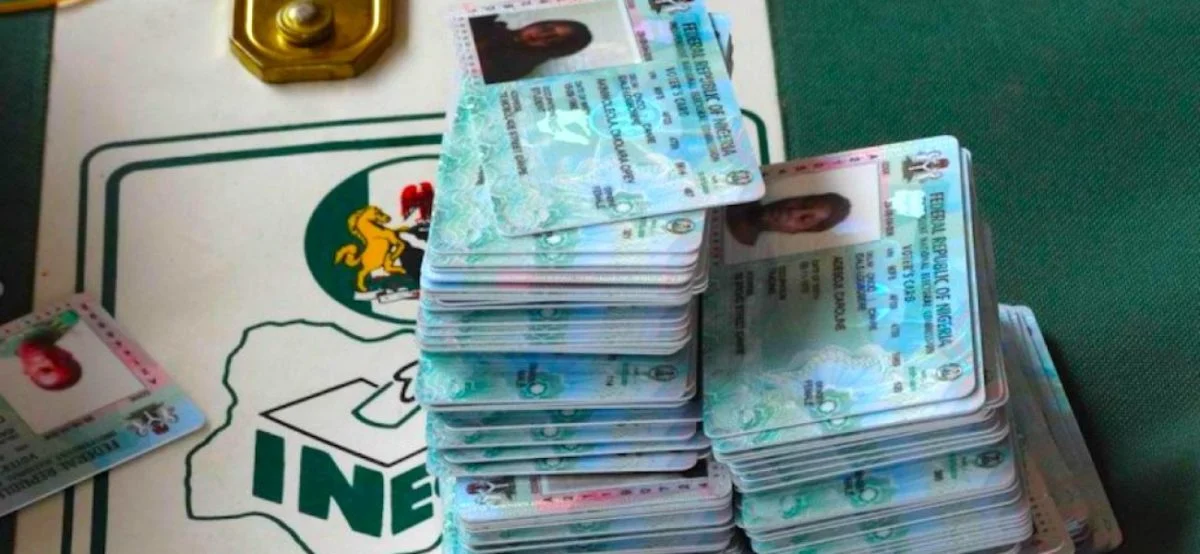
The Independent National Electoral Commission has disclosed that between 75 and 80 per cent of its Bimodal Voter Accreditation System devices, representing 186,277 machines, have been distributed to states ahead of the 2027 general elections.
The commission said the distribution exercise was progressing, although some states were yet to receive their complete allocations.
INEC National Commissioner, Mohammed Haruna, made this known in an exclusive interview with The PUNCH in Abuja.
He explained that while most states had received their allocated equipment, the commission was still working to deliver the outstanding devices and other non-sensitive electoral materials before the end of November.
Haruna said, “About 75 to 80 per cent of the BVAs have been deployed to states. Most states have received them, though not the full complement. Some have received the full complement of the materials, but some have a few numbers left to collect”.
He identified Kano State, Kaduna State and the Federal Capital Territory as some of the locations that had completed the receipt of their non-sensitive electoral materials. According to him, the distribution exercise was almost concluded across the country.
“Almost all the states have received their materials. But the ones that are complete, I know FCT, for instance, Kano and Kaduna too.”
INEC had announced last Thursday that it had commenced the distribution of non-sensitive electoral materials to selected states as part of its preparations for the 2027 general elections. The disclosure was made during a meeting with a delegation from Kenya’s Independent Electoral and Boundaries Commission.
During the engagement, the commission revealed that it had completed nine activities on its electoral timetable and was intensifying preparations following assessments conducted across Nigeria’s six geopolitical zones. The exercise was designed to evaluate the level of preparedness, identify challenges and determine areas requiring further attention.
The commission said, “We have six zones in Nigeria. The purpose is to go around the zones to see how prepared we are, assess what the zones have put in place, the challenges and what to do.
“Right now, all non-sensitive materials are almost ready. In fact, today as we speak here, the non-sensitive materials have been lifted to some zones now.”
For the 2023 general elections, INEC deployed 175,856 BVAS machines across 176,846 polling units nationwide. However, the commission has expanded its technological resources ahead of the next electoral cycle, with its chairman, Professor Joash Amupitan (SAN), announcing in October that an additional 57,000 BVAS devices had been procured.
Based on the new procurement, The PUNCH projected that the commission’s available BVAS inventory would increase to 232,846 devices for the 2027 elections, representing an estimated 32.4 per cent rise compared with the number deployed in 2023.
Amupitan also disclosed that INEC had adjusted the maximum number of registered voters assigned to a single BVAS device from 1,250 to 850. Under the revised arrangement, polling units with more than 850 registered voters would be provided with additional machines to facilitate accreditation.
The adjustment marks a departure from the 2023 operational arrangement, when one BVAS device was generally assigned to each polling unit. The commission has also established 453 additional polling units, bringing the nationwide total to 177,299 ahead of the 2027 elections.
Providing further details on the distribution exercise, Haruna assured that all outstanding non-sensitive materials would reach their designated states before the end of November.
“So, I’m sure by the end of the month, before the end of the month, all the states will receive the full complement,” he said.
On the handling of sensitive election materials, the national commissioner explained that INEC had adopted a centralised custody arrangement in collaboration with the Central Bank of Nigeria to ensure the security of the materials before the elections.
He said the materials had already been transported to CBN offices nationwide, where they would remain under custody until the week of the polls, when the commission would commence their distribution.
“Of course, sensitive materials, those, we won’t start distributing them now. We take them straight to the CBN for custody until the week of the election,” he said.
Haruna further explained that the distribution would take place at the CBN premises, with representatives of political parties, journalists and civil society organisations present to monitor the process and promote transparency.
“And, you know, we distribute them from CBN. All the agents from political parties will be there. The media is there, civil society organisations are there at the CBN premises.
“That’s where we are going to distribute them. But they have been delivered already to CBN offices around the country,” he stated.
Regarding the configuration of BVAS devices, Haruna said the exercise would be carried out closer to the elections rather than during the current phase of preparations for the mock accreditation scheduled for November 28.
He explained that each machine would be configured for a specific polling unit, a measure intended to ensure accountability and prevent devices from being deployed outside their designated locations.
“The BVAs, we’ll configure them close to the election. We’ll not configure them now. You know, each one is customised to each polling unit. Each BVA is for its own area, so that at least you can hold somebody responsible,” he said.
On efforts to improve electoral transparency and strengthen public confidence in the voting process, the commissioner highlighted INEC’s enhanced electronic transmission and verification procedures through the electronic version of Form EC8A.
He explained that the electronic form would serve as an additional verification mechanism by ensuring that results uploaded by presiding officers accurately reflected the figures agreed upon and endorsed by polling officials, party agents and security personnel at the polling units.
According to Haruna, the system was designed to prevent the transmission of results where discrepancies existed between the figures entered electronically and the results collectively verified at the polling units.
He said, “But the main thing we have done is this EC8A. There’s an e-version of it. So once the presiding officer, once they agree, they have updated, they have looked at the results, they have agreed that that is the accurate result, the polling agent signs, security signs.
“He tries to upload it onto the app. Suppose he doesn’t agree, because the one that has been entered before, you know, if there’s a discrepancy, it will not be uploaded. It will not be the same content.”
However, Haruna noted that the commission was implementing other measures to improve the electoral process but would not make every operational detail public, particularly where disclosure could compromise security arrangements.
“There are so many things that we’re doing. But there are certain things, of course, we cannot reveal. Because if you do, it’s actually harmful for security reasons,” he said.
He maintained that INEC remained committed to improving the credibility, transparency and integrity of elections, adding that some of its protective measures would remain confidential to prevent individuals from exploiting possible security loopholes.
Meanwhile, following the enactment of the Electoral Act 2026, INEC has adjusted the timetable for the 2027 general elections. The commission has fixed January 16, 2027, for the presidential and National Assembly elections.
The governorship and State Houses of Assembly elections, on the other hand, have been scheduled to hold on February 6, 2027.