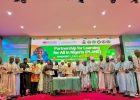
The Federal Government has secured commitments exceeding $65m from seven private sector and philanthropic organisations to support efforts to reduce maternal and newborn deaths across Nigeria.
The proposed contributions will target 172 local government areas identified as having a particularly high burden of preventable maternal and newborn deaths.
According to The PUNCH, the Coordinating Minister of Health and Social Welfare, Professor Muhammad Ali Pate, announced the development during the 2026 Joint Annual Review of the health sector in Abuja on Wednesday, November 11.
Seven organisations make commitments
The participating organisations are DP World, Bayer, UNICEF, dsm-firmenich, Nestlé Nutrition Institute, Roche and Ferring Pharmaceuticals.
Their commitments include financial resources, medical products, technical expertise and support for healthcare delivery systems.
The organisations submitted letters of intent under the Maternal and Neonatal Mortality Reduction Innovation Initiative Private Sector Compact.
Pate explained that the programme would coordinate private sector investments with government-identified healthcare priorities.
He maintained that the resources should address gaps in access to emergency care, essential medicines, skilled health workers and effective referral services.
FG targets high-risk communities
The minister disclosed that the initiative would concentrate on local government areas where maternal and newborn deaths were most prevalent.
According to the Federal Government’s estimates, Nigeria records approximately 40,000 maternal deaths and 300,000 newborn deaths annually.
These figures highlight the scale of the challenge facing the country’s maternal healthcare system.
The programme aims to improve the availability and quality of care for pregnant people, mothers and newborn babies.
Interventions will include better emergency obstetric services, improved medical supply systems and stronger coordination among healthcare facilities.
Government plans to track spending
Pate said participating organisations would be expected to align their contributions with government priorities and measurable healthcare outcomes.
He emphasised that financial commitments alone would not be sufficient unless they resulted in better services and improved survival rates.
The programme will be monitored through the health sector’s Sector-Wide Approach framework.
The government also unveiled plans for a digital platform to coordinate participating organisations and track the geographical distribution of interventions.
The platform is intended to reduce duplication and ensure that underserved communities receive appropriate support.
Private sector joins healthcare effort
The latest commitments build on existing partnerships involving the Gates Foundation, MSD for Mothers and the MTN Foundation.
Development partners are expected to support health worker training, medical supplies, technology and emergency healthcare systems.
The government maintained that collaboration among public institutions, private companies and philanthropic organisations would help strengthen maternal and newborn services nationwide.
However, the announced $65m represents financial and in-kind commitments rather than money already fully disbursed.
The actual impact of the programme will depend on implementation, funding delivery and measurable improvements in maternal and newborn healthcare outcomes.