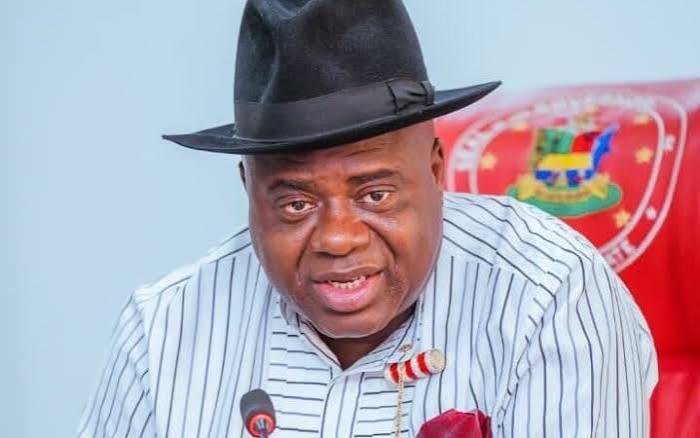
Bayelsa State Governor Douye Diri has unveiled artificial intelligence-powered robotic tutors at Bayelsa Medical University in Yenagoa as part of efforts to improve medical education and research.
According to The PUNCH, Diri introduced the technology on Monday, October 26, 2026, alongside the university’s 2025–2029 Strategic Plan.
The governor described the initiative as an important development in modernising medical training but stressed that artificial intelligence should complement traditional teaching methods.
“Technology should complement physical classroom interactions, not replace them,” Diri said.
He maintained that lecturers would continue to play an important role in mentoring students and developing healthcare professionals.
Bayelsa Medical University expands AI-powered learning
The governor urged the university’s management to translate its strategic plan into measurable improvements in academic standards, infrastructure and research.
He also reaffirmed the government’s commitment to the institution’s ASPIRE Agenda, which focuses on academic excellence, sustainability, partnerships, innovation and staff development.
Diri praised Vice-Chancellor Dimie Ogoina and the management team for their efforts to strengthen the institution.
He also disclosed that the university’s additional campus in Sampou was nearing completion.
University records progress in research, technology
Ogoina explained that the institution had introduced a virtual reality, artificial intelligence and mixed-reality studio to improve practical learning.
He disclosed that the university had secured accreditation for nine academic programmes.
According to him, nursing students recorded a 96 per cent pass rate in their professional examinations, while researchers produced more than 70 peer-reviewed publications.
The vice-chancellor also announced plans to establish a Centre of Excellence for Digital Health and Biomedical Innovation.
Diri subsequently inspected facilities at the Bayelsa Medical University Teaching Hospital, including equipment for advanced diagnostic services.
He expressed confidence that the investments would improve healthcare training and reduce residents’ need to travel outside the state for some medical procedures.