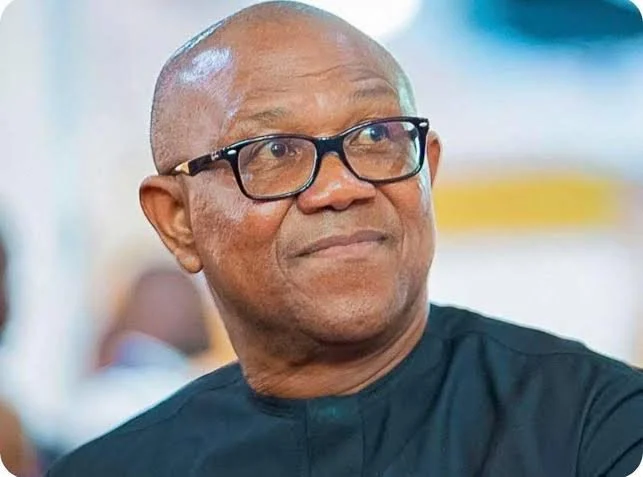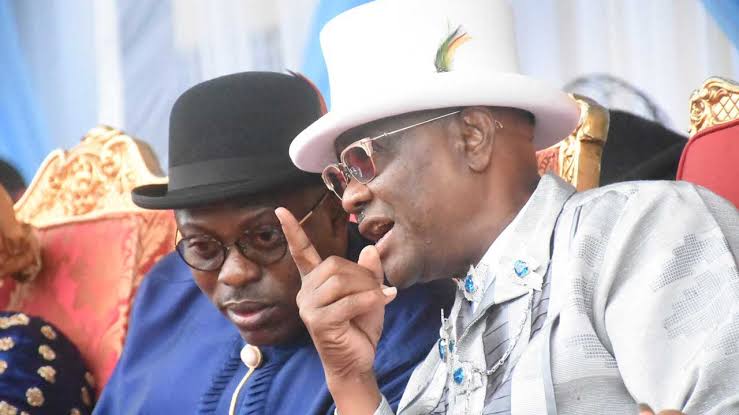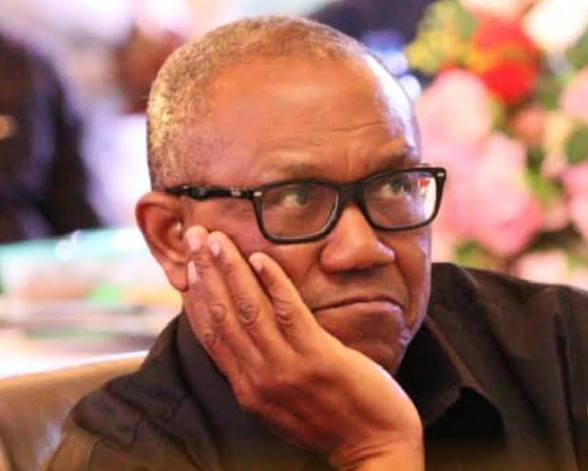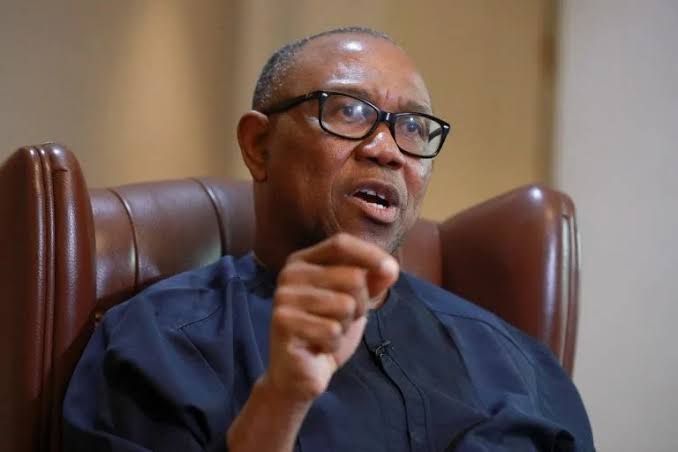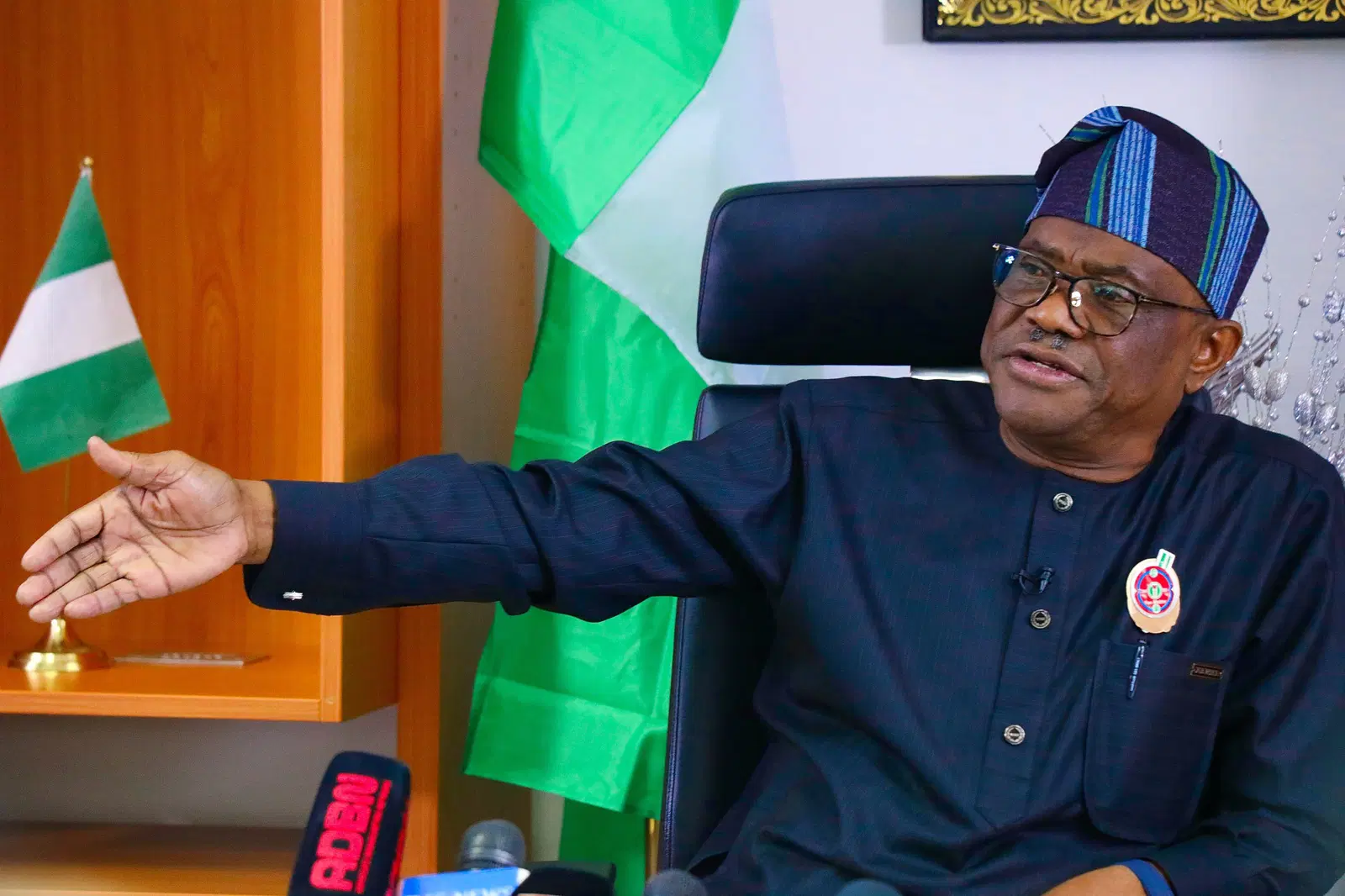
Minister of the Federal Capital Territory, Nyesom Wike, has criticised former Anambra State Governor Peter Obi over his reputation for personal frugality, questioning his leadership credentials and capacity to govern Nigeria.
Wike described Obi as stingy for carrying his own bags despite having served as a state governor, while dismissing his popularity on social media as insufficient qualification for the presidency.
Speaking at a town hall meeting with stakeholders of the Rainbow Coalition in Bonny Local Government Area of Rivers State on Saturday, the minister portrayed Obi’s political appeal as largely driven by his online following. He argued that popularity on digital platforms should not be confused with the ability to manage the country’s affairs. Wike also used the gathering to defend President Bola Tinubu’s economic policies and mobilise support for his re-election bid in 2027.
“Truly speaking, I gave him the president of social media. If you were to vote who will be president of social media, I will vote for him. But if it is to govern Nigeria, it is capital no!” Wike said.
The former Rivers State governor also took aim at Obi’s approach to personal spending, arguing that a former state chief executive should be able to employ an aide to handle routine responsibilities rather than present personal frugality as a virtue.
“As a former governor, you cannot be stingy not to have employed a personal assistant who will carry your bag. You want to show you carry your bag. We don’t want such a stingy person as a president.”
Wike further questioned Obi’s record as governor of Anambra State, suggesting that an assessment of his administration should take into account the performance of his successor, Chukwuma Soludo. He maintained that presidential aspirants should be judged by their achievements in public office rather than their political popularity.
To reinforce his argument about leadership under pressure, Wike cited his decision to remain in the Peoples Democratic Party (PDP) amid internal disagreements, insisting that political leaders must demonstrate the ability to confront challenges instead of abandoning difficult situations.
“How will you solve the problem of the country? Did you see when there was a problem in PDP? Did I run? I defeated them,” he said.
The minister also expressed reservations about the leadership of the African Democratic Congress (ADC) and questioned the suitability of former Vice President Atiku Abubakar for the presidency, referring to his longstanding acquaintance with the former vice president through their involvement in the PDP.
Wike’s comments formed part of a broader campaign for Tinubu and the All Progressives Congress (APC) ahead of the 2027 general election. He declared his support for the president, arguing that the administration’s policies and infrastructure projects should form a significant part of the electorate’s assessment of its performance.
Beyond his criticism of opposition figures, Wike accused the previous Rivers State administration of mismanaging public resources and failing to deliver value on some major projects. He alleged that $39 million had been spent on a proposed 1,000-bed Justice Karibi-Whyte Specialist Hospital without the project advancing to the foundation stage.
“Thirty-nine million US dollars, N53 billion, gone! As I speak to you, there’s no foundation, no one block laid,” he said.
He also questioned the expenditure on the state’s monorail project, claiming that approximately N60 billion had been spent without commensurate value being delivered. The minister, however, did not provide additional documentation during the meeting to substantiate the figures cited in his allegations.
Addressing the sale of a power plant, Wike referred to a transaction valued at $308 million and alleged that only $308,000 was left in the relevant state account when he assumed office in May 2015. He also recalled a proposal to spend $10 million on fumigating Rivers State as a measure against mosquito bites, questioning the justification for such an expenditure in a state that shares boundaries with several others.
Turning to the Federal Government’s economic policies, the minister defended Tinubu’s decision to remove the petrol subsidy, describing it as a difficult reform that successive administrations had discussed but failed to implement. He acknowledged that the policy had contributed to economic hardship, particularly through higher petrol prices and increased living costs, but maintained that it had also expanded the revenue available to state and local governments.
“Each time a president comes, fuel subsidies are a scam. What have you done with it? Another president will come, fuel subsidy is a scam. What have you done? Nobody has been able to take a courageous decision,” he said.
According to Wike, Tinubu proceeded with the subsidy removal despite being aware that the policy would impose immediate financial pressure on Nigerians. He argued that the long-term benefits should be considered alongside the difficulties experienced by households and businesses during the transition.
The minister claimed that states now receive at least N15 billion monthly in federal allocations, apart from other revenue inflows. However, he did not provide a breakdown of the figures or demonstrate that the stated amount applied uniformly to all states. He urged state and local governments to channel their available resources into infrastructure, education and essential public services.
Wike also claimed that public universities had gone three years without embarking on strikes, attributing the development to changes in the country’s funding environment. He maintained that the effectiveness of economic reforms should not be measured solely by their immediate effects, arguing that some difficult decisions were necessary to achieve sustainable national development.
Highlighting infrastructure delivery, the minister identified the completion of the Bonny-Bodo Road as a significant achievement of the Tinubu administration. He said the project had improved access to Bonny Island, which residents had previously reached largely by boat and helicopter, and argued that successive governments had failed to fulfil their promises to complete the road.
“The advantage is that we can now go by road to Bonny. Administrations have come and the road has become a political road. It is not today. So many governments have said, ‘We will try,’ but thank God, under the administration of the present president, the road has been completed,” he said.
Wike urged residents to evaluate political officeholders based on their performance, particularly their handling of public finances, delivery of infrastructure and willingness to take decisions he described as necessary for development. He also stressed the importance of involving local communities in determining development priorities, calling on traditional rulers, youths and other stakeholders to communicate their needs to the appropriate authorities.
Before the town hall meeting, the minister visited the Amanyanabo of Bonny Kingdom, King Edward Asimini William Dappa Pepple III, at his palace. Wike explained that the visit was intended to discuss national political developments and encourage residents to make informed decisions ahead of the 2027 general election.
The monarch welcomed the minister and recalled his contributions to Bonny Kingdom, particularly his support for efforts to establish Bonny Polytechnic during his tenure as a minister. He also acknowledged Wike’s involvement in discussions concerning security and the Bonny-Bodo Road, describing Bonny as a community of strategic importance to Nigeria.
King Pepple commended the minister for maintaining a longstanding relationship with the kingdom and for his continued engagement with issues affecting the community.
Wike also outlined the political strategy of the Rainbow Coalition in Rivers State, explaining that the group had brought together politicians from different parties in an effort to reduce political divisions and violence. He said the arrangement was intended to encourage cooperation among political actors who had previously belonged to opposing camps.
“Under a Rainbow Coalition, that’s why in our state today, you see APC, PDP, all of us. No more Rivers of blood, no more shooting,” he said.
As part of the coalition’s political preparations, Wike announced plans to unveil its candidates on October 27 and identified Kingsley Chinda as its preferred candidate for the Rivers State governorship race. He also disclosed names of candidates for other elective positions, indicating that some would contest under the APC platform despite the coalition’s cross-party membership.
The minister called on Rivers residents to support candidates he described as experienced and committed to public service. He also assured the people of Bonny that concerns raised during the engagement would be communicated to the relevant authorities for attention.
In his remarks, the chairman of the Rainbow Coalition, George Tubara Tolofari, praised Wike for his role in reconciling members following divisions within the group. He said meetings held in Port Harcourt and Bonny had helped bring together politicians from previously opposing factions, including individuals associated with the defunct Simplified Movement.
Also speaking at the event, the chairman of Bonny Local Government Area, Abinye Blessing Pepple, highlighted government initiatives focused on infrastructure development, empowerment programmes and the creation of economic opportunities for residents.