Canada has announced retaliatory tariffs ranging from 15 to 50 per cent on a wide range of United States goods. The trade dispute between the two neighbouring countries is intensifying.
According to Vanguard, the counter-tariffs will take effect on September 8. This follows the introduction of fresh US duties of up to 50 per cent on Canadian products after last-minute trade negotiations collapsed.
Canada matches US tariffs
Canadian officials said the new measures were designed to match Washington’s tariffs. The government described this as a proportionate response.
US steel and aluminium products that previously faced a 25 per cent Canadian tariff will now be hit with duties of 50 per cent.
Appliances, dairy products including cheese, and some steel and aluminium derivatives will face 25 per cent tariffs.
Certain electrical equipment and tools will attract a lower 15 per cent levy.
The targeted products account for about 7.3 per cent of Canada’s total imports from the United States.
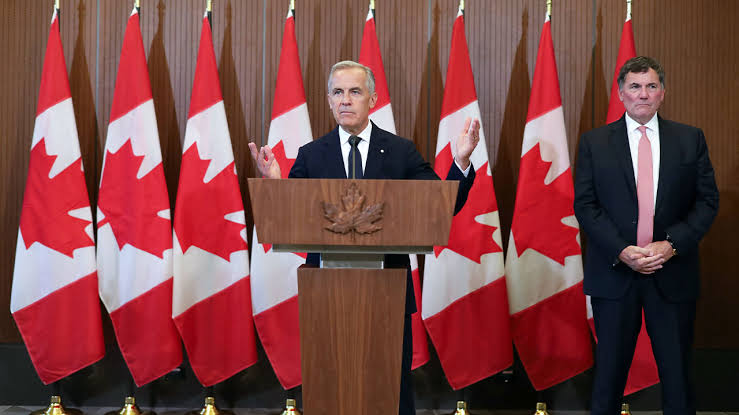
Ottawa unveils $5.4bn support package
Alongside the tariffs, the Canadian government announced a $5.4 billion support package for businesses and workers. These groups are expected to be affected by the escalating trade conflict.
Finance Minister Francois-Philippe Champagne said Canada had been confronted with an unprecedented economic challenge but would respond strategically.
He said the government’s approach would be targeted and designed to protect Canadian workers and companies.
Industry Minister Melanie Joly also urged Canadians to support domestic businesses. Meanwhile, the country works to expand relationships with other trading partners.
“We cannot wait for Washington to decide our future,” Joly said.
US tariffs hit $20bn Canadian exports
The latest US tariffs affect about $20 billion worth of Canadian goods. This is equivalent to roughly 5.5 per cent of Canada’s exports to the United States.
The measures took effect on Saturday after negotiations between both governments failed to produce an agreement.
Washington’s latest duties cover Canadian products even when they qualify under the United States-Mexico-Canada Agreement. As a result, this increases the effective US tariff rate on Canadian exports.
Plastics, electrical machinery, wood and paper products are among sectors expected to feel significant pressure.
Trade war threatens further escalation
Tensions have continued to rise beyond the latest tariffs.
US President Donald Trump has threatened to double tariffs on Canadian automobiles next year. He would raise them to 50 per cent on non-US content.
Ontario Premier Doug Ford responded angrily and threatened additional charges on electricity exports from his province to the United States.
Canadian Prime Minister Mark Carney has also accused US negotiators of introducing unacceptable demands during the final stages of trade negotiations. These include proposed restrictions affecting Canada’s relations with other trading partners.
The United States remains Canada’s largest trading partner, receiving about 70 per cent of Canadian exports.
With both countries now imposing increasingly steep duties, businesses and consumers on either side of the border face growing uncertainty. They are uncertain over prices, investment and supply chains as the trade dispute deepens.